Medieval Europe · 871–899
Why Was Alfred Called the Great? Alfred and the Danelaw
In short
- By 874 only Wessex remained of England's kingdoms, and a Danish surprise attack in 878 drove Alfred into the Somerset marshes.
- Alfred won at Edington, took Guthrum's surrender and divided England along a border with the Danelaw.
- He built burhs, reorganised his army and promoted learning in English, so that his heirs could take back the rest of the country.
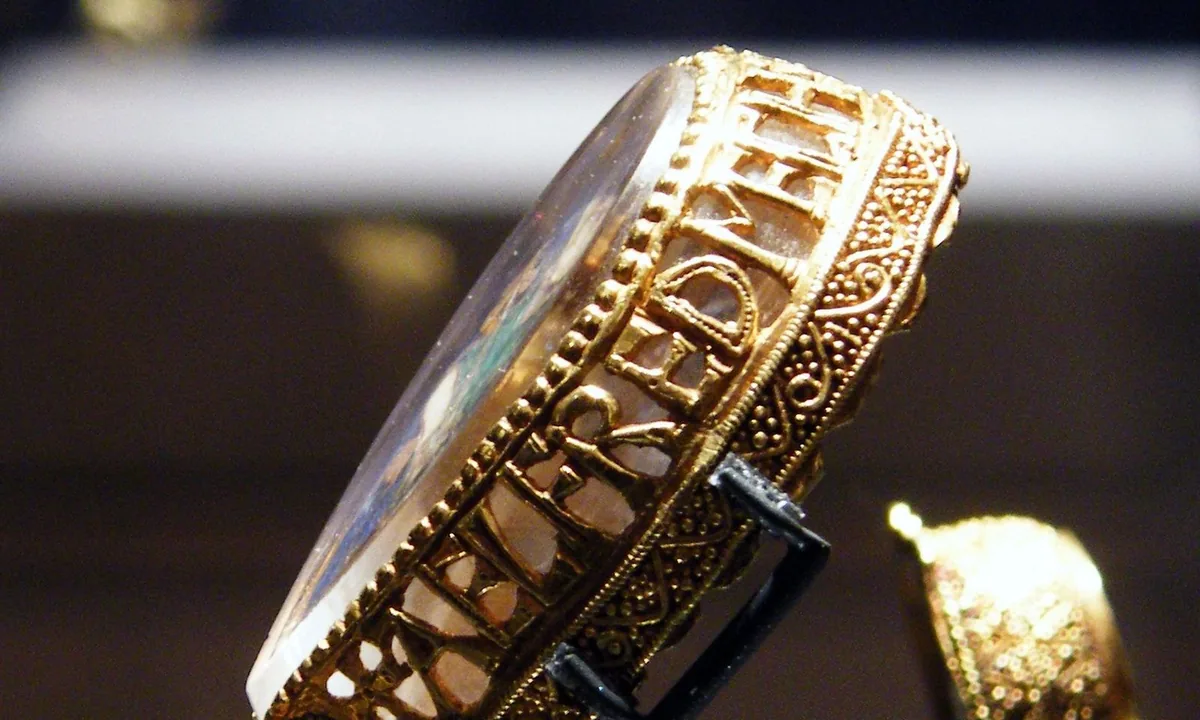
In January 878, just after Twelfth Night, a Danish army made a surprise winter attack on the royal estate of Chippenham and overran Wessex. Its king, Alfred, slipped away with a small band into the marshes of Somerset: the last independent English king, hiding in a swamp.
Three kingdoms gone
In 865 a great Viking army landed in East Anglia. It took York in 866, killed King Edmund of East Anglia in 869 and in 874 drove out the king of Mercia. Wessex, in the south, was the last kingdom left standing. Alfred, the youngest son of its king, had been taken to Rome as a child and never expected to rule. He became king in April 871, after his brother Æthelred died in a year of constant battles.
At first Alfred bought peace with money. In January 878 the Danish leader Guthrum broke it with a surprise winter attack on Chippenham, and Wessex seemed to be finished.

The swamp and the field
Alfred took refuge at Athelney, an island of firm ground in the Somerset marshes, and built a fort there. At Easter, according to the Anglo-Saxon Chronicle, he began raiding from the island, and in the seventh week after Easter he summoned the men of Somerset, Wiltshire and Hampshire to a meeting at Egbert's Stone.
Two days later he met Guthrum's army at Edington and won. He pursued the survivors to their stronghold, probably Chippenham, and besieged it for a fortnight until they surrendered. Guthrum came to Alfred with thirty of his leading men and accepted baptism, and Alfred stood as his godfather. The story that Alfred burned a peasant woman's cakes while hiding first appears in a Latin Life of St Neot written in the late tenth or eleventh century, generations after his death; it is almost certainly legend.

A line through England
A treaty made some years later, before Guthrum's death in 890, fixed a border between Alfred's lands and Guthrum's: up the Thames and the Lea, across to Bedford, then up the Ouse to Watling Street. East and north of it, Danish law applied. Later writers called this region the Danelaw, a name first recorded in the early eleventh century.
The border did not end the fighting. When fresh Viking armies arrived in 892–896, Alfred was ready. He reorganised his forces so that half of his men served while the rest tended their farms, and he built ships. Above all, he built burhs: fortified towns spaced so that hardly anywhere in Wessex lay more than about twenty miles, a day's march, from one.

A king who read
Alfred believed the Vikings were a punishment on a kingdom that had let learning decay. He gathered scholars from Mercia and Wales and from across the Channel, and had texts they thought essential translated from Latin into English. He took part himself: the Old English version of Gregory the Great's Pastoral Care has a preface by the king.
He issued a law code that began with the Ten Commandments and drew on the laws of earlier West Saxon, Mercian and Kentish kings. The Anglo-Saxon Chronicle was first compiled in his reign, around 890, as a record of the kingdom's history. His biographer Asser, a Welsh monk, praised his piety and energy, though a few scholars have doubted that Asser's Life is genuine. Alfred died in October 899, and his children and grandchildren turned Wessex into England.

In their own words
“So general was its decay in England that there were very few on this side of the Humber who could understand their rituals in English, or translate a letter from Latin into English; and I believe that there were not many beyond the Humber. There were so few of them that I cannot remember a single one south of the Thames when I came to the throne.”
King Alfred, Preface to the Old English translation of Gregory the Great's Pastoral Care, c. 890s
Translation by Henry Sweet, King Alfred's West-Saxon Version of Gregory's Pastoral Care (Early English Text Society, 1871). Alfred is describing the state of learning when he became king, perhaps exaggerating its decline to justify his reforms.
Why it happened
- The Viking great army had destroyed Northumbria, East Anglia and Mercia by 874, leaving Wessex alone.
- Alfred's army and navy were small, and Guthrum's winter attack in 878 caught him unready.
- Support from the people of Somerset, Wiltshire and Hampshire, who answered his summons, gave Alfred an army to fight back.
What happened next
- Alfred's burhs and army let Wessex resist later Viking attacks.
- His descendants conquered the Danelaw and, under his grandson Æthelstan, created a single kingdom of England in the 920s–930s.
- The Danelaw left English with Scandinavian place-names and words, and Danish kings would conquer England again in 1013–16. Read the story →
Why it still matters
Walk through Winchester, Wallingford or Oxford and you are walking through towns laid out as burhs by Alfred or his children. In Winchester, a bronze statue of Alfred by Hamo Thornycroft stands at the east end of The Broadway; it was unveiled in 1901 for the millenary of his death, which was then dated to 901.
Key people
- Alfred
- King of Wessex 871–899, the only Anglo-Saxon king later called “the Great”
- Guthrum
- Danish leader defeated at Edington in 878 who accepted baptism and ruled East Anglia
- Asser
- Welsh monk who wrote a Life of King Alfred in 893
- Æthelflæd
- Alfred's daughter, who ruled Mercia and fought the Danes after her husband's death
Key terms
- Danelaw
- The north and east of England where Danish law and custom applied after the treaty of Alfred and Guthrum.
- Burh
- A fortified town, with walls and a garrison, built by Alfred and his successors.
- Anglo-Saxon Chronicle
- A year-by-year record of English history begun in Alfred's reign and continued in several monasteries for more than two centuries.
- Witan
- The council of nobles and bishops who advised an Anglo-Saxon king.
Test yourself
Where did Alfred defeat Guthrum's army in 878?
- Hastings
- Stamford Bridge
- Edington
- Lindisfarne
Show the answer
Edington. Alfred defeated the Danes at Edington in May 878. Hastings and Stamford Bridge belong to 1066, and Lindisfarne was the monastery raided in 793.
The full lesson in the app ends with 5 questions like this one.
Connected stories
- The Viking Age: Raiders, Traders, Settlers: Alfred's wars were part of the Viking raids and settlements that reshaped northern Europe.
- Charlemagne: An Emperor in the West Again: Alfred, like Charlemagne's Alcuin of York, tied the revival of learning to the strength of the kingdom; but he promoted the vernacular where Charlemagne's court used Latin.
- 1066: The Norman Conquest: The kingdom Alfred's heirs unified was the one that Harold, Hardrada and William fought over in 1066.
Frequently asked questions
How did Alfred end up fighting the Vikings alone?
The Viking great army had destroyed Northumbria, East Anglia and Mercia by 874, leaving Wessex alone. Alfred's army and navy were small, and Guthrum's winter attack in 878 caught him unready. Support from the people of Somerset, Wiltshire and Hampshire, who answered his summons, gave Alfred an army to fight back.
What was the legacy of Alfred the Great?
Alfred's burhs and army let Wessex resist later Viking attacks. His descendants conquered the Danelaw and, under his grandson Æthelstan, created a single kingdom of England in the 920s–930s. The Danelaw left English with Scandinavian place-names and words, and Danish kings would conquer England again in 1013–16.
Where did Alfred defeat Guthrum's army in 878?
Edington. Alfred defeated the Danes at Edington in May 878. Hastings and Stamford Bridge belong to 1066, and Lindisfarne was the monastery raided in 793.
What is the main primary source for “Alfred the Great and the Danelaw”?
King Alfred, Preface to the Old English translation of Gregory the Great's Pastoral Care (c. 890s). Translation by Henry Sweet, King Alfred's West-Saxon Version of Gregory's Pastoral Care (Early English Text Society, 1871). Alfred is describing the state of learning when he became king, perhaps exaggerating its decline to justify his reforms.
Sources
- Alfred the Great: Asser's Life of King Alfred and Other Contemporary Sources, translated by Simon Keynes and Michael Lapidge (1983)
- The Anglo-Saxon Chronicle, translated by Michael Swanton (1996)
- King Alfred's West-Saxon Version of Gregory's Pastoral Care, translated by Henry Sweet (Early English Text Society, 1871)
- Alfred P. Smyth, King Alfred the Great (1995)
Images are credited under each picture. Paintings and photographs come from public collections via Wikimedia Commons; scenes with no surviving image are marked as illustrations.
