Ancient Greece · 499–479 BCE
What Happened at Thermopylae and Marathon? The Persian Wars
In short
- Athens' help for the Ionian Revolt drew Persia's anger; in 490 BCE the Athenians beat a Persian landing at Marathon.
- In 480 BCE Xerxes invaded with a huge army; Leonidas held Thermopylae for two days before being outflanked and killed.
- Victories at Salamis (480) and Plataea (479) ended the Persian invasions of mainland Greece.
Last time: Cleisthenes reorganised Athens in 508/7 BCE, and its citizens began to govern themselves.
Herodotus tells a story about Darius, king of Persia. When he heard that Athenians had helped burn one of his cities, he asked who the Athenians were, shot an arrow into the sky, and ordered a servant to tell him three times at every dinner: “Master, remember the Athenians.”
A spark in Ionia
Persia was the largest empire the world had yet seen, stretching from the Aegean Sea to the Indus. Its subjects included the Greek cities of Ionia, on the coast of what is now Turkey.
In 499 BCE the Ionians rebelled. Athens sent twenty ships and Eretria five, and in 498 BCE the rebels burned Sardis, the seat of a Persian governor. The revolt was crushed by 494 BCE, when the Persians sacked Miletus. Darius had a reason to punish Athens, and a reason to push west.
Marathon, 490 BCE
In 490 BCE a Persian fleet burned Eretria and landed on the plain of Marathon, about 40 kilometres from Athens. A runner, Pheidippides, went to ask Sparta for help; Herodotus says he arrived the day after he left. The Spartans agreed, but a religious law kept them from marching before the full moon.
So the Athenians and a small force from Plataea fought alone, perhaps 10,000 men in all. The general Miltiades persuaded the war leader Callimachus to vote for battle. The Greek heavy infantry, the hoplites, charged at a run; their centre gave way, but the strong wings closed in. Herodotus counts 6,400 Persian dead and 192 Athenians. The famous run from Marathon to Athens with news of victory is told only by writers centuries later.

Xerxes comes himself
Darius died in 486 BCE. His son Xerxes spent years preparing: engineers cut a canal through the Athos peninsula and laid bridges of boats across the Hellespont. Herodotus gives his army 1.7 million fighting men, a number no ancient supply system could feed; modern historians think it was far smaller, though still the largest army Greeks had ever faced.
His heralds demanded earth and water, the tokens of submission, from the Greek cities, though not from Athens or Sparta, which had thrown Darius' heralds into a pit and a well. Many cities submitted. About thirty, led by Sparta, swore to resist.
Thermopylae: history and legend
In late summer 480 BCE King Leonidas of Sparta held the narrow pass of Thermopylae, between mountains and sea, with several thousand Greeks, 300 of them Spartans. For two days the Persians could not break through. Then a local man, Ephialtes, showed them a path over the mountain.
Leonidas sent most of the allies away and stayed with his 300, 700 men of Thespiae and 400 Thebans. The Thebans, Herodotus says, surrendered; the rest died where they stood. The legend of “the 300” forgets the Thespians, and the defiant reply “Come and take them” first appears in Plutarch, over 500 years later.

Salamis and Plataea
The road to Athens lay open, and the Persians burned the empty city. But that September the Greek fleet destroyed much of the Persian navy at Salamis, and Xerxes returned to Asia, leaving his general Mardonius behind.
In 479 BCE a Greek army under the Spartan regent Pausanias defeated and killed Mardonius at Plataea. Persia never again invaded mainland Greece.

In their own words
“Stranger, report this word, we pray, to the Spartans, that lying / Here in this spot we remain, faithfully keeping their laws.”
Herodotus, quoting the Spartans' epitaph at Thermopylae, Histories 7.228, c. 430 BCE
Translation by G. C. Macaulay (1890). The epitaph is traditionally credited to the poet Simonides, though Herodotus names him only as the author of another epitaph on the same battlefield.
Why it happened
- Athens and Eretria helped the Ionian Revolt and the burning of Sardis in 498 BCE.
- Persian kings were expanding their empire westward into Europe.
- Greek cities were divided: many submitted, so the resisters were few and had to act together.
What happened next
- Themistocles' new fleet of triremes won the decisive battle at Salamis in 480 BCE. Read the story →
- After the victory, Athens led a new alliance of Aegean cities against Persia. Read the story →
- Herodotus wrote his Histories to explain why Greeks and Persians had gone to war.
Why it still matters
The marathon race comes from a story Herodotus never told: his Pheidippides runs to Sparta, not from the battlefield to Athens. The later legend of the messenger inspired the marathon at the first modern Olympics, Athens 1896, won by Spyridon Louis; Herodotus' version inspired the Spartathlon, a 246-km race from Athens to Sparta held every year since 1983.
Key people
- Darius I
- King of Persia (522–486 BCE) who sent the expedition defeated at Marathon
- Xerxes I
- Darius' son, who led the great invasion of 480 BCE
- Miltiades
- Athenian general who urged battle at Marathon
- Leonidas
- King of Sparta, killed at Thermopylae in 480 BCE
- Herodotus
- Historian from Halicarnassus (c. 484–c. 425 BCE) whose Histories are our main source for the wars
Key terms
- Hoplite
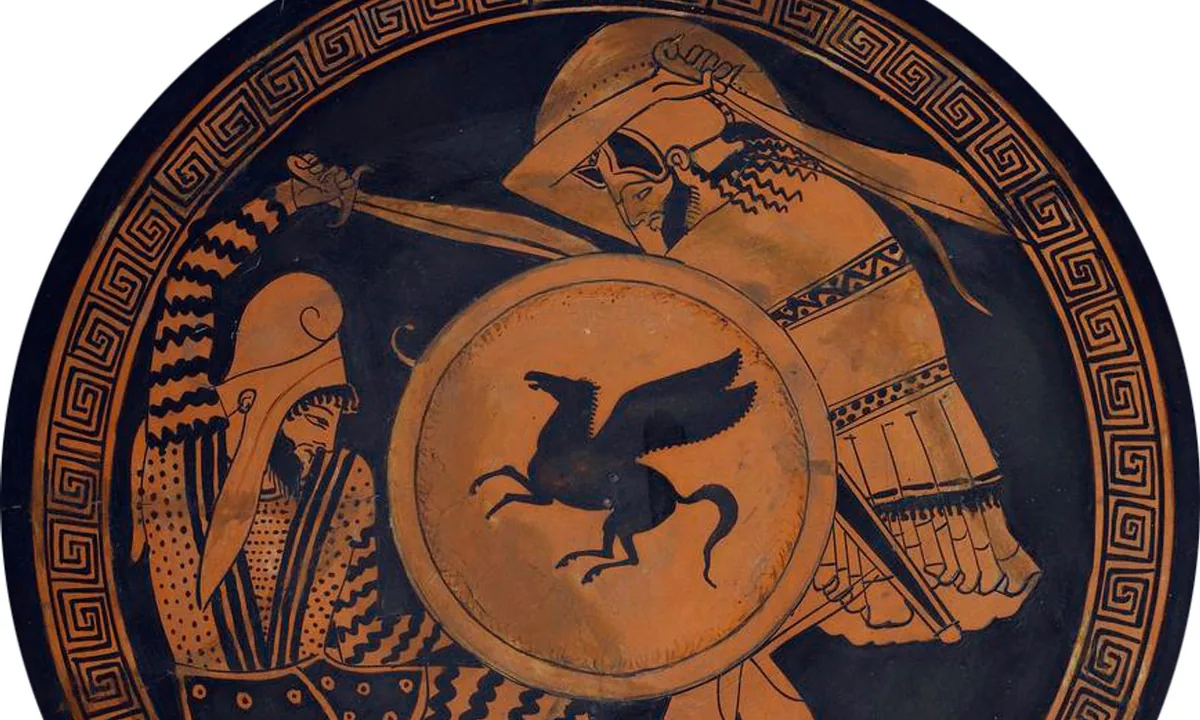
- A Greek heavy infantryman with bronze helmet, large round shield and spear, usually a citizen who paid for his own armour.
- Phalanx
- Hoplites fighting shoulder to shoulder in a deep block, shields overlapping.
- Ionia
- The Greek cities on the west coast of Asia Minor (modern Turkey), under Persian rule from the 540s BCE.
- Medism
- Siding with the Persians, whom Greeks often called the Medes.
Test yourself
Which city did Ionian rebels, helped by Athenian ships, burn in 498 BCE?
- Babylon
- Persepolis
- Sardis
- Susa
Show the answer
Sardis. Sardis was the seat of the Persian governor in western Asia Minor. Its burning gave Darius a reason to punish Athens and Eretria.
The full lesson in the app ends with 5 questions like this one.
Connected stories
- Themistocles and the Battle of Salamis: The war at sea, decided at Salamis, ran alongside the land battles of 480 BCE.
- Alexander the Great: From Macedon to India: A century and a half later, Alexander invaded Persia claiming revenge for Xerxes' burning of Athens.
- The Nile: How a River Made Egypt: Herodotus wrote about Egypt, then a Persian province, in the same Histories that tell the story of Marathon.
Frequently asked questions
Why did Persia invade Greece?
Athens and Eretria helped the Ionian Revolt and the burning of Sardis in 498 BCE. Persian kings were expanding their empire westward into Europe. Greek cities were divided: many submitted, so the resisters were few and had to act together.
What happened after the Persian Wars?
Themistocles' new fleet of triremes won the decisive battle at Salamis in 480 BCE. After the victory, Athens led a new alliance of Aegean cities against Persia. Herodotus wrote his Histories to explain why Greeks and Persians had gone to war.
Which city did Ionian rebels, helped by Athenian ships, burn in 498 BCE?
Sardis. Sardis was the seat of the Persian governor in western Asia Minor. Its burning gave Darius a reason to punish Athens and Eretria.
What is the main primary source for “The Persian Wars: Marathon and Thermopylae”?
Herodotus, quoting the Spartans' epitaph at Thermopylae, Histories 7.228 (c. 430 BCE). Translation by G. C. Macaulay (1890). The epitaph is traditionally credited to the poet Simonides, though Herodotus names him only as the author of another epitaph on the same battlefield.
Sources
- Herodotus, Histories, Books 5–9
- Tom Holland, Persian Fire: The First World Empire and the Battle for the West (2005)
- Peter Green, The Greco-Persian Wars (1996)
- Paul Cartledge, Thermopylae: The Battle That Changed the World (2006)
Images are credited under each picture. Paintings and photographs come from public collections via Wikimedia Commons; scenes with no surviving image are marked as illustrations.
