Ancient Greece · 461–429 BCE
Who Was Pericles? The Golden Age of Athens
In short
- Pericles led democratic Athens from the 460s to 429 BCE, introducing pay for jurors and a stricter citizenship law.
- Tribute from the allies helped pay for the Parthenon and Phidias' gold-and-ivory Athena.
- His Funeral Oration, as written by Thucydides, praised Athens as a democracy and “the school of Hellas”.
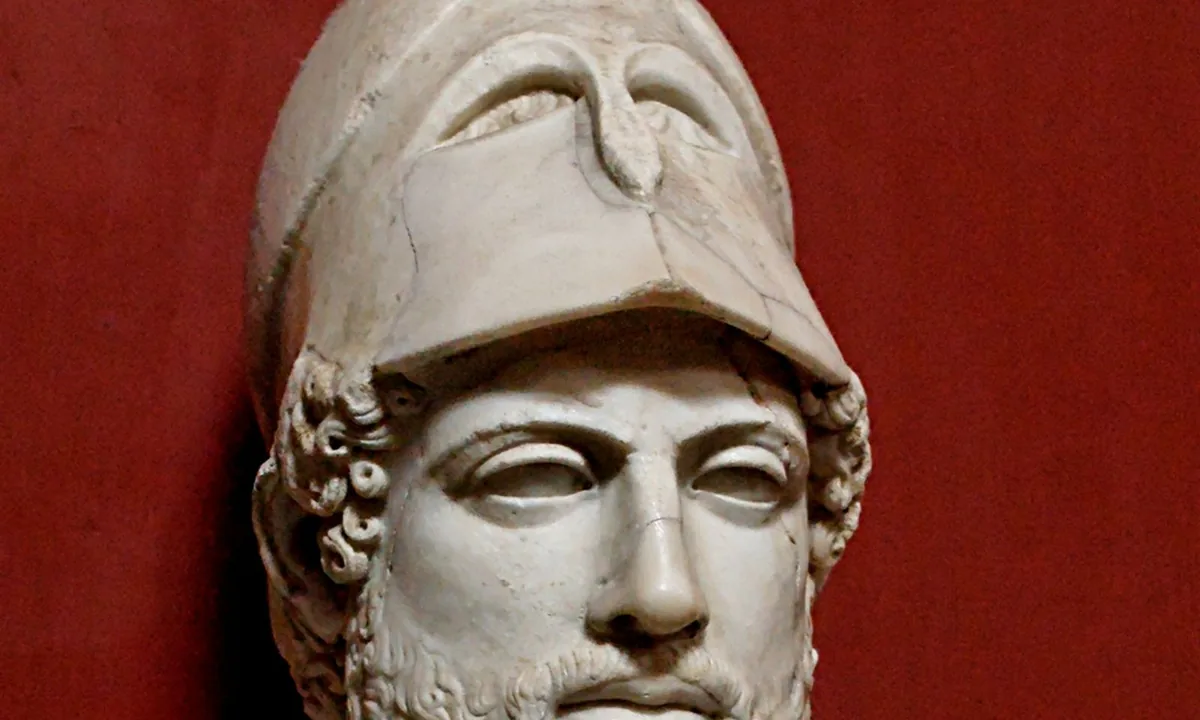
Last time: the Delian League became an Athenian empire, and in 454 BCE its treasury moved to Athens.
In the 440s BCE Pericles' opponents protested in the Assembly that the city was dressing itself up like a vain woman in jewels, with money its allies had paid for their defence. Pericles answered that as long as Athens protected the allies, it owed them no account of how it spent their money. The Assembly sided with Pericles, and the Parthenon went up.
An aristocrat for the people
Pericles was born around 495 BCE into the top of Athenian society: his mother was a niece of Cleisthenes, and his father Xanthippus had commanded the fleet against Persia. As a young man he paid for the staging of Aeschylus' play The Persians in 472 BCE.
He rose as an ally of Ephialtes, who in 462/1 BCE stripped the old aristocratic council of the Areopagus of most of its powers. When Ephialtes was murdered soon after, Pericles became the leading voice of the democracy. From 443 BCE he was elected general every year until his death.
Paying citizens to govern
Athenian juries were huge, often hundreds of men, and they sat for whole days. Pericles introduced pay for jurors, so that a poor man could afford to serve. His critics called it a bribe; his supporters called it the only way to make democracy real.
He also narrowed who counted. A law of 451/0 BCE, proposed by Pericles, limited citizenship to men whose mother and father were both Athenian. Being Athenian had become valuable, and the city guarded it.
Marble from tribute
The Persians had burned the temples on the Acropolis in 480 BCE. From 447 BCE Athens rebuilt them on a scale no Greek city had attempted. The Parthenon took fifteen years; inside stood Phidias' statue of Athena, about 12 metres tall, of gold and ivory over a wooden frame.
Much of the money came from the League. The attack described at the start of this lesson, Plutarch says, was led by Thucydides, son of Melesias (not the historian); he lost an ostracism vote in 443 BCE and went into exile. The building programme gave work to thousands of stonecutters, carters and sculptors.

A city of argument
Pericles' Athens drew talent from across the Greek world. Sophocles and Euripides wrote tragedies for its festivals; the philosopher Anaxagoras taught there, as did travelling teachers of rhetoric called sophists. Later writers say Herodotus gave readings from his Histories in the city.
Pericles' partner was Aspasia, a woman from Miletus. As a foreigner she could not marry him under his own citizenship law, and comic poets mocked her mercilessly. Their son was made a citizen only by a special vote.
A speech for the dead
In 431 BCE war broke out with Sparta. That winter Pericles spoke at the public funeral for the first Athenians killed. In Thucydides' version he praised a city where power lay with the many and anyone could serve, calling Athens “the school of Hellas”.
Thucydides admits he wrote speeches as the speakers were likely to have spoken, keeping to the general sense. So the Funeral Oration is Pericles' ideas in Thucydides' words. Within two years plague had broken out in the crowded city, and Pericles himself was dead.

In their own words
“Our constitution does not copy the laws of neighbouring states; we are rather a pattern to others than imitators ourselves. Its administration favours the many instead of the few; this is why it is called a democracy.”
Thucydides, reporting Pericles, History of the Peloponnesian War 2.37, Speech given in the winter of 431/0 BCE; written down c. 431–400 BCE
Translation by Richard Crawley (1874). Thucydides heard Pericles speak, but says he wrote speeches in his own words, keeping to the general sense of what was said (1.22).
Why it happened
- The Delian League's tribute gave Athens the money for a huge building programme.
- Ephialtes' reforms shifted power from the aristocratic Areopagus to the Assembly, the Council and the courts.
- Pay for public service let poorer citizens take a real part in government.
What happened next
- Athens' wealth and power alarmed Sparta, and war broke out in 431 BCE. Read the story →
- Pericles died in the plague of 429 BCE, leaving Athens without a leader of his stature. Read the story →
- The Parthenon became the model for classical buildings from Rome to Washington.
Why it still matters
About half of the Parthenon's surviving sculptures are in the British Museum, removed by agents of Lord Elgin between 1801 and 1812. Greece has asked for them back for decades, and its Acropolis Museum, opened in 2009, displays casts in their place, in sight of the temple.
Key people
- Pericles
- Athenian statesman and general (c. 495–429 BCE), the leading figure of the democracy for over thirty years
- Ephialtes
- Reformer who stripped the Areopagus of its powers in 462/1 BCE and was murdered soon after
- Phidias
- Sculptor who made the gold-and-ivory Athena of the Parthenon and oversaw its sculpture
- Aspasia
- Pericles' partner, from Miletus, mocked by comic poets and admired by philosophers
- Thucydides
- Athenian general and historian who recorded the Funeral Oration
Key terms
- Strategos
- General: one of ten elected each year, the main political office that was chosen by vote rather than by lot.
- Areopagus
- Athens' ancient council of former magistrates, stripped of most political power in 462/1 BCE.
- Parthenon
- The temple of Athena Parthenos (“the Virgin”) on the Acropolis, built 447–432 BCE.
- Sophist
- A paid travelling teacher, especially of persuasive speaking, much in demand in democratic Athens.
Test yourself
What did Pericles introduce so that poorer citizens could serve on juries?
- Free meals at the city hall
- Pay for jurors
- Exemption from military service
- Seats reserved for farmers
Show the answer
Pay for jurors. Jury service took whole days. Pay meant a poor man did not lose a day's living by serving.
The full lesson in the app ends with 5 questions like this one.
Connected stories
- Cleisthenes and the Birth of Democracy in Athens: Pericles was a grand-nephew of Cleisthenes and took his democracy further.
- The Trial and Death of Socrates: Socrates spent his youth and middle age in Pericles' Athens.
Frequently asked questions
What made the golden age of Athens possible?
The Delian League's tribute gave Athens the money for a huge building programme. Ephialtes' reforms shifted power from the aristocratic Areopagus to the Assembly, the Council and the courts. Pay for public service let poorer citizens take a real part in government.
What happened after Pericles?
Athens' wealth and power alarmed Sparta, and war broke out in 431 BCE. Pericles died in the plague of 429 BCE, leaving Athens without a leader of his stature. The Parthenon became the model for classical buildings from Rome to Washington.
What did Pericles introduce so that poorer citizens could serve on juries?
Pay for jurors. Jury service took whole days. Pay meant a poor man did not lose a day's living by serving.
What is the main primary source for “Pericles and the Golden Age of Athens”?
Thucydides, reporting Pericles, History of the Peloponnesian War 2.37 (Speech given in the winter of 431/0 BCE; written down c. 431–400 BCE). Translation by Richard Crawley (1874). Thucydides heard Pericles speak, but says he wrote speeches in his own words, keeping to the general sense of what was said (1.22).
Sources
- Thucydides, History of the Peloponnesian War 1.22, 2.34–46, 2.65
- Plutarch, Life of Pericles
- Aristotle (attributed), The Athenian Constitution, chapters 25–27
- Donald Kagan, Pericles of Athens and the Birth of Democracy (1991)
Images are credited under each picture. Paintings and photographs come from public collections via Wikimedia Commons; scenes with no surviving image are marked as illustrations.
