Medieval Europe · 1455–1485
What Were the Wars of the Roses? York, Lancaster and Richard III
In short
- Henry VI's collapse and defeat in France led to a struggle between Lancaster and York from 1455.
- Edward IV won the throne in 1461 and regained it in 1471; after his death in 1483 his brother Richard III took the crown, and his nephews vanished.
- Henry Tudor defeated and killed Richard at Bosworth in 1485 and founded the Tudor dynasty.
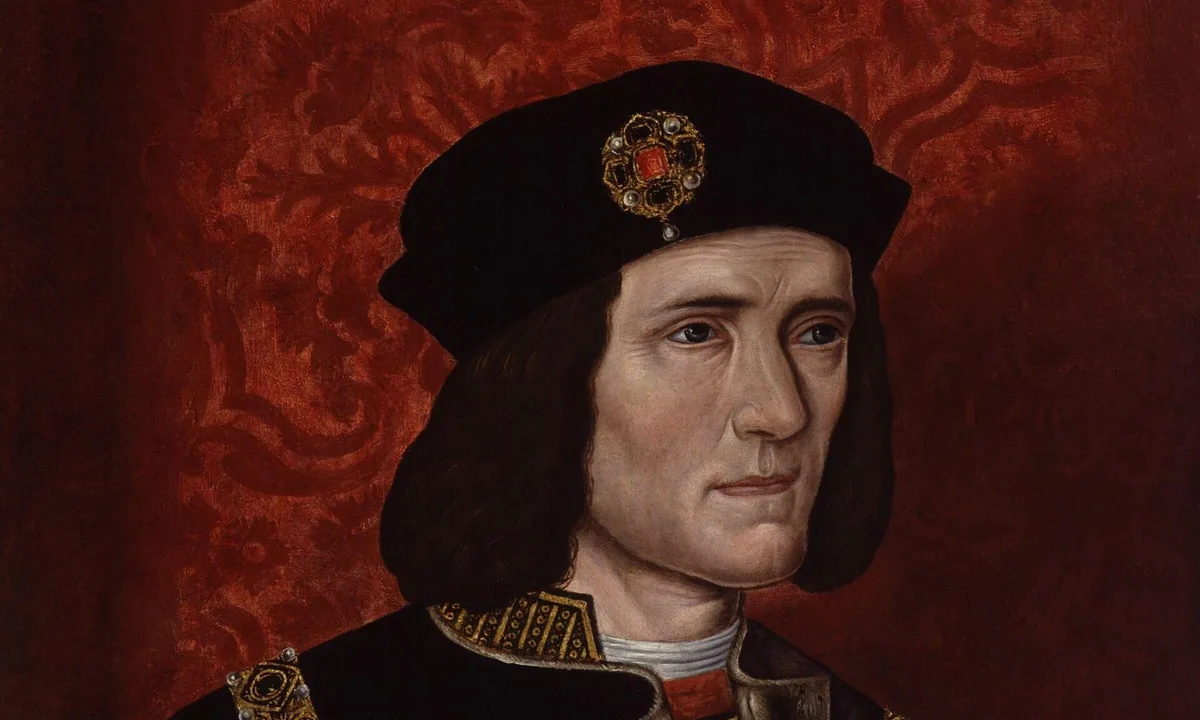
On 22 August 1485, near the Leicestershire village of Market Bosworth, an English king who had ridden out wearing his crown charged across a battlefield straight at his rival. Richard III was the last English king to die in battle, and for more than five centuries nobody knew exactly where his body lay.
A king who lost France
Henry VI became king as a baby in 1422 and was crowned king of France in Paris in 1431. As a man he was pious, gentle and a poor ruler. The defeat at Castillon in 1453 ended the war in France, and that summer he fell into a stupor that left him unable to recognise his own son.
The country was in the hands of rivals. Richard, Duke of York, a descendant of Edward III through two lines, acted as protector while the king was ill. The king's wife, Margaret of Anjou, distrusted York and fought to protect her son's claim. The first battle was fought at St Albans on 22 May 1455.

Roses, and few of them
The name Wars of the Roses comes later. The white rose was a real Yorkist badge; the red rose of Lancaster was little used until Henry Tudor made it famous, and most fighters wore the badges of their own lords. Shakespeare invented a scene in which nobles pick red and white roses in a garden, and Sir Walter Scott popularised the name in 1829.
The fighting came in bursts: St Albans in 1455, then a war from 1459. York was killed at Wakefield in December 1460, and his son Edward, Earl of March, won at Towton on 29 March 1461 in a snowstorm. A newsletter passed on the heralds' count of 28,000 dead; historians think that far too high, but Towton is often called the bloodiest battle ever fought in England. Edward was crowned Edward IV that summer.

Kingmaker and comeback
Edward's chief supporter, Richard Neville, Earl of Warwick, fell out with him and switched sides. In 1470 Warwick, allied with Margaret of Anjou, restored Henry VI. Edward fled to the Burgundian Netherlands, came back with an army in 1471 and defeated and killed Warwick at Barnet in April, then crushed the Lancastrians at Tewkesbury in May, where Henry VI's only son was killed.
Henry VI was found dead in the Tower of London the same month, probably murdered on Edward's orders. Edward IV reigned in peace until his sudden death in April 1483, leaving two sons: Edward, aged twelve, and Richard, nine.

The princes in the Tower
Edward's brother Richard, Duke of Gloucester, was named protector. In June 1483 his supporters claimed that Edward IV's marriage to Elizabeth Woodville had been invalid, so that the boys were illegitimate, and Richard took the crown himself. The two princes were last seen in the Tower of London that summer.
What happened to them is the great unsolved mystery of the period. Richard is the usual suspect, as Tudor writers, followed by Shakespeare, insisted, but others have been named, and no evidence has ever settled it. Two skeletons found in the Tower in 1674 have never been proven to be theirs.

Bosworth
Richard's seizure of the throne split the Yorkists. In August 1485 Henry Tudor, a Lancastrian claimant through his mother Margaret Beaufort, landed in Wales with French mercenaries and marched inland. Richard met him near Market Bosworth on 22 August with an army that outnumbered him.
The Stanley brothers, Henry's stepfather Lord Stanley and Sir William Stanley, kept their men apart and waited. According to the Tudor historian Polydore Vergil, Richard charged toward Henry himself; Sir William then attacked on Henry's side, and Richard was cut down. The Crowland Chronicle's anonymous author says he fell fighting “like a brave and most valiant prince”. Henry took the crown and in January 1486 married Edward IV's daughter Elizabeth of York, uniting the two houses.

In their own words
“For while fighting, and not in the act of flight, the said king Richard was pierced with numerous deadly wounds, and fell in the field like a brave and most valiant prince.”
The Second Continuator of the Crowland Chronicle, Continuation of the History of Croyland, on the Battle of Bosworth, 1486
Translation by Henry T. Riley, Ingulph's Chronicle of the Abbey of Croyland (Bohn, 1854), p. 504. The anonymous continuator, probably a well-informed royal councillor or clerk, wrote in April 1486 under Henry VII; he is hostile to Richard's seizure of the throne but credits his courage.
Why it happened
- Henry VI's weakness and mental breakdown left the kingdom without effective government.
- Defeat in France brought soldiers home and discredited the Lancastrian court.
- Two branches of Edward III's family, Lancaster and York, each had a plausible claim to the throne.
What happened next
- The Tudor dynasty began with Henry VII in 1485.
- Several great noble families lost their heads and heirs, and the Tudor crown kept a tighter grip on the nobility.
- Printing arrived in England during the wars: William Caxton set up his press in 1476 and printed Malory's Morte d'Arthur in 1485.
Why it still matters
In 2012 archaeologists from the University of Leicester found a skeleton under a car park on the site of the Greyfriars church, with a curved spine and battle wounds to the skull. DNA from descendants of Richard's sister matched it, and in March 2015, after his coffin had been carried past crowds through Leicestershire and the city, Richard III was reburied in Leicester Cathedral.
Key people
- Henry VI
- Lancastrian king, whose illness and defeat in France helped start the wars
- Edward IV
- Yorkist king 1461–83 who won the throne at Towton
- Richard III
- Edward IV's brother, king from 1483 until his death at Bosworth in 1485
- Henry Tudor
- Winner of Bosworth, who became Henry VII and founded the Tudor dynasty
Key terms
- Lancastrians
- Supporters of Henry VI and his heirs, descended from John of Gaunt, Duke of Lancaster.
- Yorkists
- Supporters of Richard, Duke of York, and his sons, descended from Edward III through two lines.
- Protector
- A noble named to govern for a king who was a child or incapable.
- Titulus Regius
- The 1484 act of Parliament declaring Edward IV's children illegitimate and confirming Richard III as king.
Test yourself
Which battle in August 1485 ended the reign of Richard III?
- Towton
- Barnet
- Tewkesbury
- Bosworth
Show the answer
Bosworth. Richard was killed at Bosworth on 22 August 1485. Towton (1461), Barnet and Tewkesbury (1471) belonged to the wars between Lancaster and York earlier on.
The full lesson in the app ends with 5 questions like this one.
Connected stories
- The Hundred Years' War and Agincourt: Defeat in the Hundred Years' War discredited Henry VI and sent soldiers home to a country in crisis.
- Joan of Arc: The recovery of France under Charles VII, begun with Joan, forced the English out and set off the crisis at home.
- Magna Carta, 1215: In 1215 barons tried to bind the king by law; in the 1400s rival noble factions fought to decide who the king should be.
Frequently asked questions
What caused the Wars of the Roses?
Henry VI's weakness and mental breakdown left the kingdom without effective government. Defeat in France brought soldiers home and discredited the Lancastrian court. Two branches of Edward III's family, Lancaster and York, each had a plausible claim to the throne.
What happened after the Wars of the Roses?
The Tudor dynasty began with Henry VII in 1485. Several great noble families lost their heads and heirs, and the Tudor crown kept a tighter grip on the nobility. Printing arrived in England during the wars: William Caxton set up his press in 1476 and printed Malory's Morte d'Arthur in 1485.
Which battle in August 1485 ended the reign of Richard III?
Bosworth. Richard was killed at Bosworth on 22 August 1485. Towton (1461), Barnet and Tewkesbury (1471) belonged to the wars between Lancaster and York earlier on.
What is the main primary source for “The Wars of the Roses and Richard III”?
The Second Continuator of the Crowland Chronicle, Continuation of the History of Croyland, on the Battle of Bosworth (1486). Translation by Henry T. Riley, Ingulph's Chronicle of the Abbey of Croyland (Bohn, 1854), p. 504. The anonymous continuator, probably a well-informed royal councillor or clerk, wrote in April 1486 under Henry VII; he is hostile to Richard's seizure of the throne but credits his courage.
Sources
- Ingulph's Chronicle of the Abbey of Croyland with the Continuations, translated by Henry T. Riley (Bohn, 1854)
- Michael Hicks, The Wars of the Roses (2010)
- Dan Jones, The Hollow Crown: The Wars of the Roses and the Rise of the Tudors (2014)
- Charles Ross, Richard III (1981)
Images are credited under each picture. Paintings and photographs come from public collections via Wikimedia Commons; scenes with no surviving image are marked as illustrations.
