Cold War Quiz
This Cold War quiz has 20 questions, from the Truman Doctrine and the Berlin Airlift to the Cuban Missile Crisis, Vietnam, détente and the fall of the Berlin Wall, with the space race from Sputnik to the Moon landing. It starts easy and gets harder.
Tap an answer to start, or use the keys A to D. No sign-up.
-
1. Gagarin landed inside the Vostok capsule.
Show the answer
B. False. He ejected about seven kilometres up and came down separately by parachute. The Soviets hid this for years, because record rules said the pilot had to land with his craft.
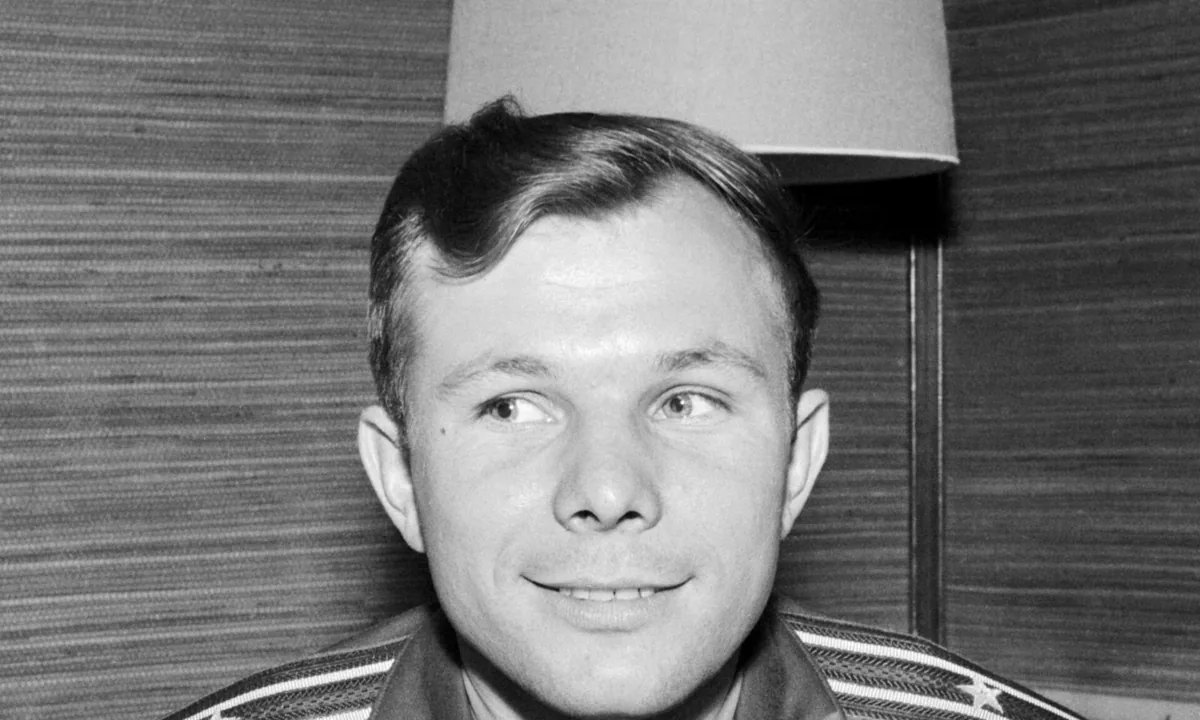
Yuri Gagarin in Finland, 3 July 1961, on a tour after his flight (photograph by Arto Jousi, Finnish Museum of Photography). Arto Jousi, Finnish Museum of Photography · Public domain · Wikimedia Commons -
2. Why did the United States and the Soviet Union avoid fighting each other directly?
Show the answer
A. A nuclear war could destroy whole cities in minutes. Once both sides had atomic bombs (the Soviet Union tested its first in 1949), a direct war risked destruction on both sides. So they competed through spying, an arms race and proxy wars.
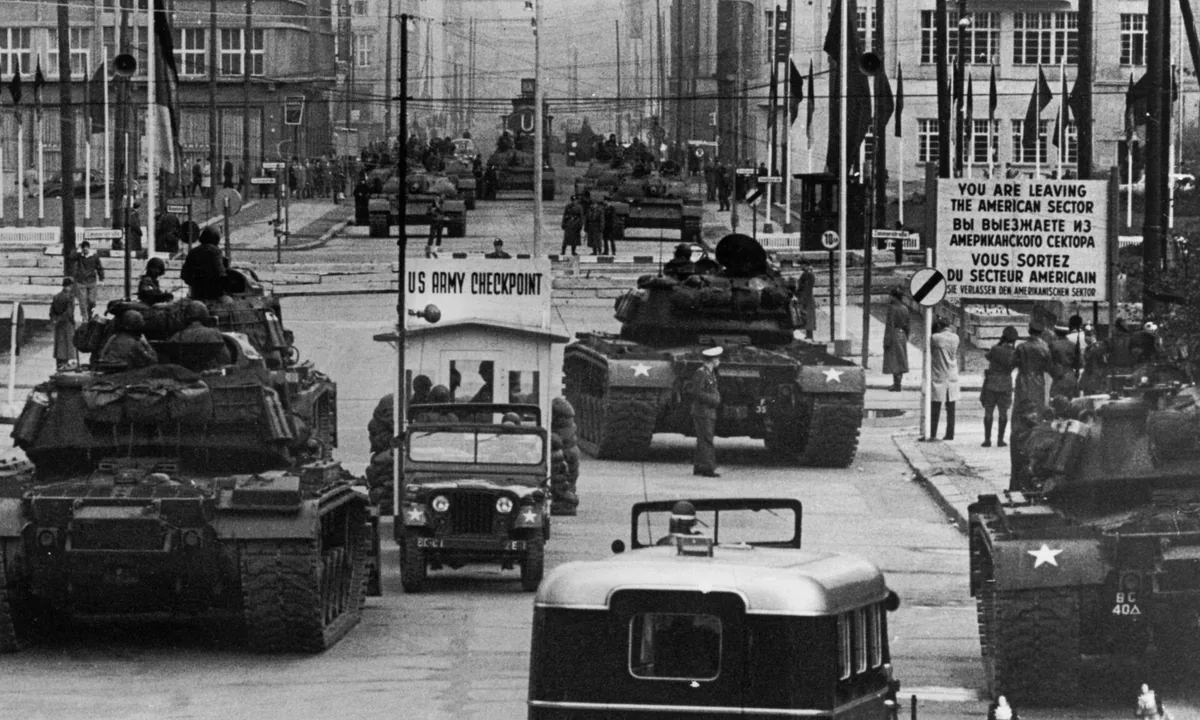
US Army tanks at Checkpoint Charlie, the crossing between the American and Soviet sectors of Berlin, during the October 1961 standoff with Soviet tanks. US Army, 1961 · Public domain · Wikimedia Commons -
3. Who was the first American in space, on 5 May 1961?
Show the answer
A. Alan Shepard. Alan Shepard flew a fifteen-minute suborbital flight. John Glenn was the first American to orbit, in February 1962.
Yuri Gagarin in Finland, 3 July 1961, on a tour after his flight (photograph by Arto Jousi, Finnish Museum of Photography). Arto Jousi, Finnish Museum of Photography · Public domain · Wikimedia Commons -
4. Which 1947 policy committed the United States to stopping communism from spreading?
Show the answer
D. The Truman Doctrine. On 12 March 1947 Truman asked Congress to help Greece and Turkey. His promise to contain communism became known as the Truman Doctrine; the Marshall Plan was aid to rebuild Europe.
US Army tanks at Checkpoint Charlie, the crossing between the American and Soviet sectors of Berlin, during the October 1961 standoff with Soviet tanks. US Army, 1961 · Public domain · Wikimedia Commons -
5. What was Stalin's 1936–1938 campaign of mass arrests and executions called?
Show the answer
A. The Great Purge. In the Great Purge, also called the Great Terror, roughly 700,000 people were executed. The Gulag was the system of camps where many more were sent.
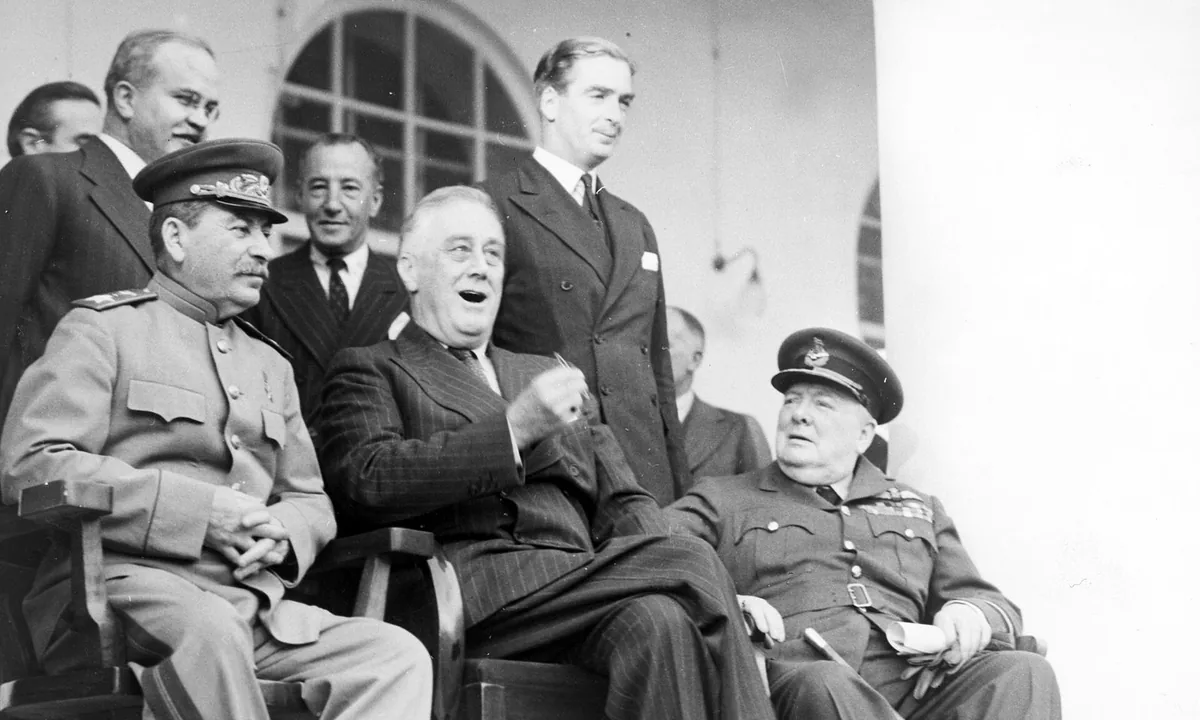
Joseph Stalin (left, in marshal's uniform) with Franklin D. Roosevelt and Winston Churchill at the Tehran Conference, Iran, in late November 1943. Molotov and Anthony Eden stand behind them. US Army Signal Corps, 1943 · Public domain · Wikimedia Commons -
6. Why did a small satellite frighten many Americans?
Show the answer
C. The rocket that launched it could also carry a nuclear warhead. The R-7 was an intercontinental ballistic missile, a rocket built to carry a bomb between continents. If it could lift a satellite, it could lift a bomb.
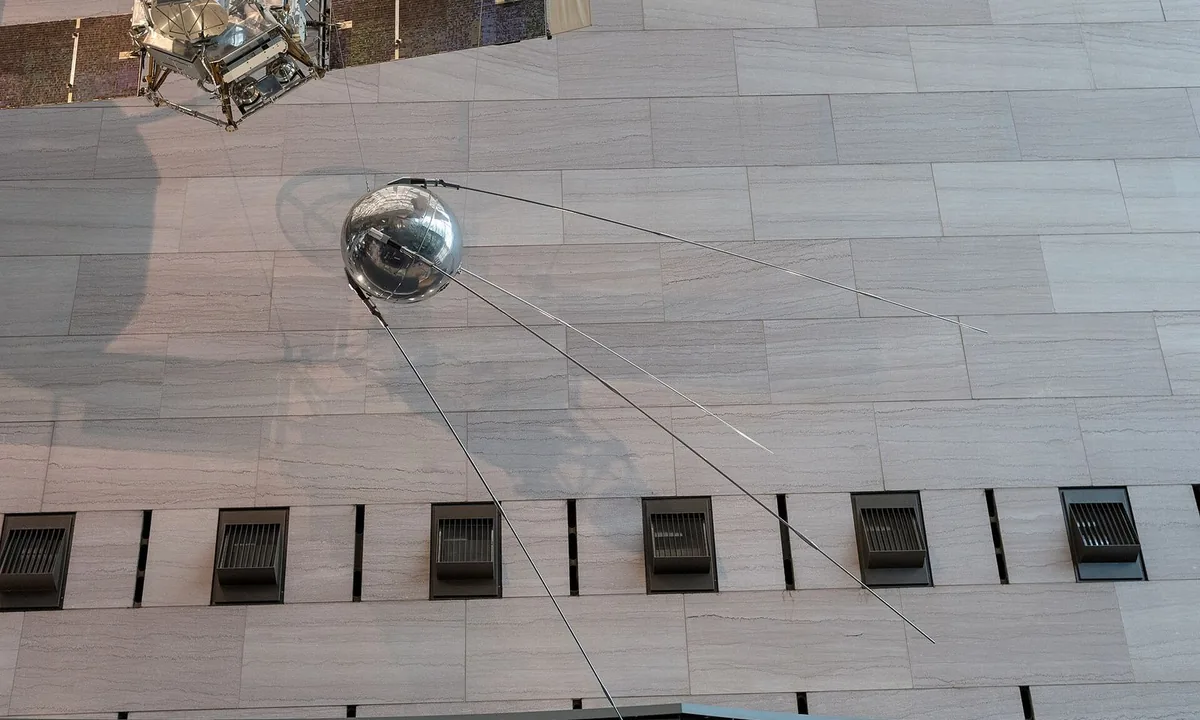
Sputnik 1 (full-size replica, National Air and Space Museum, Washington): a polished aluminium sphere 58 cm across with four trailing antennas. Mys 721tx · CC BY-SA 3.0 · Wikimedia Commons -
7. Why did Armstrong take manual control of Eagle during the descent?
Show the answer
D. The automatic landing site was a field of boulders. He saw that the planned landing spot was covered with rocks. He flew on to find a safer place, using up fuel.
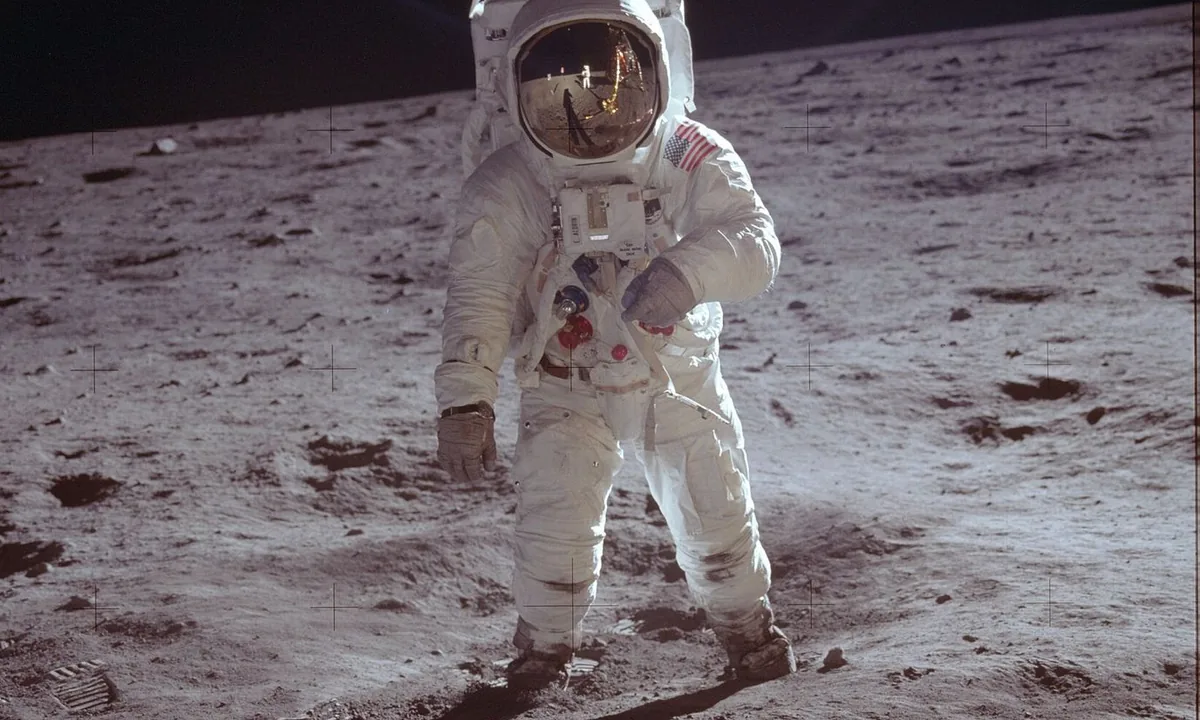
Buzz Aldrin on the Moon, 20 July 1969, photographed by Neil Armstrong, who is reflected in Aldrin's visor (NASA, AS11-40-5903). Neil Armstrong / NASA · Public domain · Wikimedia Commons -
8. Kennedy answered the Soviet missiles in Cuba by bombing the missile sites at once.
Show the answer
B. False. Kennedy rejected the advice to bomb the sites. He chose a naval blockade, the “quarantine”, which gave both sides time to find a peaceful way out.
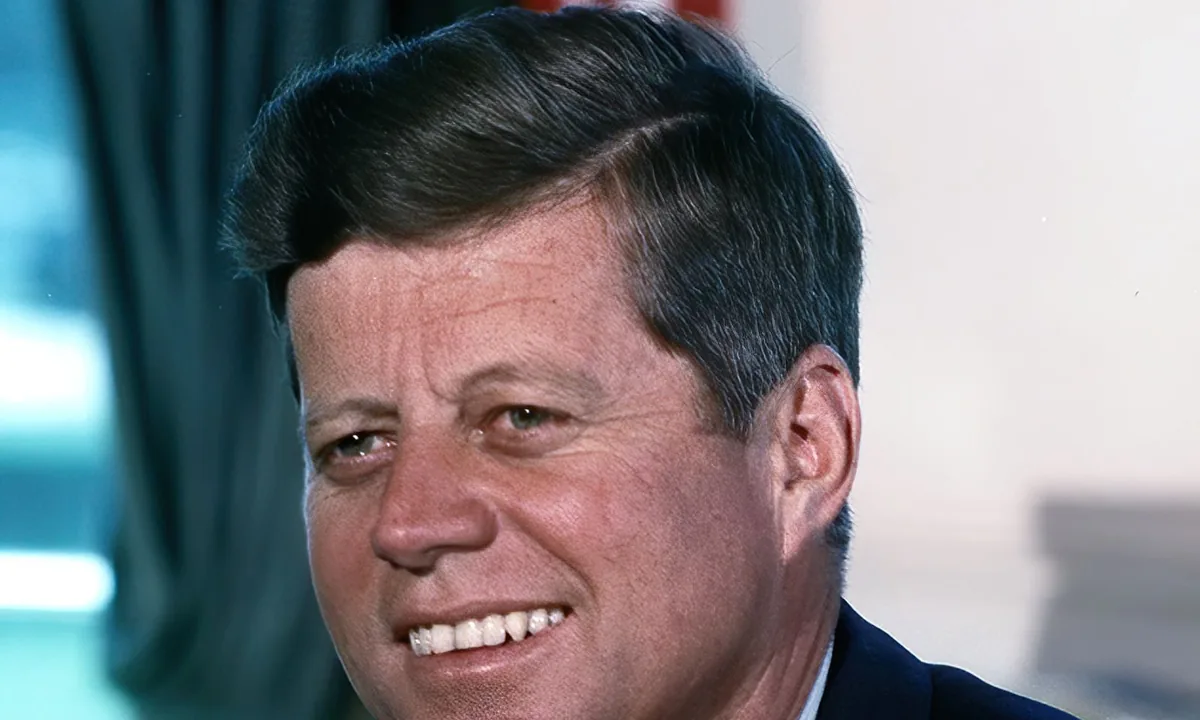
John F. Kennedy in the Oval Office, 11 July 1963, photographed by White House photographer Cecil Stoughton. Cecil Stoughton, 1963 · Public domain · Wikimedia Commons -
9. Reagan's words were tough, but he was also willing to negotiate. Which 1987 treaty got rid of a whole class of nuclear missiles?
Show the answer
B. The INF Treaty. The INF Treaty, signed at the White House on 8 December 1987, eliminated ground-launched missiles with a medium range. Reykjavik in 1986 ended without a deal.
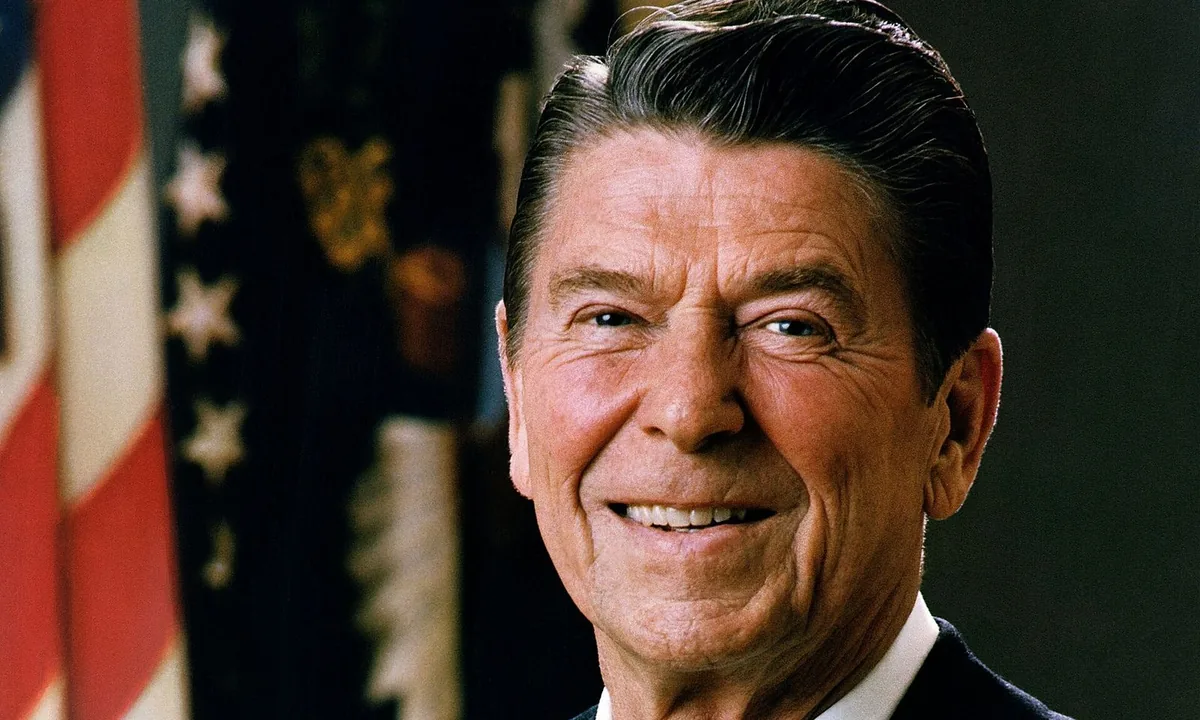
Ronald Reagan's official presidential portrait, taken on 7 February 1981, weeks after he took office. Michael Evans, 1981 · Public domain · Wikimedia Commons -
10. South Korea signed the 1953 armistice at Panmunjom.
Show the answer
B. False. South Korea refused to sign. The armistice was an agreement to stop fighting, not a peace treaty, and no peace treaty has ever been signed.
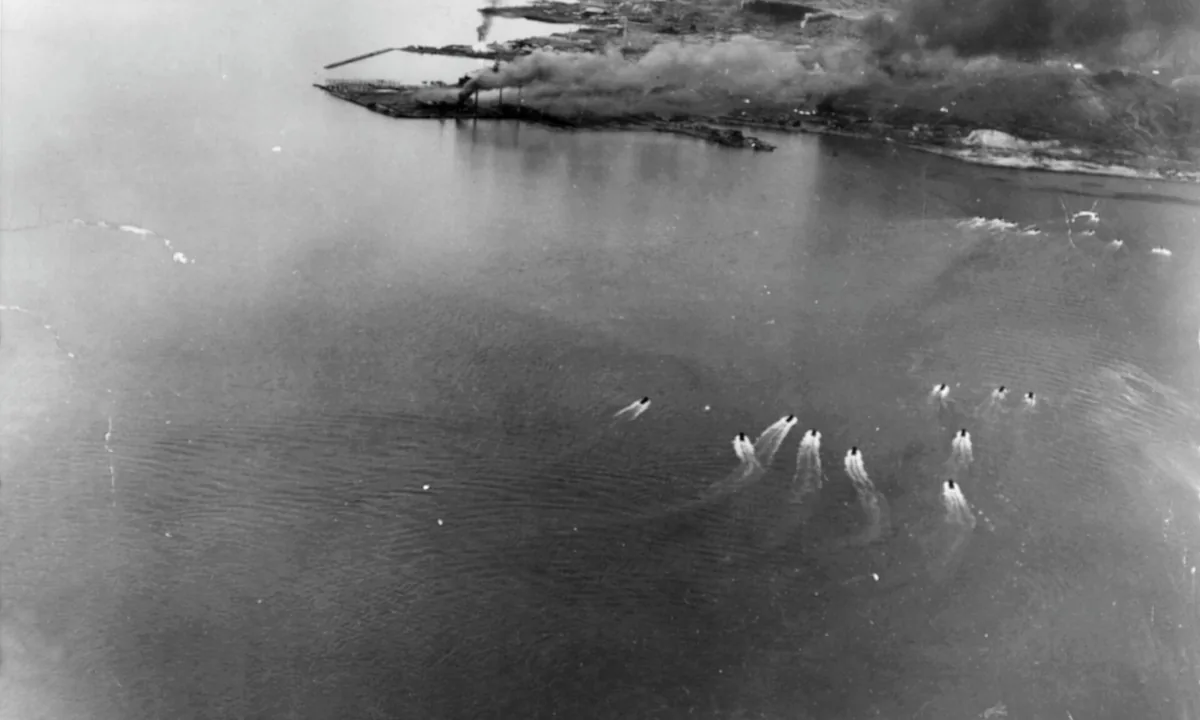
Landing craft head for Red Beach as smoke rises over Inchon, Korea, during the UN amphibious landing on 15 September 1950. US Navy, 1950 · Public domain · Wikimedia Commons -
11. What did the United States secretly agree to do to end the crisis?
Show the answer
D. Remove its Jupiter missiles from Turkey. Robert Kennedy told the Soviet ambassador the missiles in Turkey would go. The deal stayed secret, and they left in April 1963.
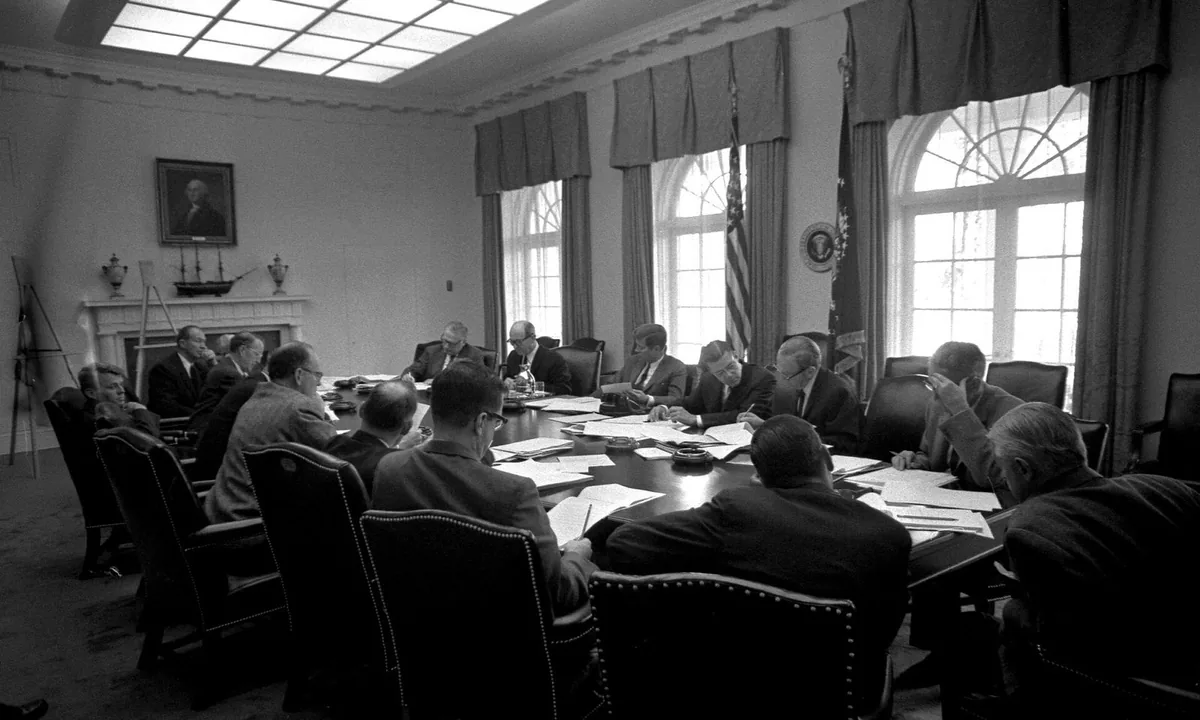
President Kennedy meets his crisis team, the Executive Committee of the National Security Council (ExComm), in the White House Cabinet Room on 29 October 1962. Cecil Stoughton, 1962 · Public domain · Wikimedia Commons -
12. What was the name of the sweet drops for Berlin's children that the pilot Gail Halvorsen started?
Show the answer
B. Operation Little Vittles. Operation Vittles was the whole American airlift and Plainfare was Britain's; Little Vittles was the name for the sweet drops.
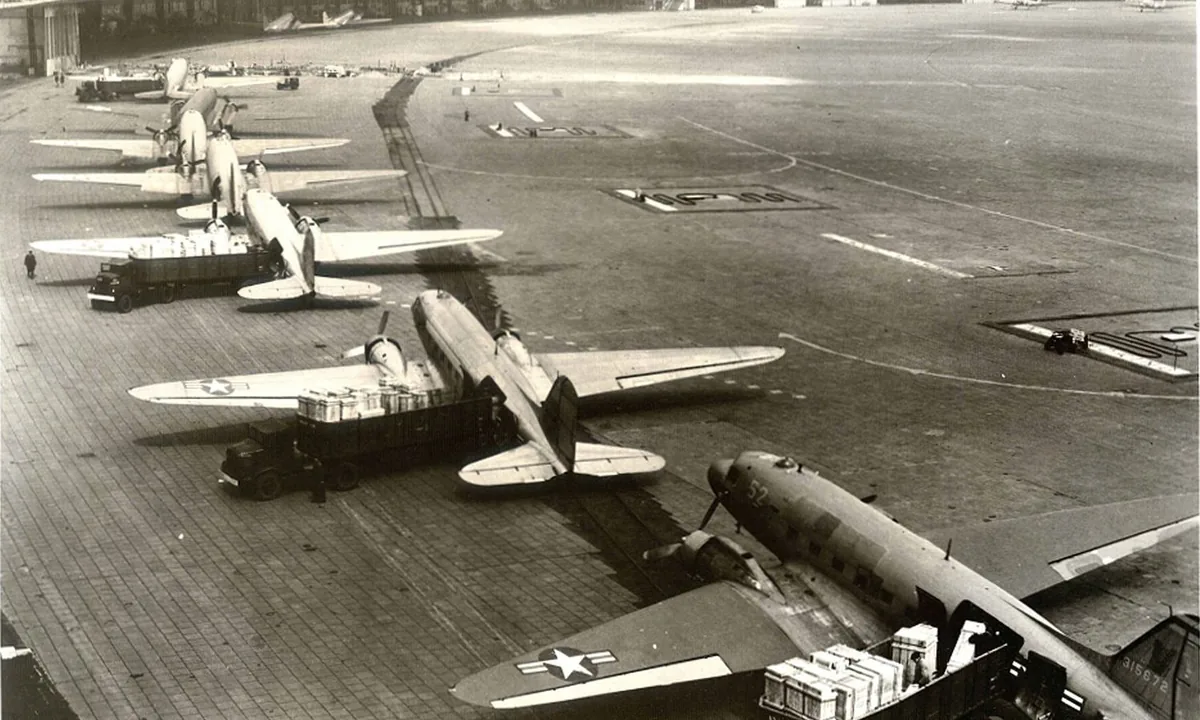
American C-47 transport planes in the unloading line at Tempelhof airport, West Berlin, during the Berlin Airlift (Operation Vittles), 1948-49. US Air Force, 1948 · Public domain · Wikimedia Commons -
13. What did Apollo 8 achieve in December 1968?
Show the answer
D. The first crewed orbit of the Moon. Apollo 8 carried Borman, Lovell and Anders around the Moon ten times, though it did not land.
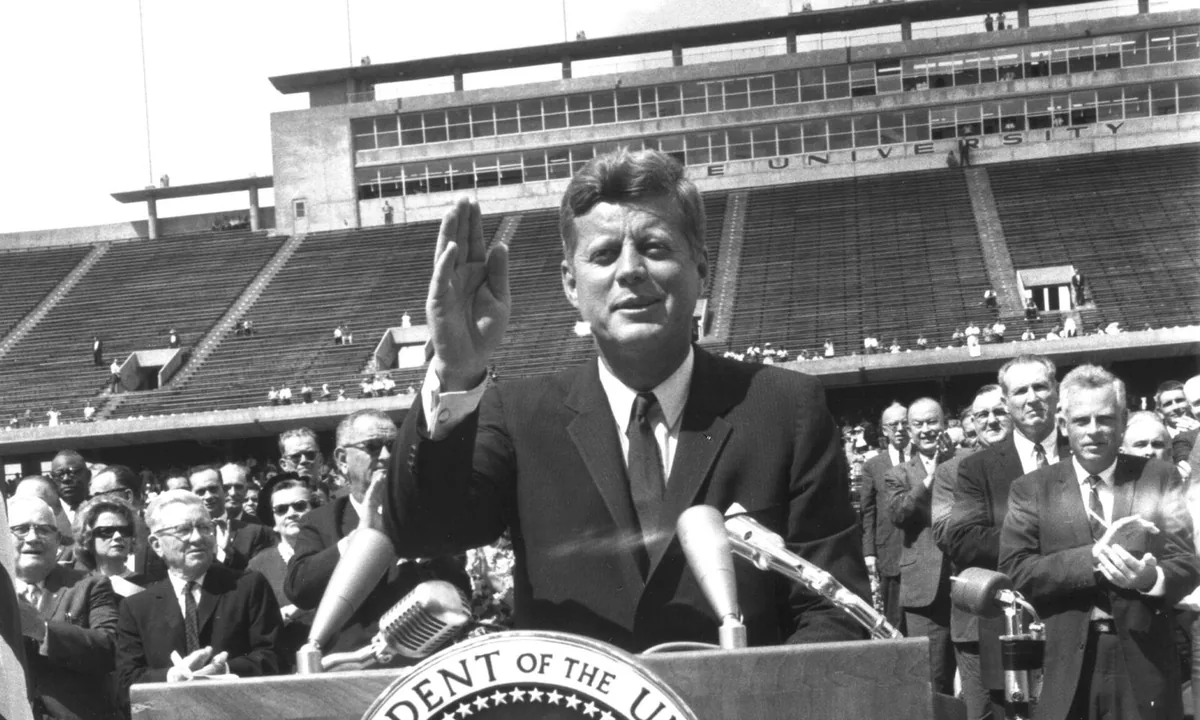
President John F. Kennedy speaking at Rice University stadium, Houston, 12 September 1962 (NASA). NASA · Public domain · Wikimedia Commons -
14. What did the Truman Doctrine commit the United States to?
Show the answer
B. Containing communism and stopping it spreading. The Truman Doctrine replaced the old isolationism, the habit of staying out of other countries' quarrels, with a policy of containment.
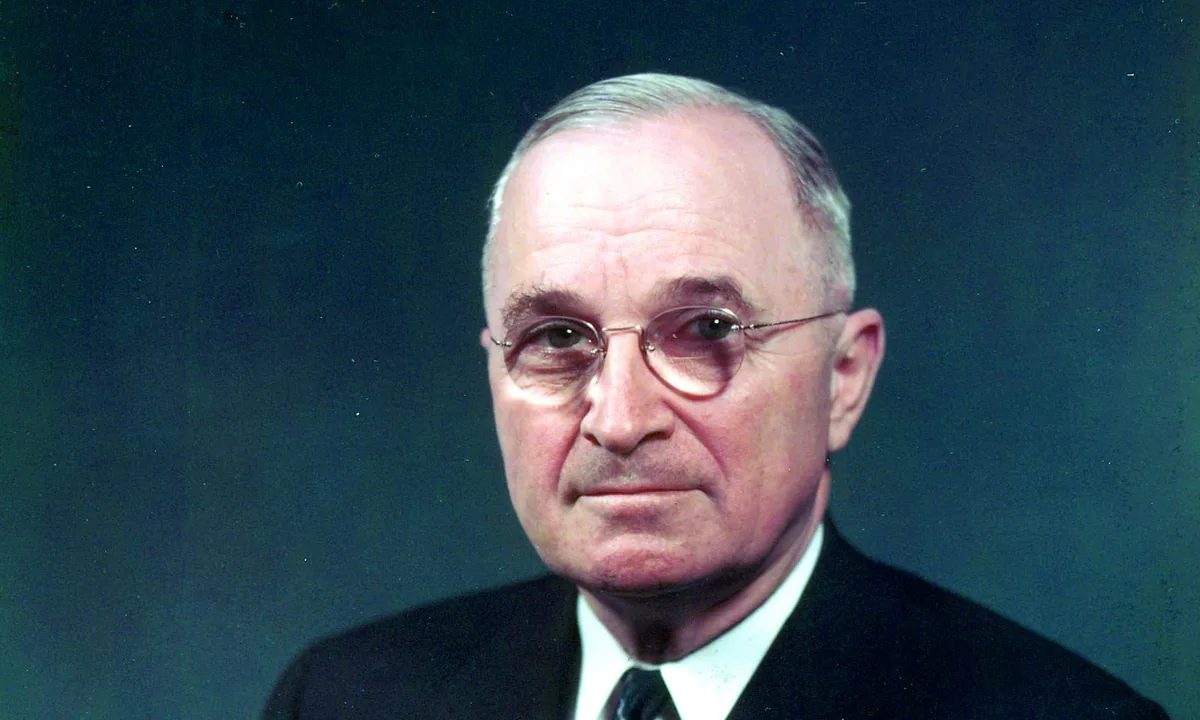
Harry S. Truman, president from 1945 to 1953, in a portrait from about 1947. Truman Library (NARA), c. 1947 · Public domain · Wikimedia Commons -
15. Why did Stalin reject the Marshall Plan?
Show the answer
D. He feared it would bring American influence. Stalin feared that American money would bring American influence into the satellite states, so he refused it and made Czechoslovakia pull out of the planning talks.
Joseph Stalin (left, in marshal's uniform) with Franklin D. Roosevelt and Winston Churchill at the Tehran Conference, Iran, in late November 1943. Molotov and Anthony Eden stand behind them. US Army Signal Corps, 1943 · Public domain · Wikimedia Commons -
16. What did the first satellite, Sputnik 1, carry?
Show the answer
A. A radio transmitter and batteries. Sputnik 1 was a simple polished sphere with a radio transmitter. Laika flew on Sputnik 2.
Sputnik 1 (full-size replica, National Air and Space Museum, Washington): a polished aluminium sphere 58 cm across with four trailing antennas. Mys 721tx · CC BY-SA 3.0 · Wikimedia Commons -
17. What does the French word “détente” mean?
Show the answer
D. Relaxation. Détente means “relaxation”: the superpowers tried to ease tension rather than end their rivalry.
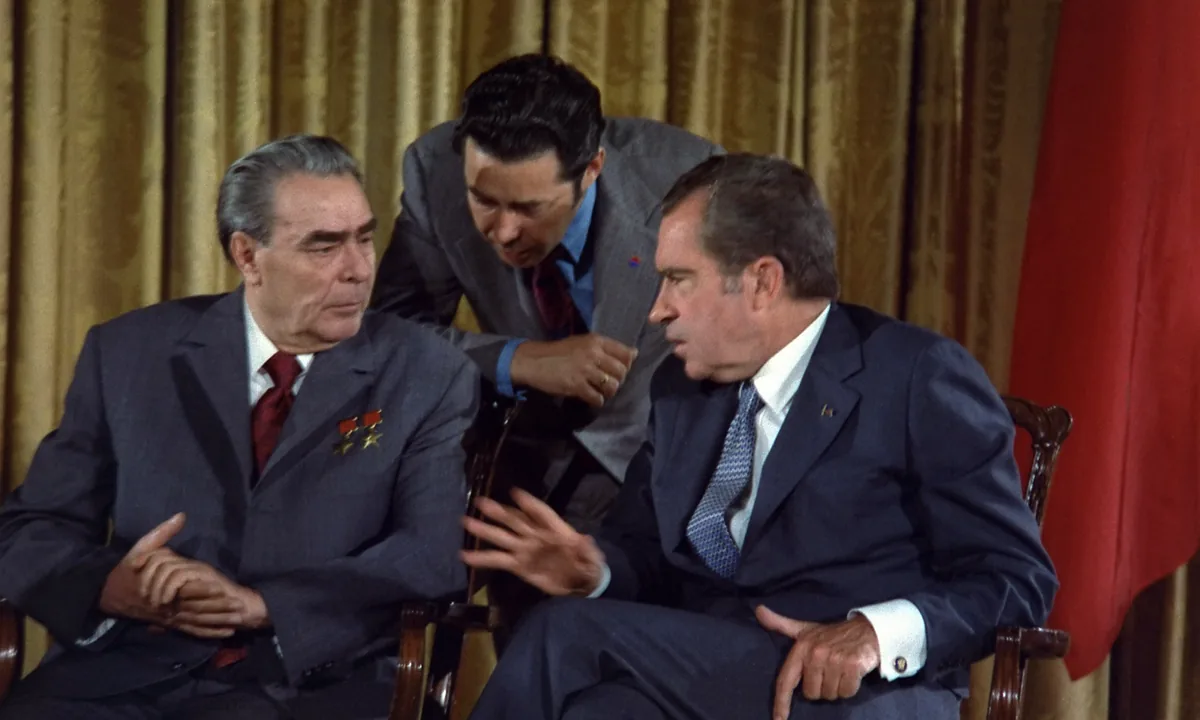
Soviet leader Leonid Brezhnev and President Richard Nixon talk, with interpreter Viktor Sukhodrev between them, during Brezhnev's visit to the United States on 19 June 1973. Robert LeRoy Knudsen, 1973 · Public domain · Wikimedia Commons -
18. Why did the communist governments of Eastern Europe fall so quickly in 1989?
Show the answer
A. Gorbachev would no longer send in Soviet troops. Those governments had relied on the threat of Soviet tanks. Once Gorbachev made clear the threat was gone, they could not survive their own people's anger.
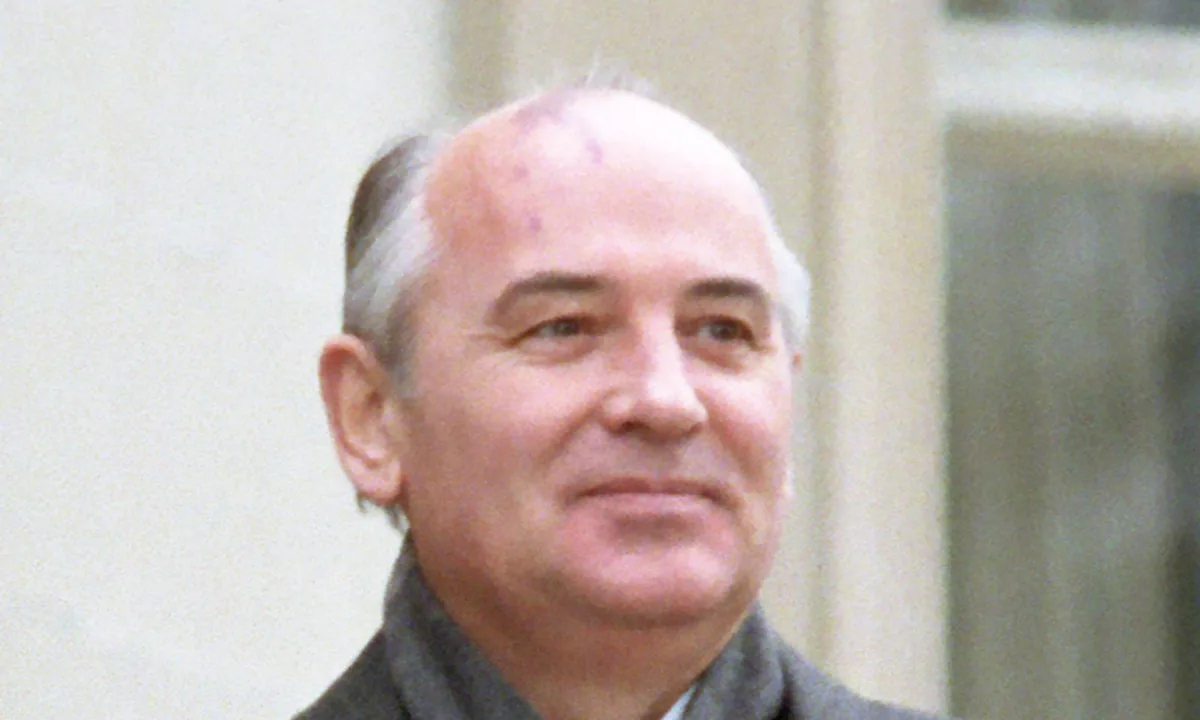
Mikhail Gorbachev at his first summit with Ronald Reagan in Geneva, 19 November 1985, eight months after he became Soviet leader. White House Photo Office, 1985 · Public domain · Wikimedia Commons -
19. Why did crowds of East Berliners rush to the checkpoints on the night of 9 November 1989?
Show the answer
D. Schabowski said the new rule applied at once. The travel rule was meant to start the next morning, but Schabowski said “immediately”, and West German television spread the news.
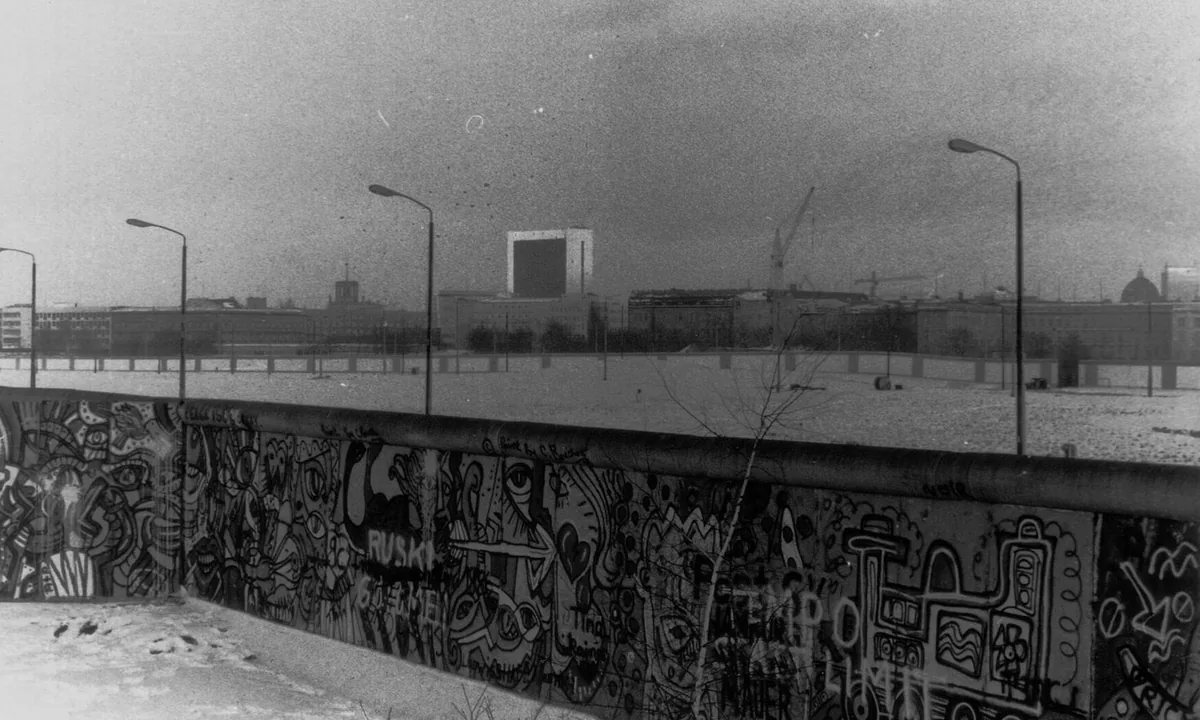
The Berlin Wall in 1986, seen from West Berlin south of the Brandenburg Gate: graffiti on the western face, and behind it the guarded "death strip" and East Berlin. Lklundin, 1986 · CC BY-SA 4.0 · Wikimedia Commons -
20. In military terms, the Tet Offensive was a victory for the communist attackers.
Show the answer
B. False. The attackers lost on the battlefield, but Tet convinced many Americans that victory was far away, and that mattered more.
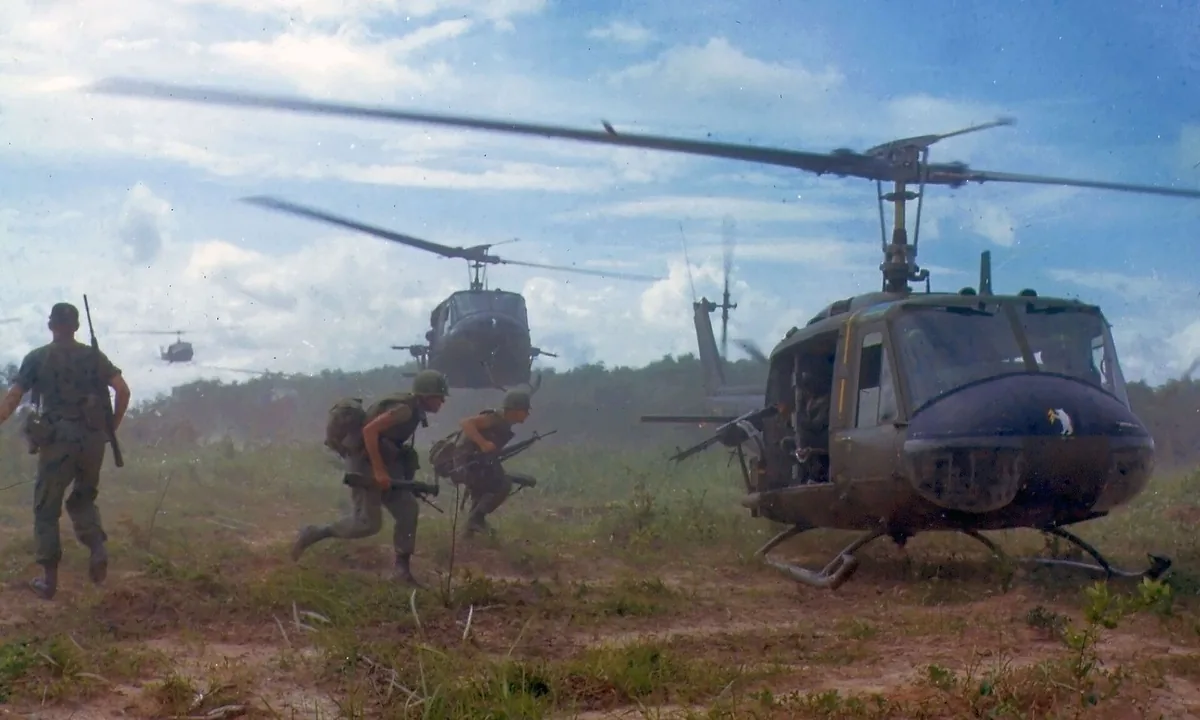
US Army UH-1D "Huey" helicopters airlift troops of the 2nd Battalion, 14th Infantry northeast of Cu Chi, South Vietnam, during Operation Wahiawa, May 1966. James K. F. Dung, US Army, 1966 · Public domain · Wikimedia Commons
Your score
You got right. Want the stories behind them?
Aurelius: Learn History has 700+ more questions like these, each one after the five-minute illustrated story it comes from, across 18 eras. Free to try.
Play next: World War 2 Quiz · American History Quiz · History Quiz
About this quiz
The leaders are here too, from Truman and Stalin to Kennedy, Reagan and Gorbachev.
The questions come from 16 lessons in the app: Gagarin's Flight, 1961, The Beginning of the Cold War, Joseph Stalin: The Iron Fist, Sputnik, 1957: The Beep That Shocked America, Apollo 11: The First Footsteps on the Moon, John F. Kennedy: The New Frontier, Ronald Reagan: Pressure and Talks, The Korean War: The First Hot War, The Cuban Missile Crisis: Thirteen Days in October, The Berlin Airlift: Defying the Blockade, Kennedy's Moon Speech and the Road to Apollo, Harry S. Truman: The Cold War President, Détente: The Cold War Thaws, Mikhail Gorbachev: The Reformer, The Fall of the Berlin Wall, The Vietnam War: A Nation Divided.
Questions are labelled easy, medium or hard by the level of the lesson they come from, and the quiz plays in that order, easy to hard. There are 700+ more in the Aurelius: Learn History app.
Frequently asked questions
How many questions are in the Cold War Quiz?
20: 4 easy, 12 medium and 4 hard, played easy to hard. 16 are multiple choice and 4 true or false. Every answer is explained, with the picture of the story behind it, and at the end you see your score by level.
Is the Cold War Quiz free?
Yes. It plays in your browser with no account and no sign-up. For more, Aurelius: Learn History has 700+ questions like these, each after a short illustrated lesson. The app is free to download and try on iPhone, iPad and Android.
Where do the questions come from?
From the lessons in Aurelius: Learn History. Every question follows a short illustrated story in the app and is written and checked by the Aurelius editorial team. The easy, medium and hard labels are the levels of those lessons. See how lessons are checked.
Which quiz should I play next?
Try the World War 2 Quiz, the American History Quiz and the History Quiz. All quizzes are listed at the end of this page.
More history quizzes
- World War 2 QuizFrom the invasion of Poland to Bastogne.
- American History QuizThe Revolution and the Civil War: US history trivia.
- History QuizThe all-round history quiz across many eras.
- WW1 Quiz: World War 1 Questions and AnswersFrom the Archduke’s assassination to Versailles.
- Ancient Egypt QuizPharaohs, pyramids, mummies and the Rosetta Stone.
- Medieval History Quiz: The Middle AgesFrom Charlemagne and the Vikings to the Black Death.
- Ancient Rome QuizRepublic, Caesar and empire.
- Ancient Greece QuizAthens, Sparta, Persia and Alexander.
- French Revolution and Napoleon QuizFrom the Bastille to Waterloo.
- Tudors and Reformation QuizHenry VIII, Elizabeth I, Luther and the Armada.
- World History QuizOne game across world history.
- 100 History Trivia Questions and Answers100 questions with answers for quiz nights and classrooms.