Ancient Egypt Quiz
This Ancient Egypt quiz has 25 questions, from Narmer and the Nile to the pyramids, mummies, hieroglyphs, Hatshepsut, Akhenaten, Tutankhamun, Ramses II and Cleopatra. It goes from easy to medium, and every answer is explained with the artefact or monument behind it.
Tap an answer to start, or use the keys A to D. No sign-up.
-
1. A curse inscription was found at the entrance of Tutankhamun's tomb.
Show the answer
B. False. No curse was found. The legend grew in newspapers after Lord Carnarvon died of an infected mosquito bite in April 1923.
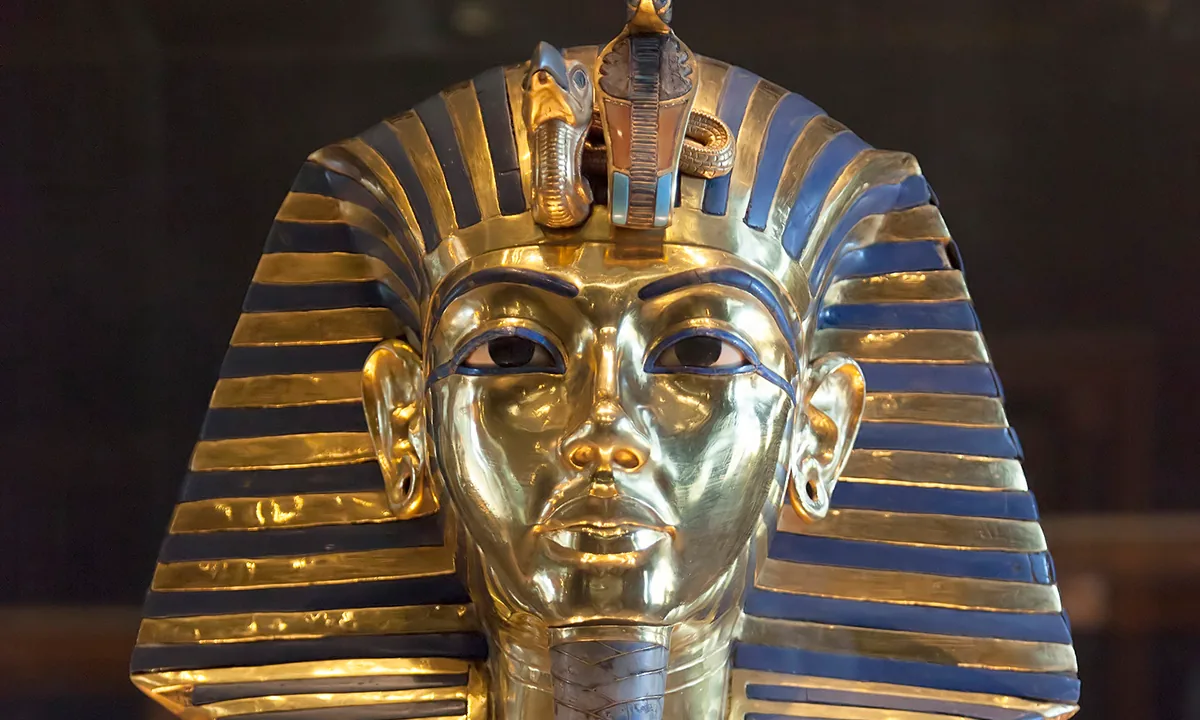
The gold funerary mask of Tutankhamun, c. 1323 BCE, inlaid with lapis lazuli, quartz and coloured glass; found by Howard Carter's team in 1925. Egyptian Museum, Cairo. Roland Unger · Public domain · Wikimedia Commons Read the full story: How Did King Tut Die? Tutankhamun and His Tomb →
-
2. Why are many historians cautious about reading the Narmer Palette as a record of one conquest?
Show the answer
C. Royal art showed what kings wanted remembered, and archaeology suggests a slower process. The palette is royal display. Pottery and burials show southern culture spreading into the Delta before Narmer. So Egypt probably became one country slowly, whatever the palette claims.
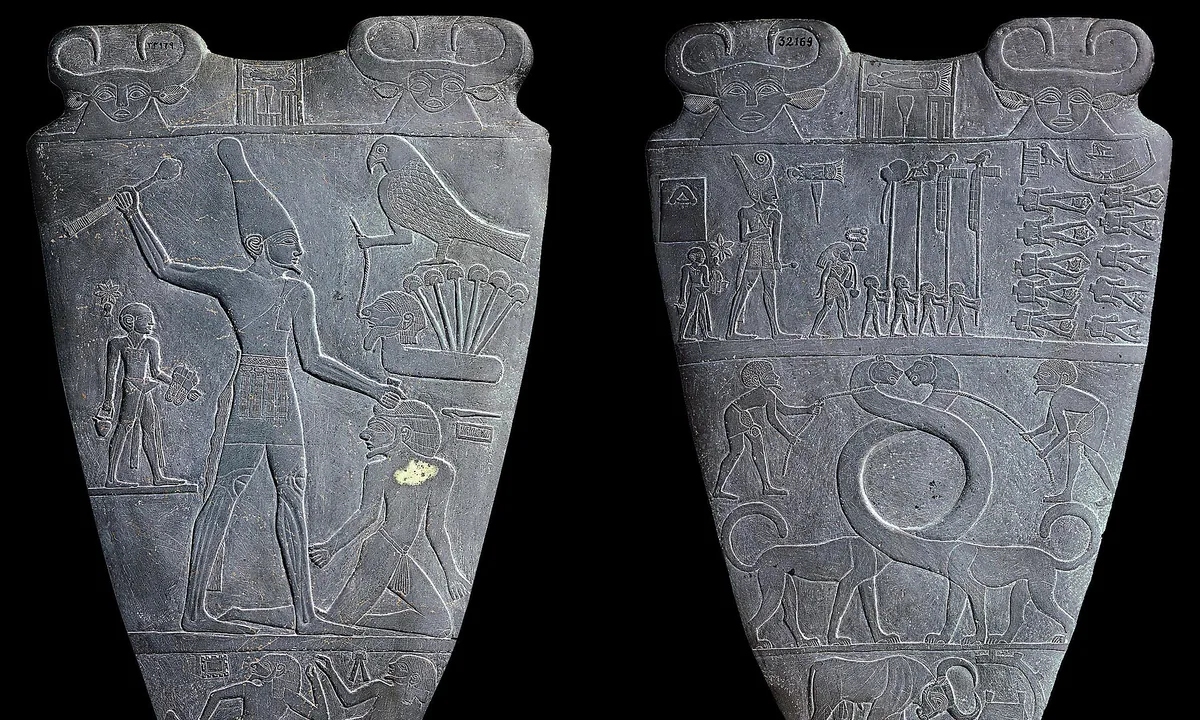
Both sides of the Narmer Palette, c. 3100 BCE, found at Hierakonpolis in 1897–98: at left the king, in the white crown of Upper Egypt, strikes a kneeling enemy; at right he wears the red crown of Lower Egypt. Egyptian Museum, Cairo. Narmer Palette, c. 3100 BCE (Egyptian Museum, Cairo) · Public domain · Wikimedia Commons Read the full story: Who United Upper and Lower Egypt? Narmer and the First Pharaohs →
-
3. What does a tomb painting of about 1900 BCE show workers doing to move a huge statue?
Show the answer
D. Pouring water on the sand ahead of the sledge. A man pours water in front of the sledge. In 2014 physicists found that sand with the right amount of water roughly halves the pulling force needed.
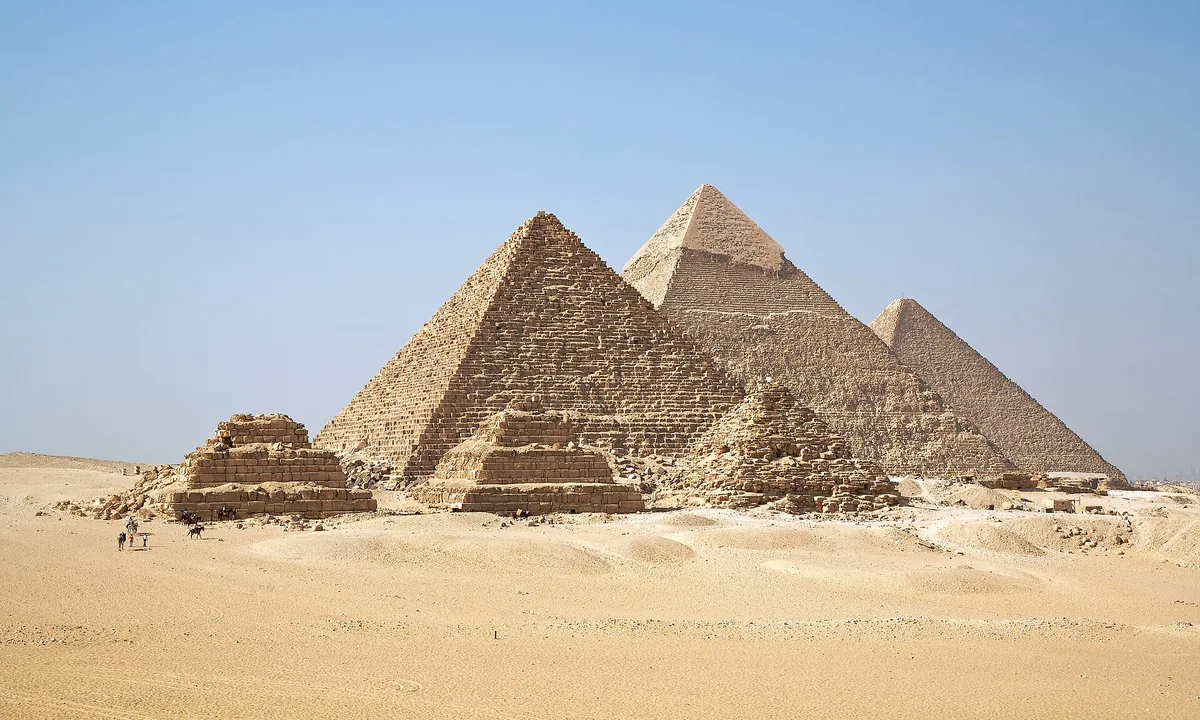
The pyramids of Giza from the south-west: Menkaure's pyramid and its small queens' pyramids in front, Khafre's in the middle and Khufu's Great Pyramid behind. Ricardo Liberato · CC BY-SA 2.0 · Wikimedia Commons -
4. Why did people settle along the Nile in growing numbers after about 5000 BCE?
Show the answer
C. The Sahara was drying out and the river never failed. The Sahara, once green, turned to desert. The Nile became the one water supply people could trust. Kings came much later: villages and towns grew first.
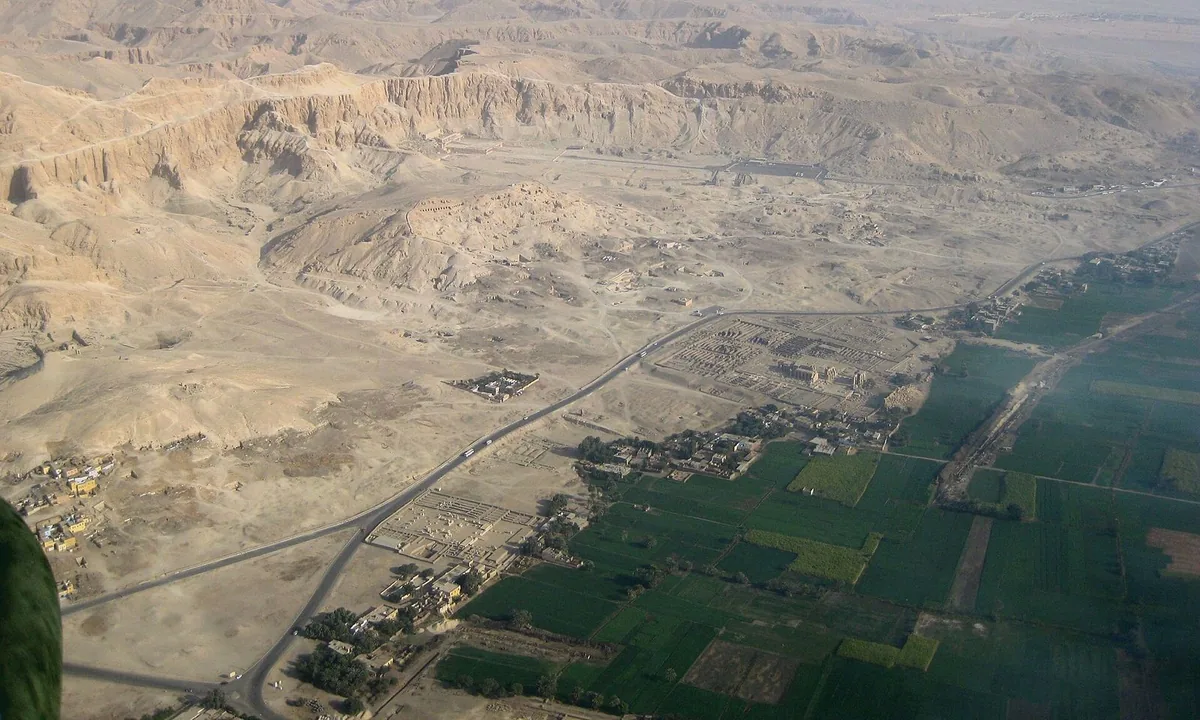
The edge of the black land: green fields stop abruptly at the desert on the west bank of the Nile at Luxor, ancient Thebes, below the Theban hills. Egyptians called the farmland Kemet, “the black land”, and the desert Deshret, “the red land”. Merlin UK · CC BY-SA 3.0 · Wikimedia Commons Read the full story: Why Was the Nile River Important to Ancient Egypt? →
-
5. Why did Rome declare war on Cleopatra rather than on Mark Antony?
Show the answer
D. Octavian wanted a foreign war, not another civil war against a Roman. Romans were tired of civil war. Fighting “the Egyptian queen” let Octavian unite Italy behind him, while Antony looked like her servant.
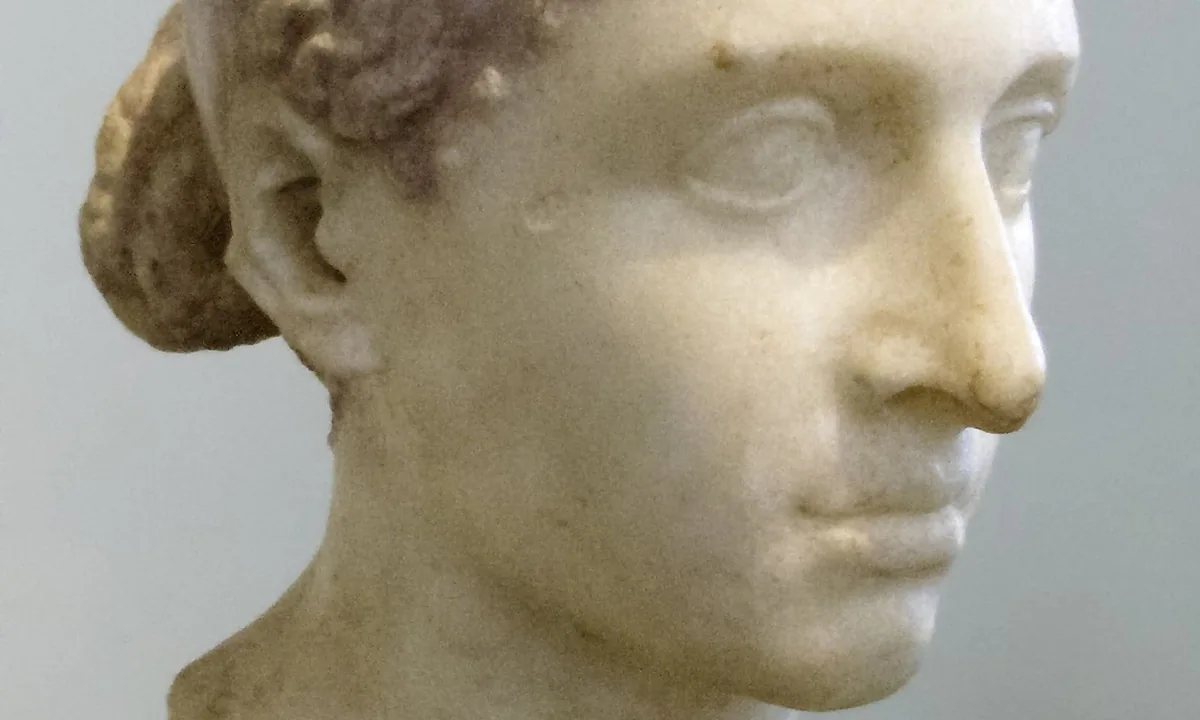
Marble portrait of Cleopatra VII, carved in her lifetime (mid-1st century BCE), with her hair in the “melon” style and a royal diadem. Altes Museum, Berlin. Photo: Louis le Grand · Public domain · Wikimedia Commons Read the full story: How Did Cleopatra Die? The Last Queen of Egypt →
-
6. What kept Tutankhamun's tomb hidden from robbers for more than 3,000 years?
Show the answer
D. Rubble and workmen's huts from a later tomb covered it. Workmen cutting the tomb of Ramses VI piled rubble and built huts over the entrance to KV62. This hid it. Robbers broke in soon after the burial, but officials sealed the tomb again.
The gold funerary mask of Tutankhamun, c. 1323 BCE, inlaid with lapis lazuli, quartz and coloured glass; found by Howard Carter's team in 1925. Egyptian Museum, Cairo. Roland Unger · Public domain · Wikimedia Commons Read the full story: How Did King Tut Die? Tutankhamun and His Tomb →
-
7. According to Manetho, the first king Menes was killed by a hippopotamus.
Show the answer
A. True. Manetho wrote around 280 BCE. He says Menes was carried off by a hippopotamus. It is a legend written down nearly 3,000 years after the events, not evidence.
Both sides of the Narmer Palette, c. 3100 BCE, found at Hierakonpolis in 1897–98: at left the king, in the white crown of Upper Egypt, strikes a kneeling enemy; at right he wears the red crown of Lower Egypt. Egyptian Museum, Cairo. Narmer Palette, c. 3100 BCE (Egyptian Museum, Cairo) · Public domain · Wikimedia Commons Read the full story: Who United Upper and Lower Egypt? Narmer and the First Pharaohs →
-
8. Why do archaeologists reject the idea that slaves built the pyramids?
Show the answer
B. The builders' town and cemetery show fed, housed and medically treated workers. Archaeologists found bakeries, breweries and barracks near the site. Workers were buried with honour beside the pyramids, and some had broken bones that had healed. This points to organised workers who were paid or called up by the state.
The pyramids of Giza from the south-west: Menkaure's pyramid and its small queens' pyramids in front, Khafre's in the middle and Khufu's Great Pyramid behind. Ricardo Liberato · CC BY-SA 2.0 · Wikimedia Commons -
9. The Egyptian name Kemet, “the black land”, referred to the dark soil left by the flood.
Show the answer
A. True. Kemet was the rich black mud of the valley. Deshret, “the red land”, was the desert. People often claim that the word “desert” comes from Deshret, but it does not.
The edge of the black land: green fields stop abruptly at the desert on the west bank of the Nile at Luxor, ancient Thebes, below the Theban hills. Egyptians called the farmland Kemet, “the black land”, and the desert Deshret, “the red land”. Merlin UK · CC BY-SA 3.0 · Wikimedia Commons Read the full story: Why Was the Nile River Important to Ancient Egypt? →
-
10. Only pharaohs were mummified in ancient Egypt.
Show the answer
B. False. Officials and anyone who could pay were mummified. There were cheaper methods for poorer people. Millions of animals were mummified too.
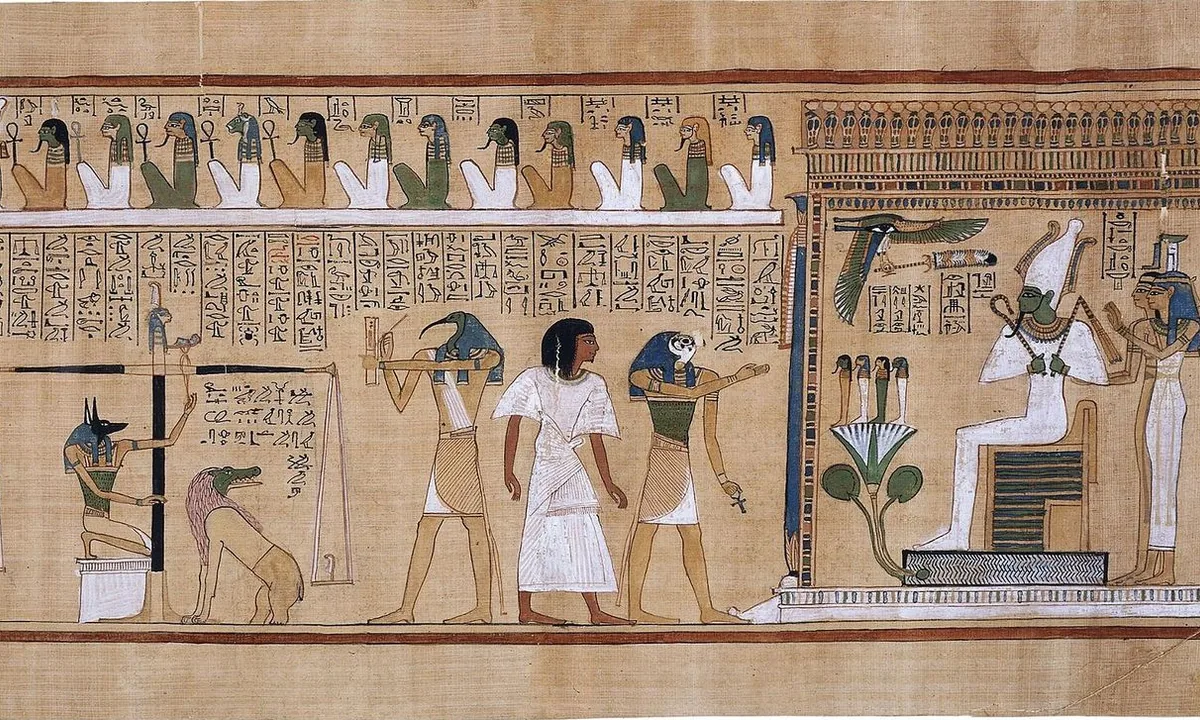
The weighing of the heart, from the Book of the Dead of the scribe Hunefer, c. 1275 BCE: Anubis weighs his heart against the feather of truth while Thoth records the result. British Museum, London. Book of the Dead of Hunefer, c. 1275 BCE · Public domain · Wikimedia Commons Read the full story: Why Did the Egyptians Mummify Their Dead? The Mummification Process →
-
11. What makes many historians doubt that Thutmose III erased Hatshepsut out of personal hatred?
Show the answer
B. The erasure began some twenty years after she died. A man who wanted revenge would hardly wait twenty years. The late timing fits a political aim: making sure his son, Amenhotep II, would be the next king.
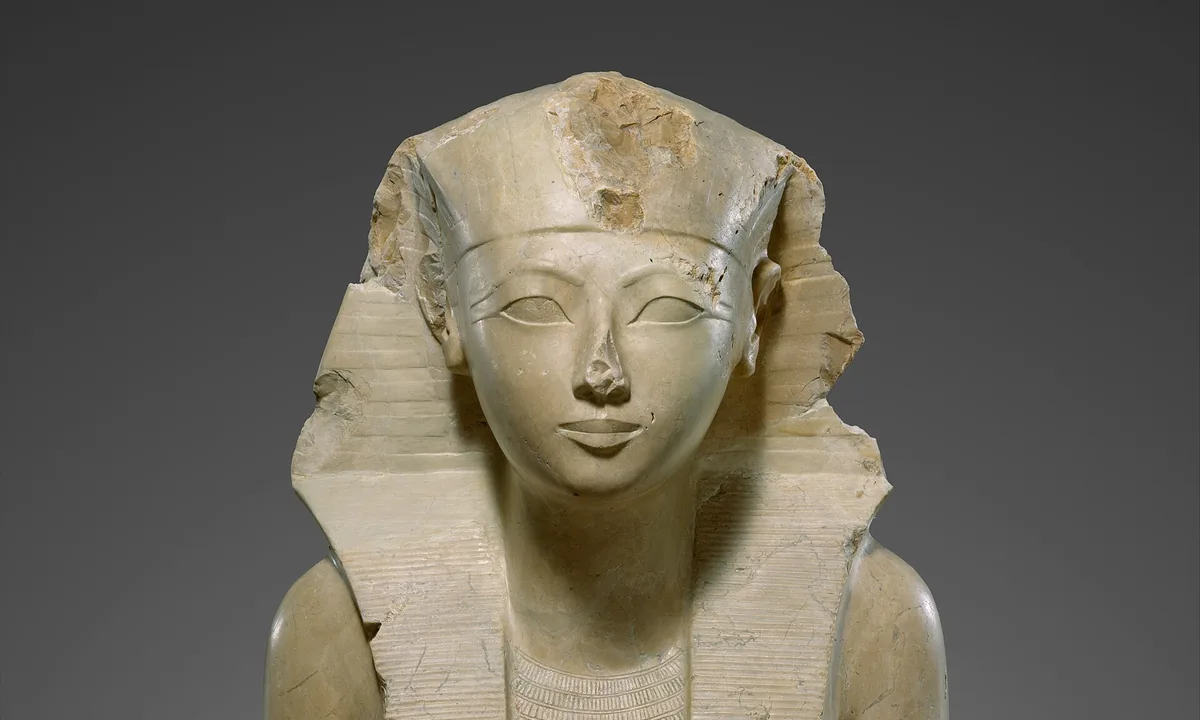
Seated statue of Hatshepsut from her temple at Deir el-Bahari, c. 1479–1458 BCE: she wears the king's nemes headcloth but is shown with a woman's slender body. Metropolitan Museum of Art, New York. Metropolitan Museum of Art · CC0 · Wikimedia Commons Read the full story: Who Was Hatshepsut? The Woman Who Became Pharaoh →
-
12. Long before 650 BCE, which faster, joined-up script did Egyptian scribes use for letters and accounts?
Show the answer
C. Hieratic. Hieroglyphs were slow to draw, so scribes wrote hieratic, a joined-up form, in ink on papyrus. Demotic, quicker still, came from about 650 BCE.
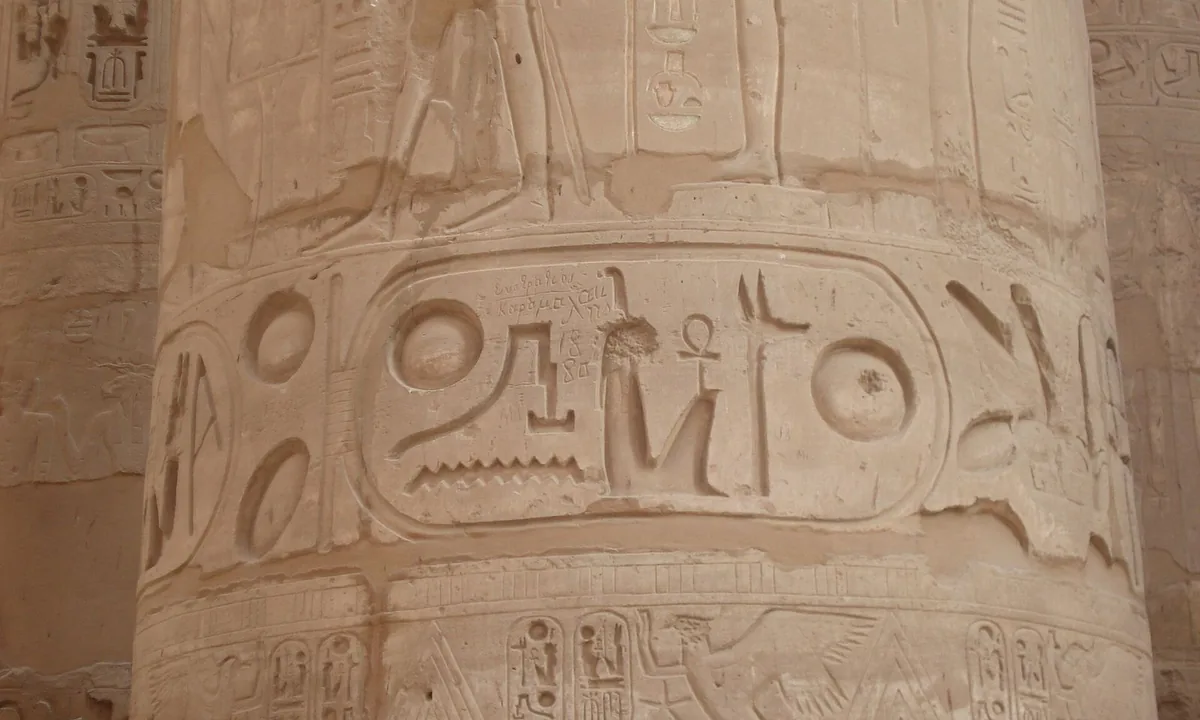
Hieroglyphs carved deep into a column of the Great Hypostyle Hall at Karnak, Luxor: the oval cartouche holds the throne name of Ramesses II (13th century BCE). Fitzcarmalan · CC BY-SA 4.0 · Wikimedia Commons -
13. What were the Amduat and the Book of Gates?
Show the answer
C. Netherworld books guiding the king at night. They were religious texts painted on the tomb walls. They followed the sun god through the twelve hours of the night, to guide the dead pharaoh to rebirth at dawn.
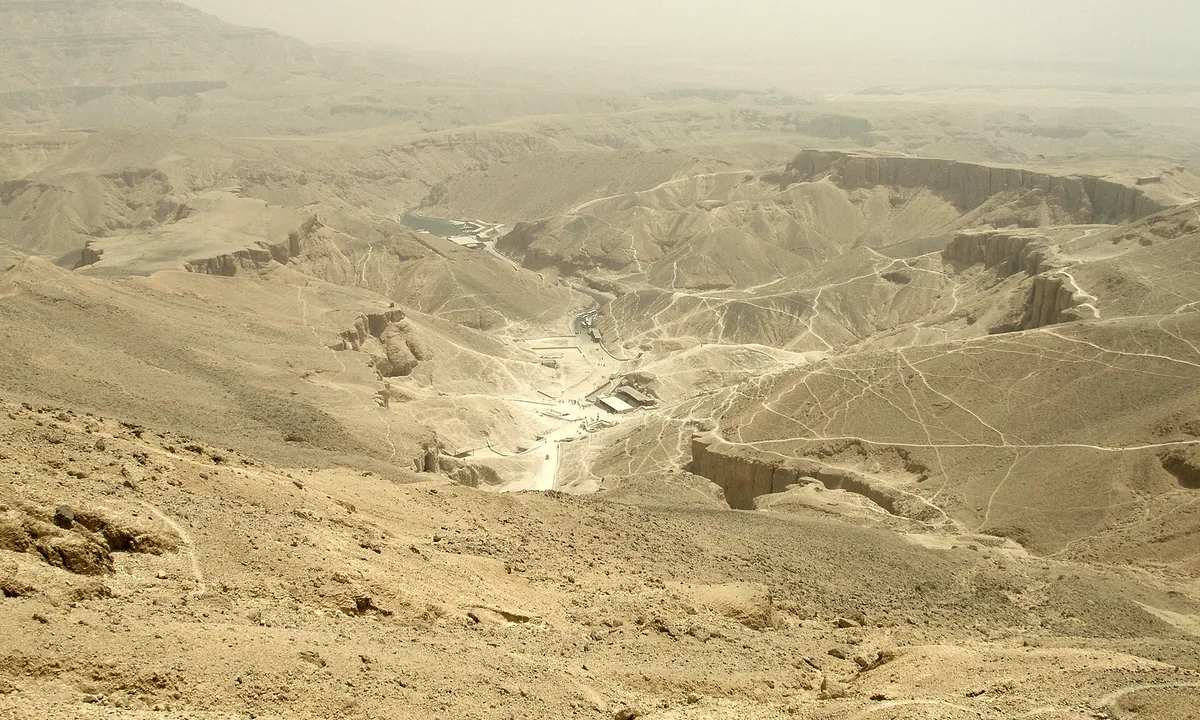
The Valley of the Kings on the west bank of the Nile at Thebes (Luxor), seen from the cliffs above; New Kingdom pharaohs were buried here c. 1550–1070 BCE. Vyacheslav Argenberg · CC BY 4.0 · Wikimedia Commons -
14. The Amarna letters are diplomatic letters written in Egyptian hieroglyphs.
Show the answer
B. False. They are clay tablets in cuneiform, mostly in Akkadian, the international language of diplomacy at the time.
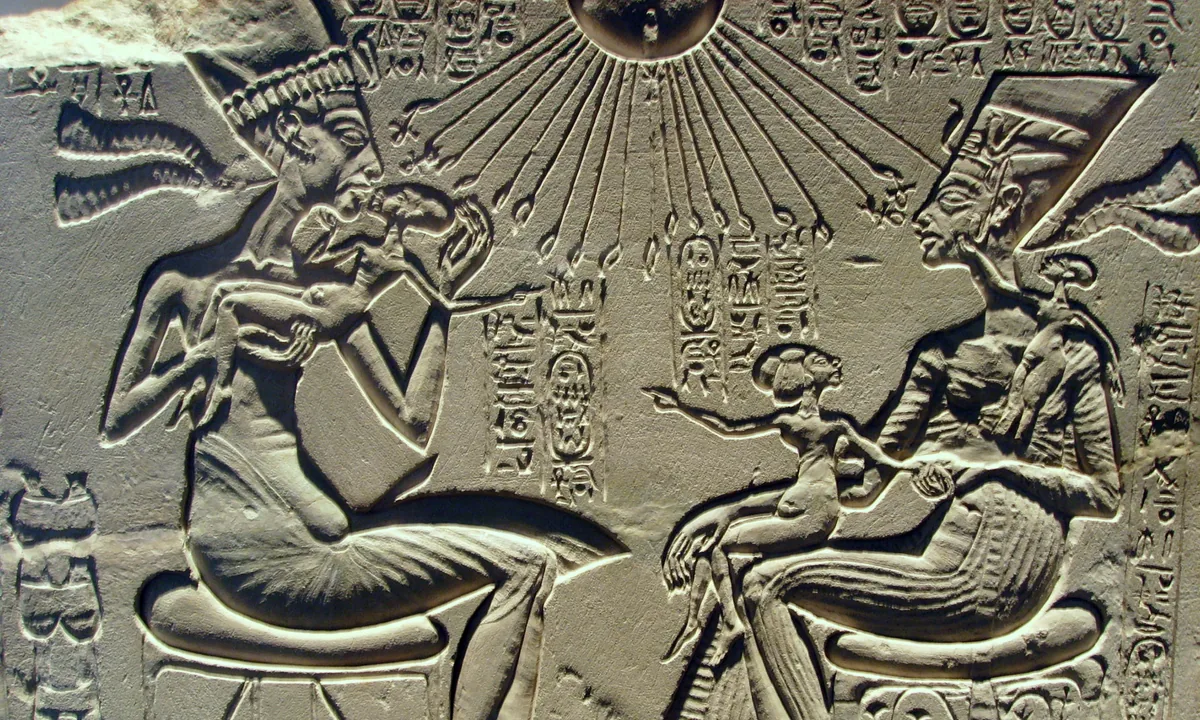
A house altar from Amarna, c. 1345 BCE: Akhenaten and Nefertiti sit with three of their daughters beneath the Aten sun disk, whose rays end in tiny hands. Neues Museum, Berlin. Gerbil · Public domain · Wikimedia Commons Read the full story: Akhenaten and Nefertiti: The Pharaoh Who Changed Egypt's Gods →
-
15. Which three scripts appear on the Rosetta Stone?
Show the answer
A. Hieroglyphs, Demotic and Greek. Hieroglyphs were for sacred texts and Demotic for everyday Egyptian. Greek was the language of the Ptolemaic government. That makes two languages in three scripts.
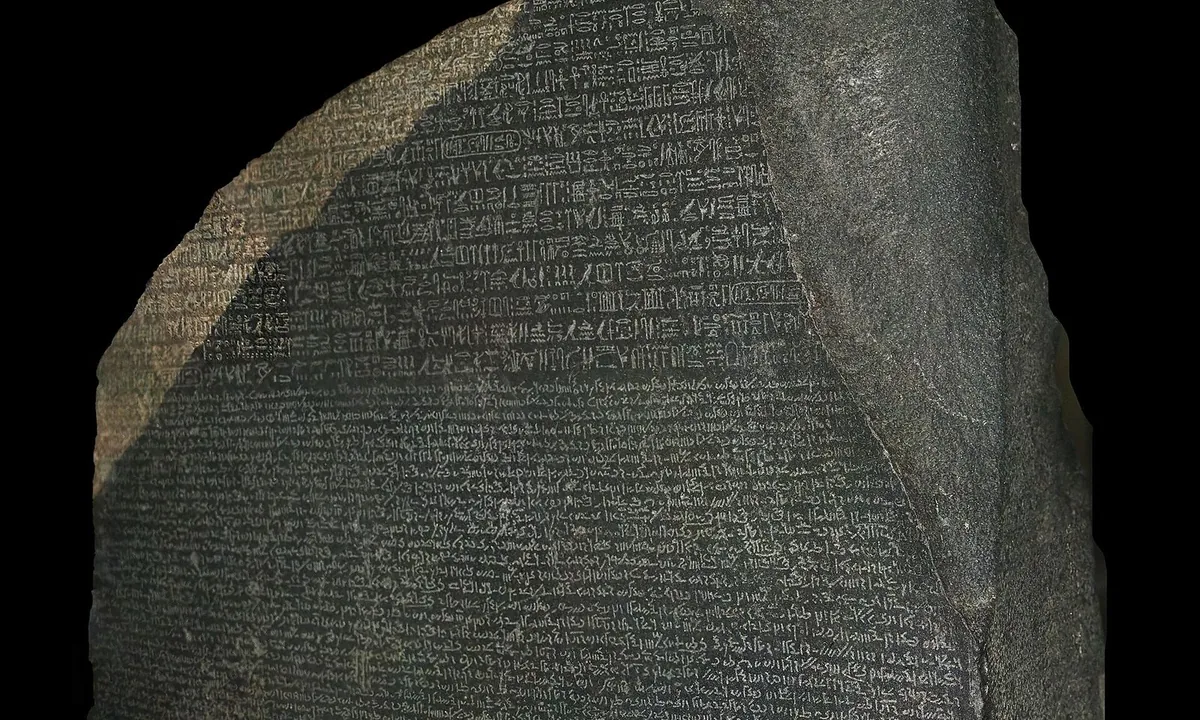
The Rosetta Stone, British Museum: one priestly decree of 196 BCE written three times, in hieroglyphs (top), Demotic (middle) and Greek (bottom). Hans Hillewaert · CC BY-SA 4.0 · Wikimedia Commons Read the full story: What Is the Rosetta Stone and Why Is It Important? →
-
16. Why were pictures of Nefertiti found in so many homes and temples at Amarna?
Show the answer
A. People were meant to worship the Aten through the royal family. Akhenaten taught that he alone truly knew the Aten, so people prayed through the king and his family. Home altars showed the royal couple under the sun's rays.
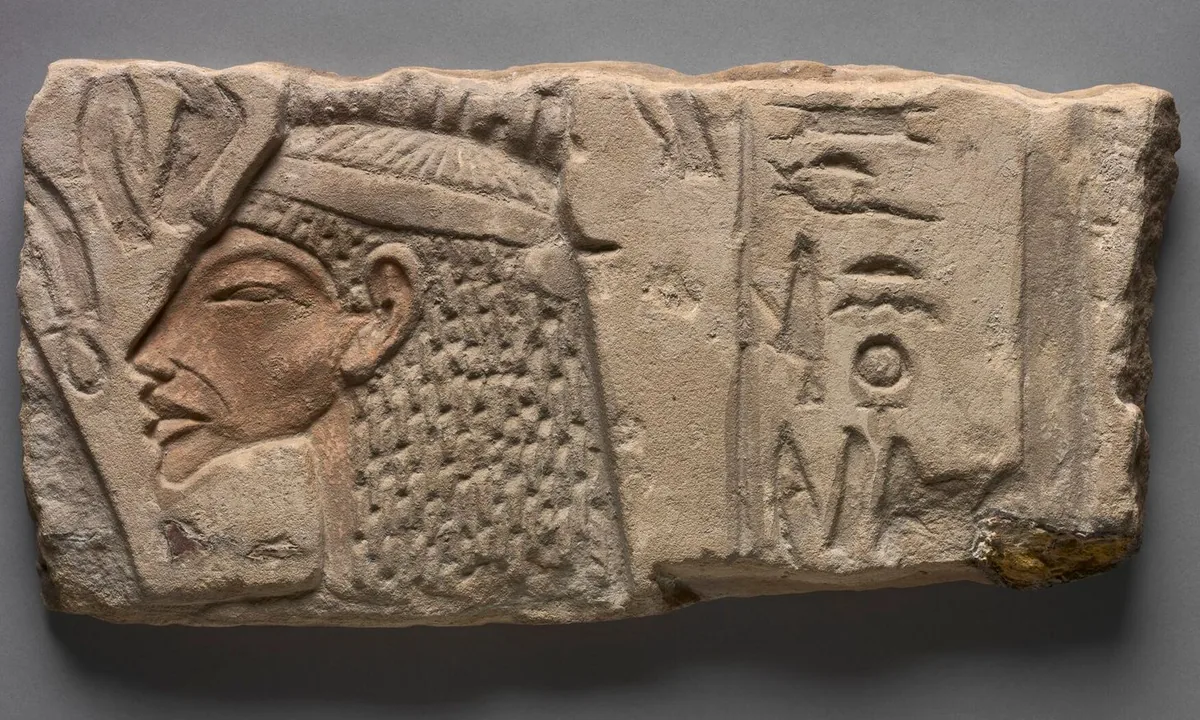
Queen Nefertiti in profile, wearing a close-fitting cap crown: a carved sandstone talatat block from Akhenaten's temples to the Aten at Karnak, c. 1353–1347 BCE (Cleveland Museum of Art). Cleveland Museum of Art · CC0 · Wikimedia Commons -
17. What was the actual result of the Battle of Kadesh?
Show the answer
B. A draw: the Hittites kept control of the region. Ramses survived and claimed victory on his temples. But he did not take Kadesh, and Hittite records show the region stayed under their control.
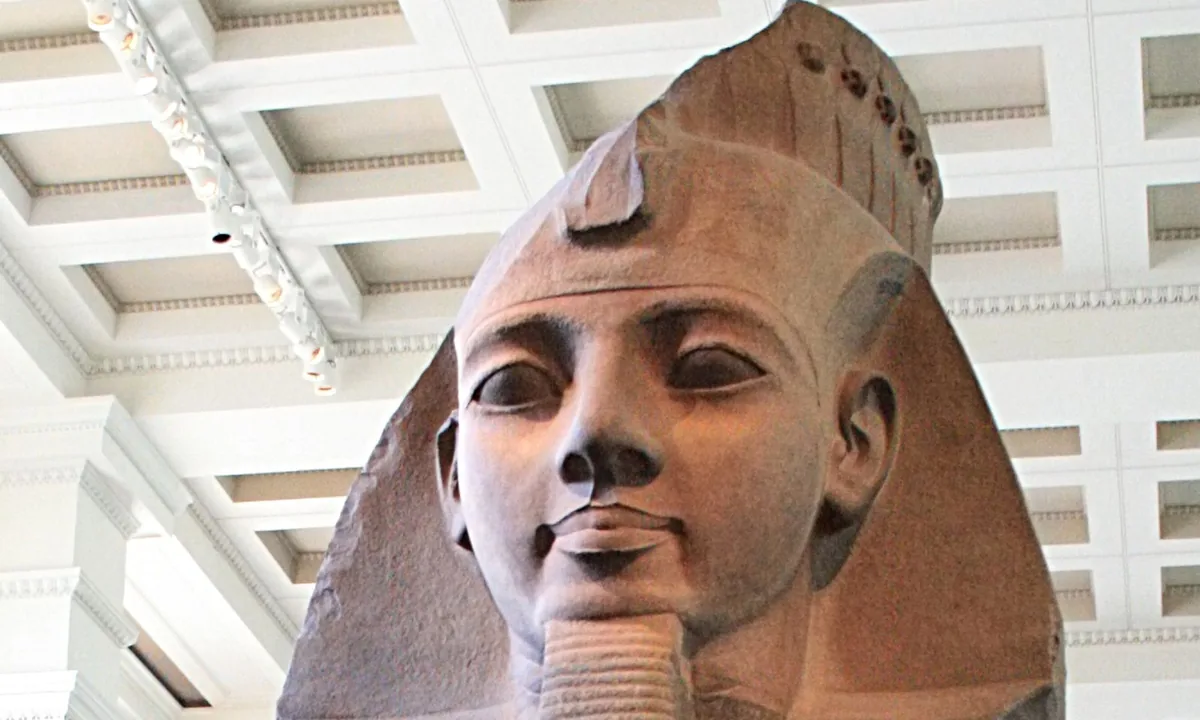
The “Younger Memnon”, a colossal granite bust of Ramses II from his mortuary temple, the Ramesseum, c. 1250 BCE. British Museum, London. Pbuergler · CC BY-SA 3.0 · Wikimedia Commons Read the full story: Who Was Ramses II? Kadesh, the First Peace Treaty and Abu Simbel →
-
18. What was natron used for?
Show the answer
D. Drying the body out completely. Natron, a natural salt, drew the water out of the body over about forty days. Resins and oils were applied afterwards.
The weighing of the heart, from the Book of the Dead of the scribe Hunefer, c. 1275 BCE: Anubis weighs his heart against the feather of truth while Thoth records the result. British Museum, London. Book of the Dead of Hunefer, c. 1275 BCE · Public domain · Wikimedia Commons Read the full story: Why Did the Egyptians Mummify Their Dead? The Mummification Process →
-
19. How did Hatshepsut first come to rule Egypt?
Show the answer
C. She was regent for her young stepson. When Thutmose II died, his heir Thutmose III was a small child. Hatshepsut ruled for him as regent before having herself crowned king.
Seated statue of Hatshepsut from her temple at Deir el-Bahari, c. 1479–1458 BCE: she wears the king's nemes headcloth but is shown with a woman's slender body. Metropolitan Museum of Art, New York. Metropolitan Museum of Art · CC0 · Wikimedia Commons Read the full story: Who Was Hatshepsut? The Woman Who Became Pharaoh →
-
20. Why did the king Narmer write his name with a catfish and a chisel?
Show the answer
D. The two signs spelled out the sounds of his name. The catfish was pronounced nar and the chisel mer. Used only for their sounds, the two signs spelled Nar-mer.
Hieroglyphs carved deep into a column of the Great Hypostyle Hall at Karnak, Luxor: the oval cartouche holds the throne name of Ramesses II (13th century BCE). Fitzcarmalan · CC BY-SA 4.0 · Wikimedia Commons -
21. Why was Tutankhamun's tomb still full of treasure in 1922?
Show the answer
A. Rubble and huts from later work hid its entrance. Robbers took little soon after the burial, and the tomb was sealed again. Then rubble and workmen's huts from a later tomb covered the entrance, and it was forgotten.
The Valley of the Kings on the west bank of the Nile at Thebes (Luxor), seen from the cliffs above; New Kingdom pharaohs were buried here c. 1550–1070 BCE. Vyacheslav Argenberg · CC BY 4.0 · Wikimedia Commons -
22. What was the Aten?
Show the answer
B. The visible disk of the sun. The Aten was the disk of the sun, shown with rays ending in hands that offer life to the royal family. Amun, whom Akhenaten rejected, was the king of the gods.
A house altar from Amarna, c. 1345 BCE: Akhenaten and Nefertiti sit with three of their daughters beneath the Aten sun disk, whose rays end in tiny hands. Neues Museum, Berlin. Gerbil · Public domain · Wikimedia Commons Read the full story: Akhenaten and Nefertiti: The Pharaoh Who Changed Egypt's Gods →
-
23. How did the Rosetta Stone end up in the British Museum?
Show the answer
D. It was handed over when the French surrendered in 1801. French soldiers found it in 1799. The French surrendered at Alexandria in 1801, and under the terms of the surrender it passed to the British. It reached London in 1802.
The Rosetta Stone, British Museum: one priestly decree of 196 BCE written three times, in hieroglyphs (top), Demotic (middle) and Greek (bottom). Hans Hillewaert · CC BY-SA 4.0 · Wikimedia Commons Read the full story: What Is the Rosetta Stone and Why Is It Important? →
-
24. Why did later kings try to erase the memory of Amarna?
Show the answer
C. They blamed the revolution for angering the old gods. After Akhenaten, Egypt returned to Amun and the old gods. Later kings saw his reign as a disaster, took his temples apart and left his name out of the king lists.
Queen Nefertiti in profile, wearing a close-fitting cap crown: a carved sandstone talatat block from Akhenaten's temples to the Aten at Karnak, c. 1353–1347 BCE (Cleveland Museum of Art). Cleveland Museum of Art · CC0 · Wikimedia Commons -
25. Both the Egyptian and the Hittite versions of Ramses's peace treaty survive.
Show the answer
A. True. The Egyptian text is carved at Karnak and the Ramesseum. The Hittite text survives on clay tablets from their capital, Hattusa.
The “Younger Memnon”, a colossal granite bust of Ramses II from his mortuary temple, the Ramesseum, c. 1250 BCE. British Museum, London. Pbuergler · CC BY-SA 3.0 · Wikimedia Commons Read the full story: Who Was Ramses II? Kadesh, the First Peace Treaty and Abu Simbel →
Your score
You got right. Want the stories behind them?
Aurelius: Learn History has 700+ more questions like these, each one after the five-minute illustrated story it comes from, across 18 eras. Free to try.
Play next: Ancient Rome Quiz · Medieval History Quiz · History Quiz
About this quiz
Most answers link to the full story: tap “Read the full story” under an answer to open the lesson it comes from.
The questions come from 13 lessons in the app: How Did King Tut Die? Tutankhamun and His Tomb, Who United Upper and Lower Egypt? Narmer and the First Pharaohs, How Were the Pyramids Built?, Why Was the Nile River Important to Ancient Egypt?, How Did Cleopatra Die? The Last Queen of Egypt, Why Did the Egyptians Mummify Their Dead? The Mummification Process, Who Was Hatshepsut? The Woman Who Became Pharaoh, Hieroglyphs: The Sacred Writing, The Valley of the Kings, Akhenaten and Nefertiti: The Pharaoh Who Changed Egypt's Gods, What Is the Rosetta Stone and Why Is It Important?, Nefertiti: The Beautiful Queen, Who Was Ramses II? Kadesh, the First Peace Treaty and Abu Simbel.
Questions are labelled easy, medium or hard by the level of the lesson they come from, and the quiz plays in that order, easy to medium. There are 700+ more in the Aurelius: Learn History app.
Frequently asked questions
How many questions are in the Ancient Egypt Quiz?
25: 9 easy and 16 medium, played easy to medium. 19 are multiple choice and 6 true or false. Every answer is explained, with the picture of the story behind it, and at the end you see your score by level.
Is the Ancient Egypt Quiz free?
Yes. It plays in your browser with no account and no sign-up. For more, Aurelius: Learn History has 700+ questions like these, each after a short illustrated lesson. The app is free to download and try on iPhone, iPad and Android.
Where do the questions come from?
From the lessons in Aurelius: Learn History. Every question follows a short illustrated story in the app and is written and checked by the Aurelius editorial team. The easy, medium and hard labels are the levels of those lessons. See how lessons are checked.
Which quiz should I play next?
Try the Ancient Rome Quiz, the Medieval History Quiz and the History Quiz. All quizzes are listed at the end of this page.
More history quizzes
- Ancient Rome QuizRepublic, Caesar and empire.
- Medieval History Quiz: The Middle AgesFrom Charlemagne and the Vikings to the Black Death.
- History QuizThe all-round history quiz across many eras.
- World War 2 QuizFrom the invasion of Poland to Bastogne.
- WW1 Quiz: World War 1 Questions and AnswersFrom the Archduke’s assassination to Versailles.
- American History QuizThe Revolution and the Civil War: US history trivia.
- Cold War QuizBerlin, Cuba, Vietnam and the space race.
- Ancient Greece QuizAthens, Sparta, Persia and Alexander.
- French Revolution and Napoleon QuizFrom the Bastille to Waterloo.
- Tudors and Reformation QuizHenry VIII, Elizabeth I, Luther and the Armada.
- World History QuizOne game across world history.
- 100 History Trivia Questions and Answers100 questions with answers for quiz nights and classrooms.