Ancient Greece Quiz
This Ancient Greece quiz has 30 questions, from Cleisthenes’ democracy, Marathon, Thermopylae and Salamis to Pericles, the Peloponnesian War, the trial of Socrates and Alexander the Great. It starts easy and gets harder, and every answer is explained.
Tap an answer to start, or use the keys A to D. No sign-up.
-
1. What became the basic unit of Athenian citizenship under Cleisthenes?
Show the answer
B. The deme, a village or city district. Every citizen registered in his deme and was officially named after it. The demes were then grouped into trittyes, or “thirds”, and into ten new tribes.
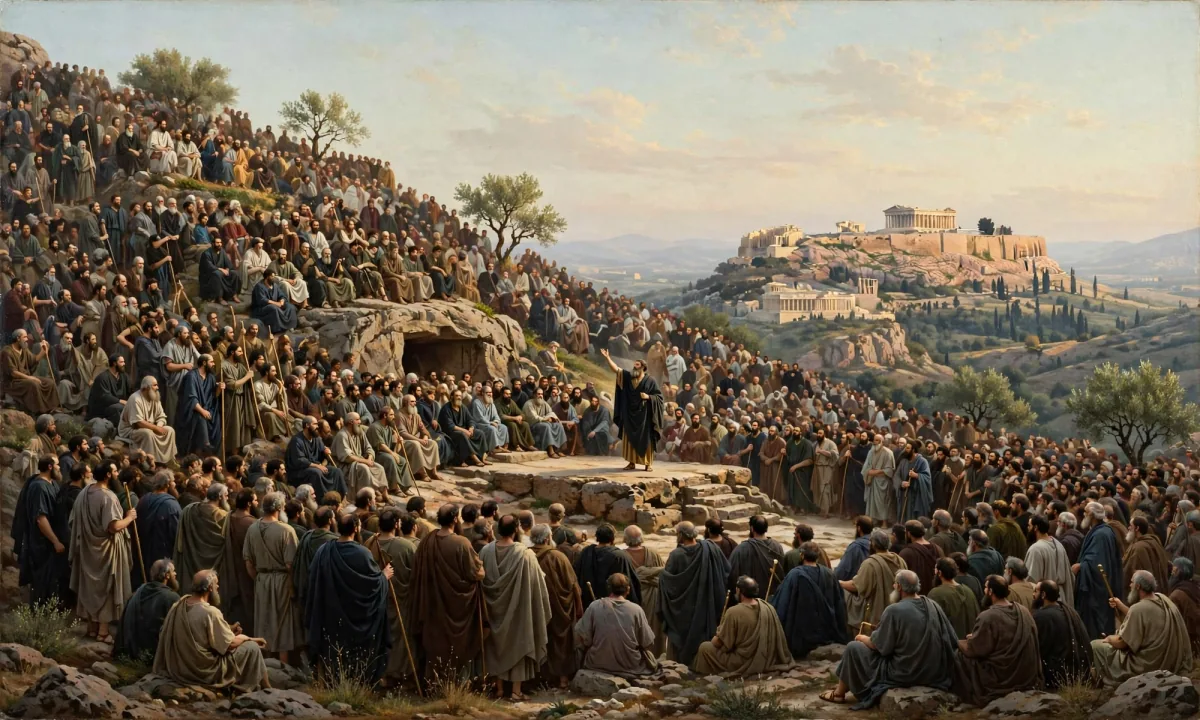
Illustration: the Athenian Assembly meeting on the Pnyx hill, where adult male citizens debated and voted on laws in the 5th century BCE. Illustration (AI-generated) Read the full story: Who Was Cleisthenes? The Birth of Democracy in Athens →
-
2. How do we know what Socrates taught?
Show the answer
C. From the writings of his followers, above all Plato. Socrates wrote nothing. Plato and Xenophon wrote about him, and Aristophanes mocked him on stage.
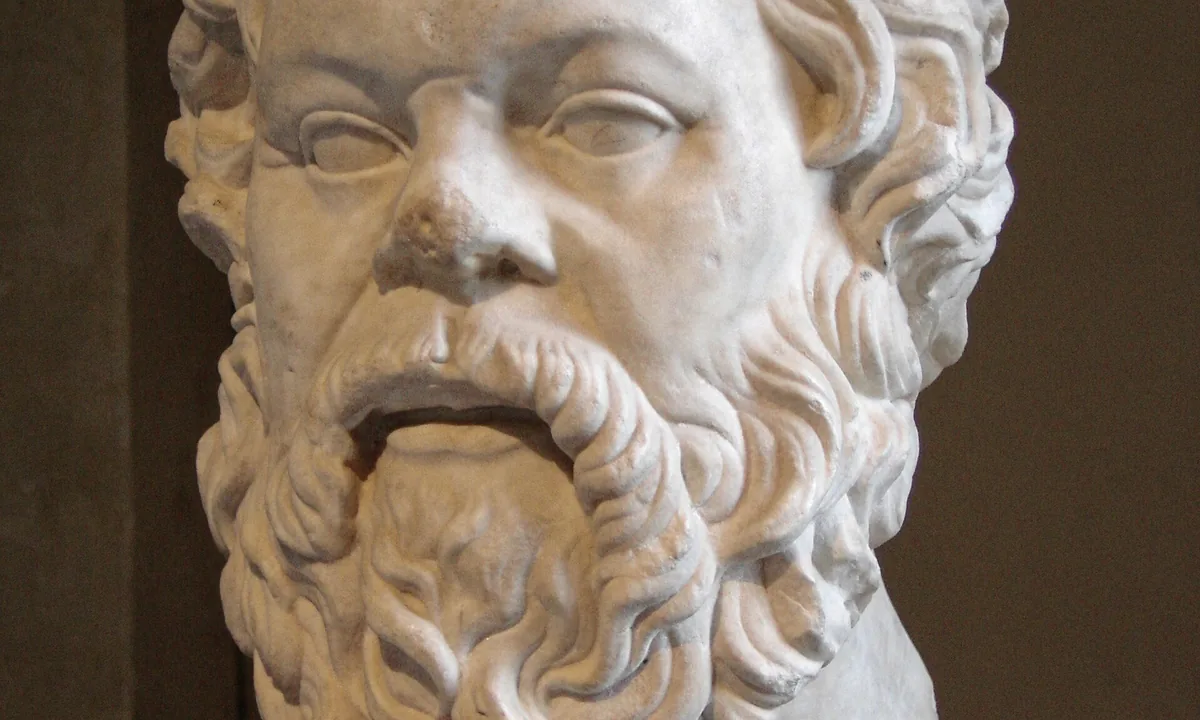
Socrates: Roman marble copy of a Greek portrait made in the 4th century BCE, showing his famous snub nose and thick beard. Louvre, Paris. Bust of Socrates, Roman copy · Public domain · Wikimedia Commons Read the full story: Why Was Socrates Executed? The Trial and Death of Socrates →
-
3. What did Pericles introduce so that poorer citizens could serve on juries?
Show the answer
B. Pay for jurors. Jury service took whole days. With pay, a poor man did not lose a day's income by serving.
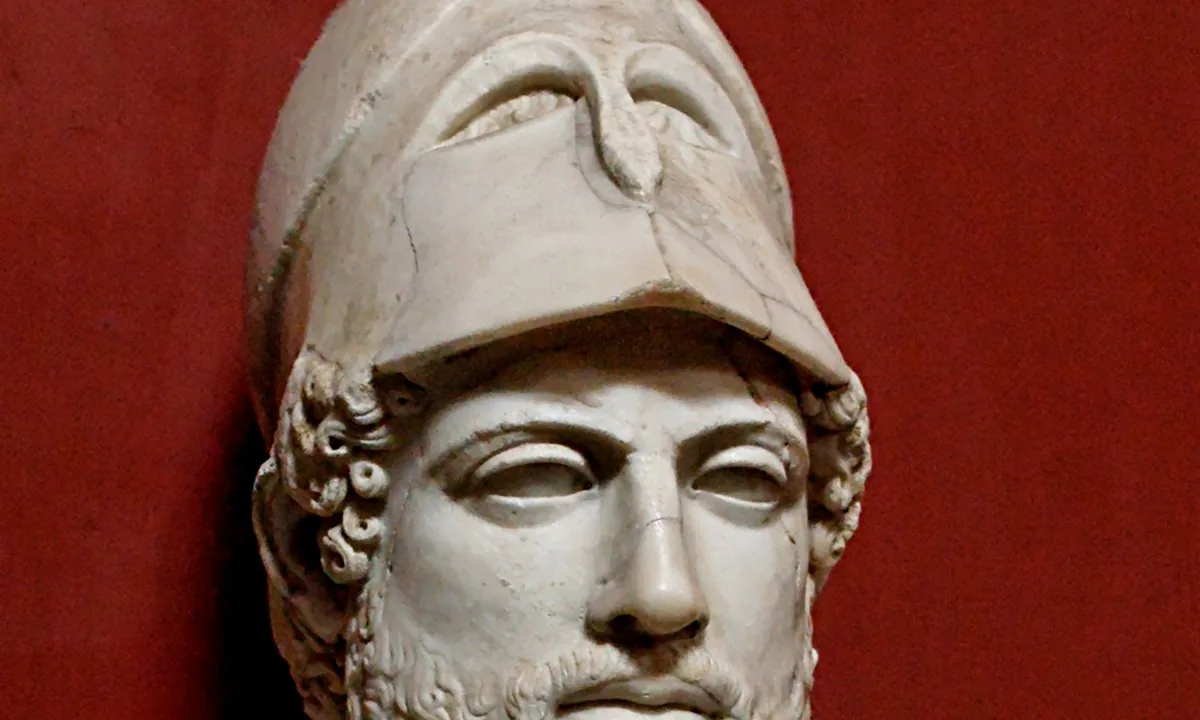
Pericles in a general's helmet: Roman marble copy of a Greek portrait made about 430 BCE. Vatican Museums. Photo: Marie-Lan Nguyen (Jastrow) · Public domain · Wikimedia Commons Read the full story: Who Was Pericles? The Golden Age of Athens →
-
4. According to Herodotus, only 300 Greeks fought at Thermopylae.
Show the answer
B. False. Several thousand Greeks held the pass. On the last day the 300 Spartans stayed with 700 Thespians and 400 Thebans.
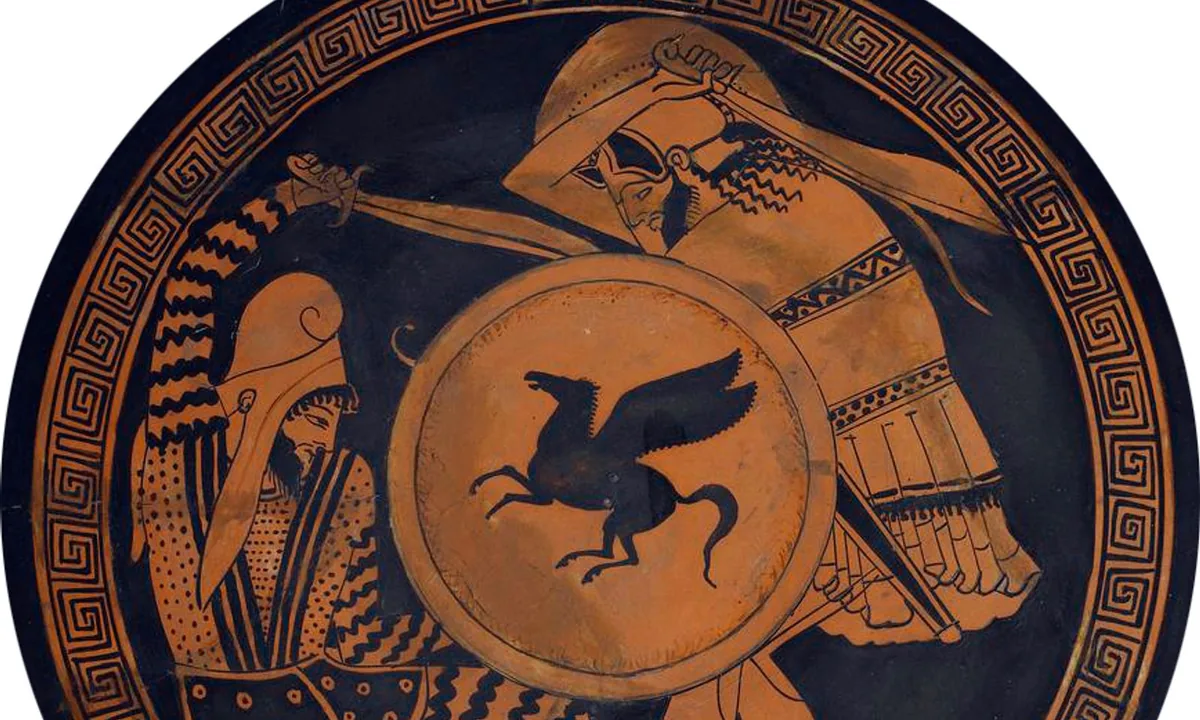
A Greek hoplite with helmet and round shield fights a Persian warrior in trousers on an Athenian red-figure drinking cup, painted in the decades of the Persian Wars (5th century BCE). Attic red-figure kylix, early 5th century BCE · Public domain · Wikimedia Commons Read the full story: What Happened at Thermopylae and Marathon? The Persian Wars →
-
5. Every adult living in Athens could vote in the Assembly.
Show the answer
B. False. Only free adult men of Athenian families were citizens. Women, slaves and resident foreigners could not vote.
Illustration: the Athenian Assembly meeting on the Pnyx hill, where adult male citizens debated and voted on laws in the 5th century BCE. Illustration (AI-generated) Read the full story: Who Was Cleisthenes? The Birth of Democracy in Athens →
-
6. Why could Socrates' accusers not charge him over what happened under the Thirty Tyrants?
Show the answer
B. An amnesty of 403 BCE banned prosecutions for those events. The amnesty that restored the democracy protected everyone from prosecution for acts under the Thirty. So the charge was made one of impiety and corrupting the young.
Socrates: Roman marble copy of a Greek portrait made in the 4th century BCE, showing his famous snub nose and thick beard. Louvre, Paris. Bust of Socrates, Roman copy · Public domain · Wikimedia Commons Read the full story: Why Was Socrates Executed? The Trial and Death of Socrates →
-
7. Why did critics in Athens object to Pericles' building programme?
Show the answer
A. It used money the allies had paid for their defence. Plutarch says the politician Thucydides, son of Melesias, attacked the use of League tribute for temples. Pericles replied that Athens owed the allies protection, not accounts.
Pericles in a general's helmet: Roman marble copy of a Greek portrait made about 430 BCE. Vatican Museums. Photo: Marie-Lan Nguyen (Jastrow) · Public domain · Wikimedia Commons Read the full story: Who Was Pericles? The Golden Age of Athens →
-
8. Why did the Spartans reach Marathon too late for the battle?
Show the answer
B. A religious law kept them from marching before the full moon. Herodotus says the Spartans agreed to help but would not leave before the full moon. By the time they arrived, the battle was over and they could only look at the Persian dead.
A Greek hoplite with helmet and round shield fights a Persian warrior in trousers on an Athenian red-figure drinking cup, painted in the decades of the Persian Wars (5th century BCE). Attic red-figure kylix, early 5th century BCE · Public domain · Wikimedia Commons Read the full story: What Happened at Thermopylae and Marathon? The Persian Wars →
-
9. What happened to an Athenian who was ostracised?
Show the answer
D. He was exiled for ten years but kept his property. Ostracism removed a man without punishing him as a criminal. He left Athens for ten years and kept his property and citizenship.
Illustration: the Athenian Assembly meeting on the Pnyx hill, where adult male citizens debated and voted on laws in the 5th century BCE. Illustration (AI-generated) Read the full story: Who Was Cleisthenes? The Birth of Democracy in Athens →
-
10. What penalty did Socrates first propose for himself after being found guilty?
Show the answer
D. Free meals at public expense, an honour for benefactors. He argued that he deserved the honours Athens gave its benefactors. Then he offered a fine of thirty minae, guaranteed by his friends. The jury chose death.
Socrates: Roman marble copy of a Greek portrait made in the 4th century BCE, showing his famous snub nose and thick beard. Louvre, Paris. Bust of Socrates, Roman copy · Public domain · Wikimedia Commons Read the full story: Why Was Socrates Executed? The Trial and Death of Socrates →
-
11. What did Pericles' citizenship law of about 451 BCE require?
Show the answer
C. An Athenian mother and father. Only men with two Athenian parents counted as citizens. So Pericles' own son with Aspasia needed a special vote to become one.
Pericles in a general's helmet: Roman marble copy of a Greek portrait made about 430 BCE. Vatican Museums. Photo: Marie-Lan Nguyen (Jastrow) · Public domain · Wikimedia Commons Read the full story: Who Was Pericles? The Golden Age of Athens →
-
12. Why did the plague of 430 BCE kill so many Athenians?
Show the answer
C. The people of Attica were crowded inside the city walls. Pericles' strategy packed the people of the countryside into the city, where the disease spread fast. Thucydides mentions a rumour that the wells were poisoned, but only as a rumour.
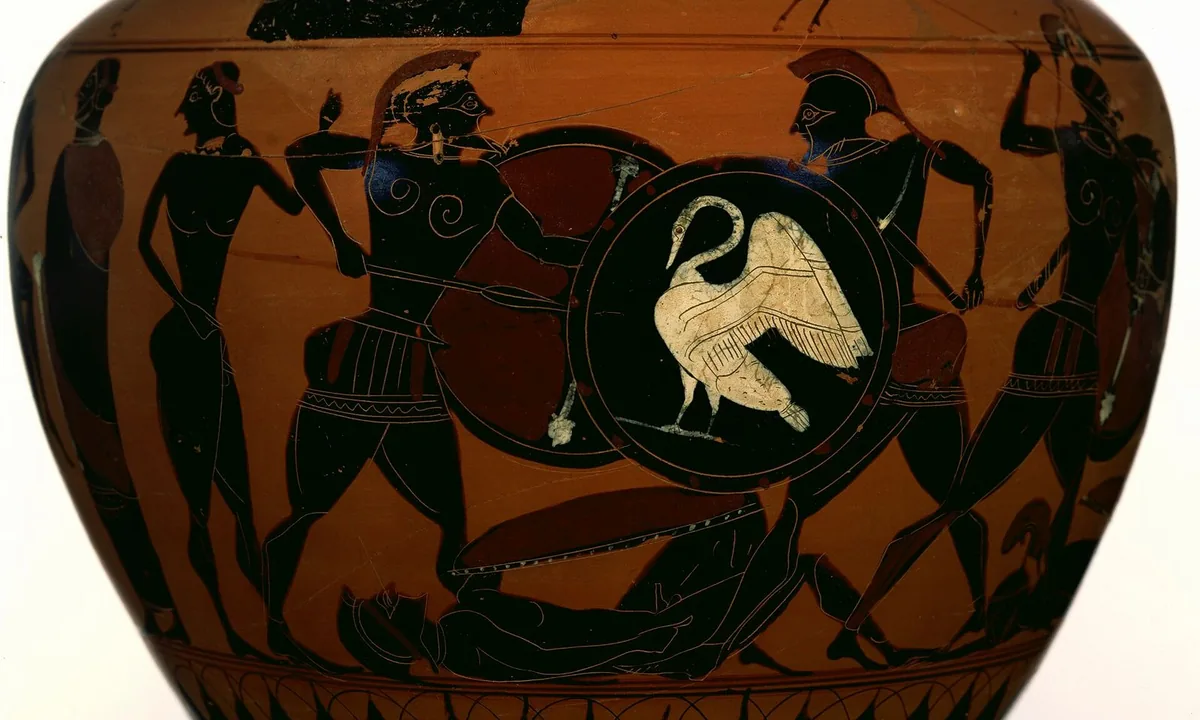
Two hoplites fight over a fallen warrior on an Athenian black-figure amphora from the workshop of Exekias, about 540 BCE (J. Paul Getty Museum). Made a century before the Peloponnesian War, it shows how Greek heavy infantry fought: bronze helmets, round shields and spears. Group E (workshop of Exekias), c. 540 BCE · CC0 · Wikimedia Commons -
13. Why was Philip II's army so much stronger than earlier Macedonian forces?
Show the answer
A. It was professionally drilled, armed with long pikes and paid with Thracian gold. Philip turned part-time soldiers into a professional army with the sarissa. He paid for it with gold from Thracian mines.
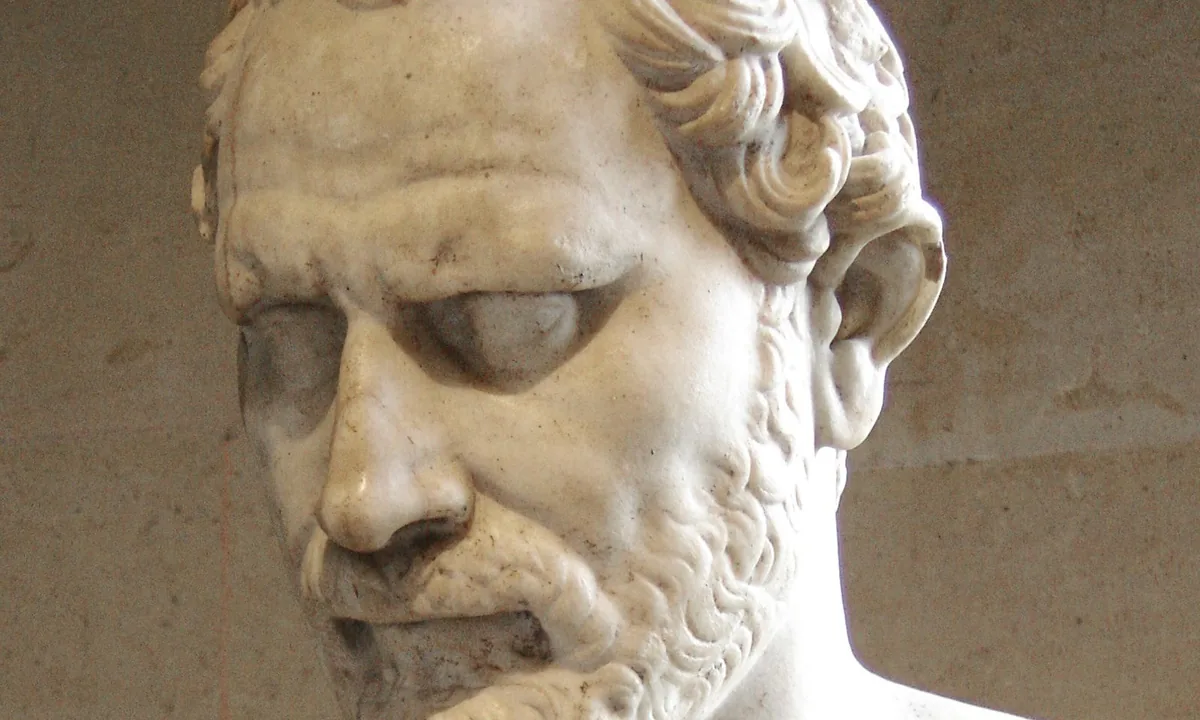
Demosthenes: Roman marble copy of the bronze statue the Athenians set up in his honour in 280 BCE. Louvre, Paris. Eric Gaba (Sting) · CC BY-SA 2.5 · Wikimedia Commons Read the full story: Who Was Demosthenes? The Philippics Against Philip of Macedon →
-
14. Historians know for certain that Alexander was poisoned.
Show the answer
B. False. Rumours of poison spread in ancient times, but Arrian doubted them. The sources describe a fever after heavy drinking. The cause is unknown.
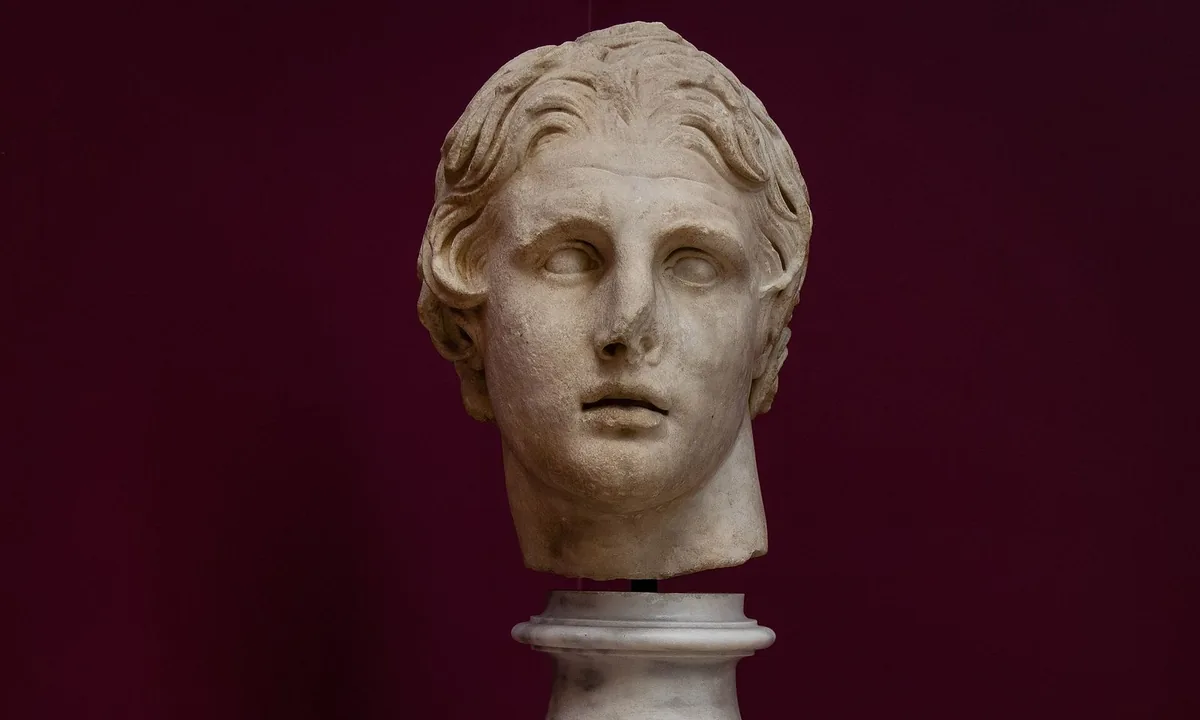
Marble head of Alexander the Great from Pergamon, carved in the early 2nd century BCE in the tradition of his court sculptor Lysippos: the upswept hair and upward gaze became his trademark. Istanbul Archaeology Museums. Bjørn Erik Pedersen, 2017 · CC BY-SA 4.0 · Wikimedia Commons Read the full story: How Did Alexander the Great Die? From Macedon to India →
-
15. Why did the Ionian allies ask Athens, not Sparta, to lead the fleet in 478 BCE?
Show the answer
D. The Spartan commander Pausanias had behaved like a tyrant. Pausanias' arrogance, and suspicions that he was plotting with Persia, turned the allies against Spartan leadership. In fact, Sparta had won at Plataea.
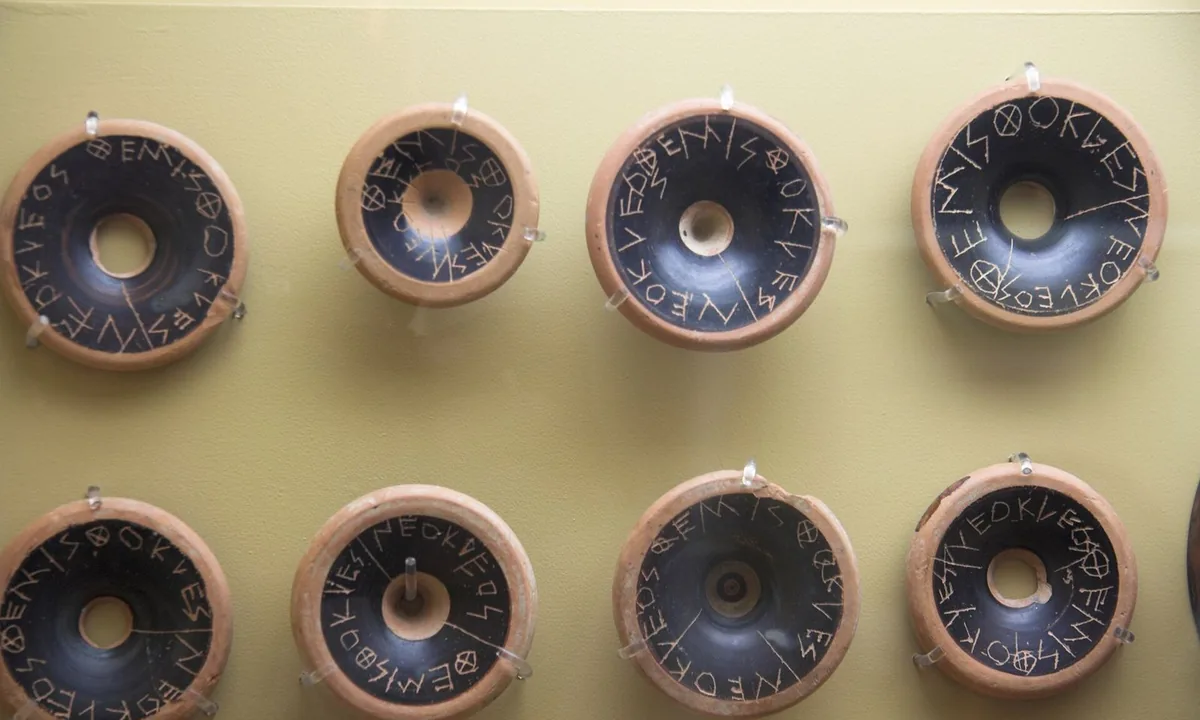
Ostraka — pottery pieces scratched with a name — cast against Themistocles in the ostracism votes of the 480s BCE, when his rival Aristides was himself sent into exile (482 BCE). Ancient Agora Museum, Athens. Zde, 2008 · CC BY-SA 4.0 · Wikimedia Commons Read the full story: What Was the Delian League? Aristides and the Athenian Empire →
-
16. What did Themistocles persuade the Athenians to do with the silver from Laurion?
Show the answer
D. Build a fleet of warships. He persuaded the Assembly to spend the silver on triremes. This was the fleet that fought at Salamis three years later.
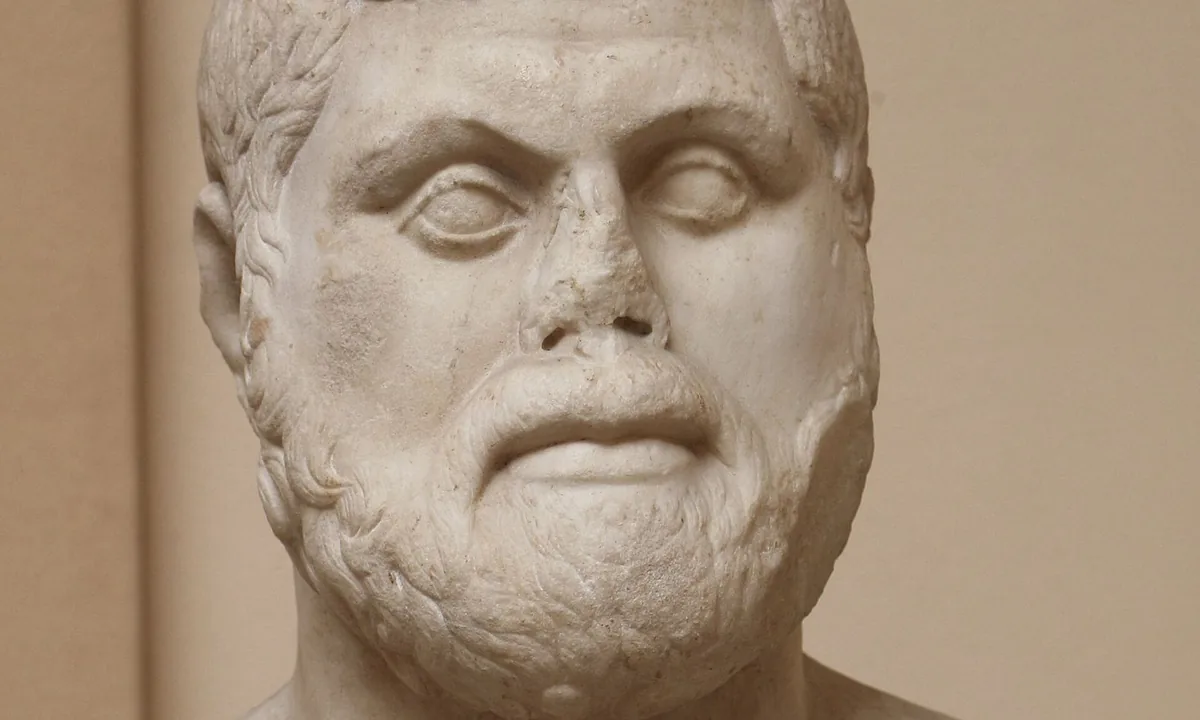
Themistocles: Roman marble herm found at Ostia, copying a Greek portrait made around 470 BCE, during the victor of Salamis' own lifetime. Ostia Antica Museum. Sailko, 2015 · CC BY 3.0 · Wikimedia Commons Read the full story: What Happened at the Battle of Salamis? Themistocles' Gamble →
-
17. What was the Megarian Decree?
Show the answer
D. A ban on Megarians using the harbours of Athens' empire. Athens shut Megarians out of the ports of its empire and the market of Athens. This was a heavy blow to a trading city, and one of the complaints before the war.
Two hoplites fight over a fallen warrior on an Athenian black-figure amphora from the workshop of Exekias, about 540 BCE (J. Paul Getty Museum). Made a century before the Peloponnesian War, it shows how Greek heavy infantry fought: bronze helmets, round shields and spears. Group E (workshop of Exekias), c. 540 BCE · CC0 · Wikimedia Commons -
18. How did Demosthenes die in 322 BCE?
Show the answer
D. He took poison in a temple to avoid capture. Antipater's men cornered him in the temple of Poseidon on Kalaureia. There he took poison that he carried with him.
Demosthenes: Roman marble copy of the bronze statue the Athenians set up in his honour in 280 BCE. Louvre, Paris. Eric Gaba (Sting) · CC BY-SA 2.5 · Wikimedia Commons Read the full story: Who Was Demosthenes? The Philippics Against Philip of Macedon →
-
19. Who taught Alexander when he was a teenager?
Show the answer
C. Aristotle. Philip hired Aristotle, who had studied at Plato's Academy, to teach his son from about 343 BCE.
Marble head of Alexander the Great from Pergamon, carved in the early 2nd century BCE in the tradition of his court sculptor Lysippos: the upswept hair and upward gaze became his trademark. Istanbul Archaeology Museums. Bjørn Erik Pedersen, 2017 · CC BY-SA 4.0 · Wikimedia Commons Read the full story: How Did Alexander the Great Die? From Macedon to India →
-
20. Members of the Delian League were free to leave whenever they wished.
Show the answer
B. False. When Naxos tried to leave around 470 BCE, Athens surrounded it, attacked it and forced it back. Thasos was treated the same way in 465 BCE.
Ostraka — pottery pieces scratched with a name — cast against Themistocles in the ostracism votes of the 480s BCE, when his rival Aristides was himself sent into exile (482 BCE). Ancient Agora Museum, Athens. Zde, 2008 · CC BY-SA 4.0 · Wikimedia Commons Read the full story: What Was the Delian League? Aristides and the Athenian Empire →
-
21. Themistocles died in Athens as an honoured citizen.
Show the answer
B. False. He was ostracised around 471 BCE and condemned for treason. He died around 459 BCE in Magnesia, a city the Persian king had given him to govern.
Themistocles: Roman marble herm found at Ostia, copying a Greek portrait made around 470 BCE, during the victor of Salamis' own lifetime. Ostia Antica Museum. Sailko, 2015 · CC BY 3.0 · Wikimedia Commons Read the full story: What Happened at the Battle of Salamis? Themistocles' Gamble →
-
22. Why did the historian Thucydides spend twenty years in exile?
Show the answer
B. He arrived too late to save Amphipolis from Brasidas. As general in the north in 424 BCE, he failed to reach Amphipolis before Brasidas took it. Exile let him gather information from both sides.
Two hoplites fight over a fallen warrior on an Athenian black-figure amphora from the workshop of Exekias, about 540 BCE (J. Paul Getty Museum). Made a century before the Peloponnesian War, it shows how Greek heavy infantry fought: bronze helmets, round shields and spears. Group E (workshop of Exekias), c. 540 BCE · CC0 · Wikimedia Commons -
23. What were the Philippics?
Show the answer
B. Demosthenes' speeches warning Athens against Philip. From 351 BCE Demosthenes gave a series of speeches urging Athens to act against Philip II. The word now means any fierce attack in words.
Demosthenes: Roman marble copy of the bronze statue the Athenians set up in his honour in 280 BCE. Louvre, Paris. Eric Gaba (Sting) · CC BY-SA 2.5 · Wikimedia Commons Read the full story: Who Was Demosthenes? The Philippics Against Philip of Macedon →
-
24. Why did Alexander turn back at the river Hyphasis in 326 BCE?
Show the answer
A. His exhausted army refused to march any farther east. After eight years of marching and fighting, the soldiers refused to go on. Alexander sulked in his tent for three days. Then he gave the order to turn back.
Marble head of Alexander the Great from Pergamon, carved in the early 2nd century BCE in the tradition of his court sculptor Lysippos: the upswept hair and upward gaze became his trademark. Istanbul Archaeology Museums. Bjørn Erik Pedersen, 2017 · CC BY-SA 4.0 · Wikimedia Commons Read the full story: How Did Alexander the Great Die? From Macedon to India →
-
25. Where was the Delian League's treasury kept when the alliance was founded?
Show the answer
C. On the island of Delos. The money and the meetings were on Delos, a sacred island of Apollo, which is why historians call it the Delian League. The treasury moved to Athens in 454 BCE.
Ostraka — pottery pieces scratched with a name — cast against Themistocles in the ostracism votes of the 480s BCE, when his rival Aristides was himself sent into exile (482 BCE). Ancient Agora Museum, Athens. Zde, 2008 · CC BY-SA 4.0 · Wikimedia Commons Read the full story: What Was the Delian League? Aristides and the Athenian Empire →
-
26. Who commanded the Spartan fleet that destroyed the Athenian fleet at Aegospotami?
Show the answer
D. Lysander. Lysander, with money from the Persian prince Cyrus, caught the Athenian ships on the beach at Aegospotami in 405 BCE. He captured most of them.
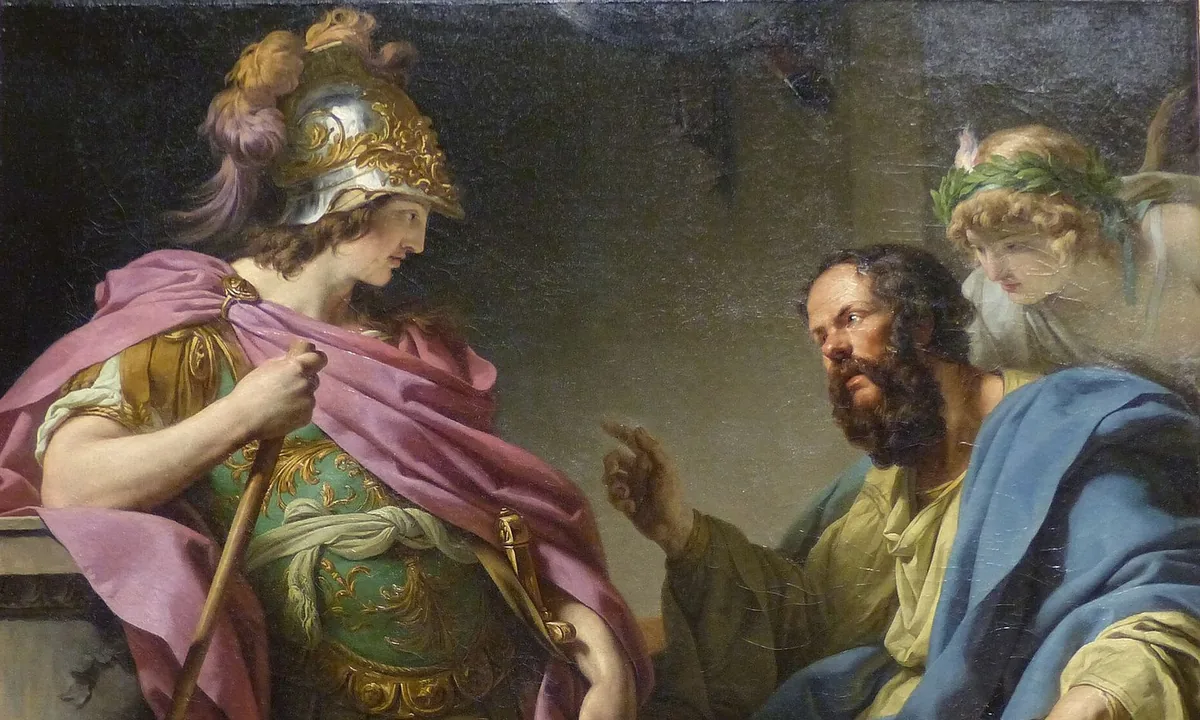
Alcibiades Receiving the Lessons of Socrates, painted by François-André Vincent in 1776: the young aristocrat in armour listens to the philosopher who was his mentor. A later painting with 18th-century costume ideas. Musée Fabre, Montpellier. François-André Vincent, 1776 · Public domain · Wikimedia Commons Read the full story: Who Won the Peloponnesian War? Alcibiades and the Fall of Athens →
-
27. How did the people of Segesta convince Athenian ambassadors that they were rich?
Show the answer
A. They passed the same borrowed gold and silver cups from house to house. Thucydides says the ambassadors dined in many houses and saw what looked like great wealth. In fact, they saw the same borrowed cups each time.
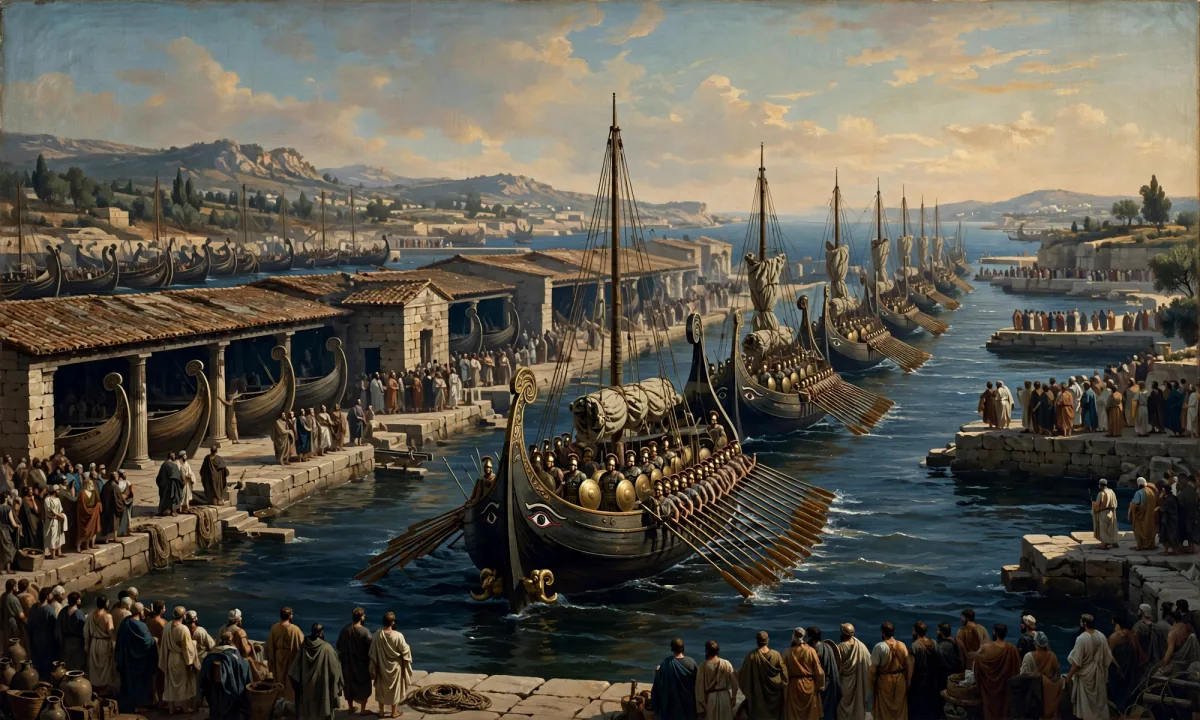
Illustration: the Athenian fleet rows out of the Piraeus for Sicily in 415 BCE, watched by crowds on the quays. Illustration (AI-generated) Read the full story: What Was the Sicilian Expedition? Athens' Disaster at Syracuse →
-
28. Why did the Spartan fort at Decelea hurt Athens so badly?
Show the answer
A. Thousands of slaves escaped to it, and Athenians could not farm their land. Thucydides says more than 20,000 slaves ran away, many of them skilled. With the land occupied all year, Athens depended entirely on food brought in by sea.
Alcibiades Receiving the Lessons of Socrates, painted by François-André Vincent in 1776: the young aristocrat in armour listens to the philosopher who was his mentor. A later painting with 18th-century costume ideas. Musée Fabre, Montpellier. François-André Vincent, 1776 · Public domain · Wikimedia Commons Read the full story: Who Won the Peloponnesian War? Alcibiades and the Fall of Athens →
-
29. Why did Nicias delay the retreat from Syracuse in August 413 BCE?
Show the answer
D. An eclipse of the moon, which his seers said to wait out. The seers advised waiting twenty-seven days after the eclipse. The delay let the Syracusans trap the fleet in the harbour.
Illustration: the Athenian fleet rows out of the Piraeus for Sicily in 415 BCE, watched by crowds on the quays. Illustration (AI-generated) Read the full story: What Was the Sicilian Expedition? Athens' Disaster at Syracuse →
-
30. Where did Alcibiades advise the Spartans to build a permanent fort?
Show the answer
B. Decelea, in the hills of Attica. A garrison at Decelea, a short march from Athens, kept Athenian farmers off their land all year round.
Alcibiades Receiving the Lessons of Socrates, painted by François-André Vincent in 1776: the young aristocrat in armour listens to the philosopher who was his mentor. A later painting with 18th-century costume ideas. Musée Fabre, Montpellier. François-André Vincent, 1776 · Public domain · Wikimedia Commons Read the full story: Who Won the Peloponnesian War? Alcibiades and the Fall of Athens →
Your score
You got right. Want the stories behind them?
Aurelius: Learn History has 700+ more questions like these, each one after the five-minute illustrated story it comes from, across 18 eras. Free to try.
Play next: Ancient Rome Quiz · Ancient Egypt Quiz · History Quiz
About this quiz
It goes well beyond the famous 300: the amnesty that shaped Socrates’ trial, the borrowed cups of Segesta and the eclipse that doomed the Athenian fleet at Syracuse.
The questions come from 11 lessons in the app: Who Was Cleisthenes? The Birth of Democracy in Athens, Why Was Socrates Executed? The Trial and Death of Socrates, Who Was Pericles? The Golden Age of Athens, What Happened at Thermopylae and Marathon? The Persian Wars, What Caused the Peloponnesian War?, Who Was Demosthenes? The Philippics Against Philip of Macedon, How Did Alexander the Great Die? From Macedon to India, What Was the Delian League? Aristides and the Athenian Empire, What Happened at the Battle of Salamis? Themistocles' Gamble, Who Won the Peloponnesian War? Alcibiades and the Fall of Athens, What Was the Sicilian Expedition? Athens' Disaster at Syracuse.
Questions are labelled easy, medium or hard by the level of the lesson they come from, and the quiz plays in that order, easy to hard. There are 700+ more in the Aurelius: Learn History app.
Frequently asked questions
How many questions are in the Ancient Greece Quiz?
30: 11 easy, 14 medium and 5 hard, played easy to hard. 25 are multiple choice and 5 true or false. Every answer is explained, with the picture of the story behind it, and at the end you see your score by level.
Is the Ancient Greece Quiz free?
Yes. It plays in your browser with no account and no sign-up. For more, Aurelius: Learn History has 700+ questions like these, each after a short illustrated lesson. The app is free to download and try on iPhone, iPad and Android.
Where do the questions come from?
From the lessons in Aurelius: Learn History. Every question follows a short illustrated story in the app and is written and checked by the Aurelius editorial team. The easy, medium and hard labels are the levels of those lessons. See how lessons are checked.
Which quiz should I play next?
Try the Ancient Rome Quiz, the Ancient Egypt Quiz and the History Quiz. All quizzes are listed at the end of this page.
More history quizzes
- Ancient Rome QuizRepublic, Caesar and empire.
- Ancient Egypt QuizPharaohs, pyramids, mummies and the Rosetta Stone.
- History QuizThe all-round history quiz across many eras.
- World War 2 QuizFrom the invasion of Poland to Bastogne.
- WW1 Quiz: World War 1 Questions and AnswersFrom the Archduke’s assassination to Versailles.
- American History QuizThe Revolution and the Civil War: US history trivia.
- Cold War QuizBerlin, Cuba, Vietnam and the space race.
- Medieval History Quiz: The Middle AgesFrom Charlemagne and the Vikings to the Black Death.
- French Revolution and Napoleon QuizFrom the Bastille to Waterloo.
- Tudors and Reformation QuizHenry VIII, Elizabeth I, Luther and the Armada.
- World History QuizOne game across world history.
- 100 History Trivia Questions and Answers100 questions with answers for quiz nights and classrooms.