French Revolution and Napoleon Quiz
This French Revolution and Napoleon quiz has 30 questions, from the Estates-General, the Tennis Court Oath and the flight to Varennes to Robespierre, Napoleon’s rise, Austerlitz, Trafalgar, the retreat from Moscow and Waterloo. It starts easy and gets harder, and every answer is explained.
Tap an answer to start, or use the keys A to D. No sign-up.
-
1. On which day of the year does France celebrate its national day, Bastille Day?
Show the answer
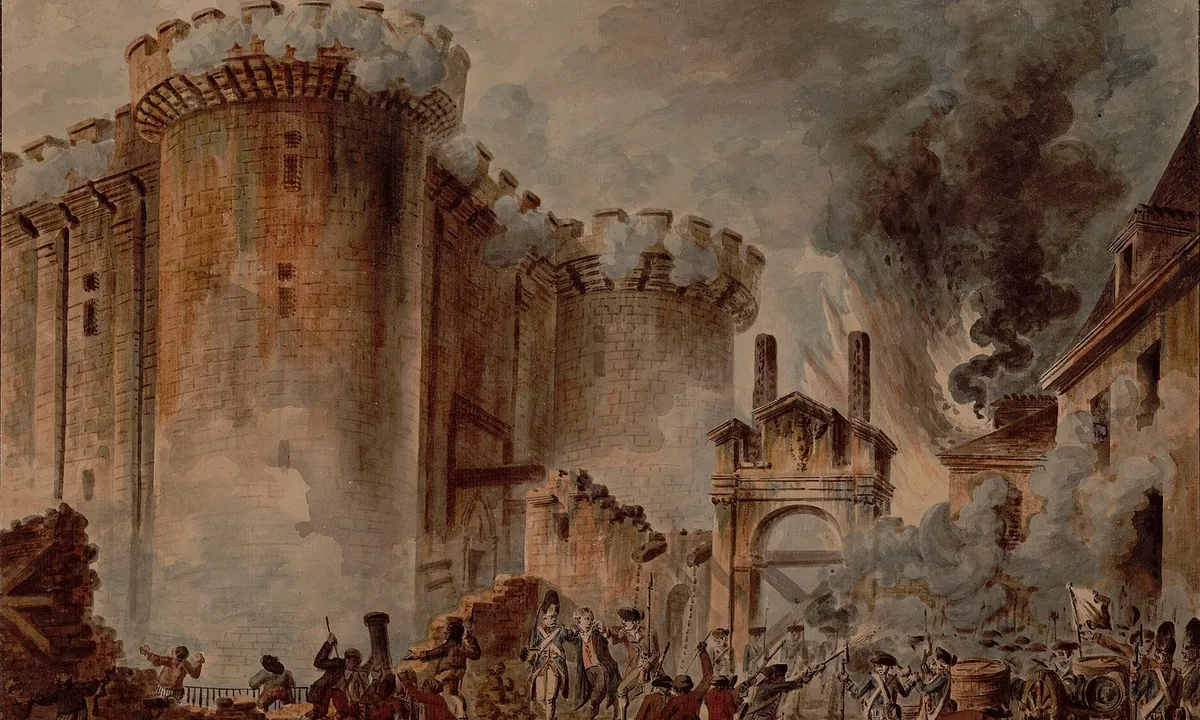
B. 14 July. The Bastille fell on 14 July 1789. Necker had been dismissed on 11 July, and the king came to Paris on 17 July, but 14 July became the national day.
The storming of the Bastille, 14 July 1789, painted the same year by Jean-Pierre Houël. Jean-Pierre Houël, 1789 · Public domain · Wikimedia Commons -
2. What did the deputies swear in the Tennis Court Oath?
Show the answer
D. Not to separate until a constitution had been written for France. In June 1789 the deputies were still monarchists: they still wanted a king. They swore to stay together until France had a constitution. The republic came three years later.
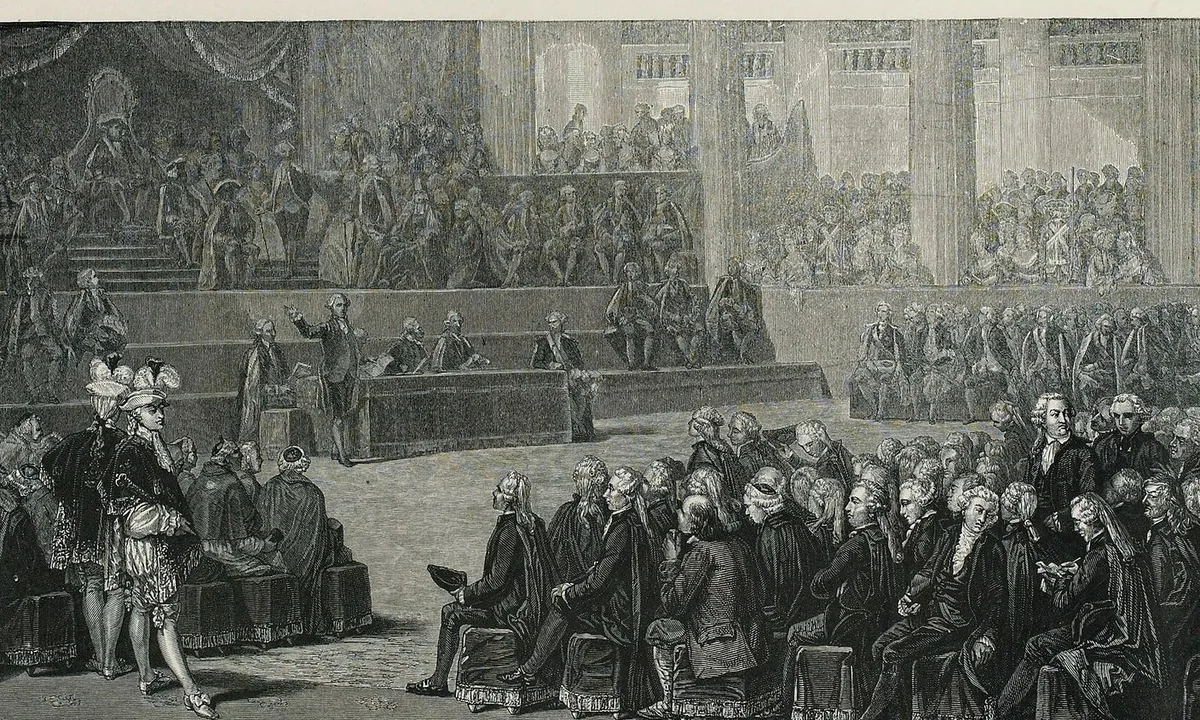
The Opening of the Estates-General at Versailles, 5 May 1789: print published by Adolphe Pannemaker after Louis-Charles-Auguste Couder's painting of 1839 (Musée Carnavalet, Paris Musées). The king sits on a dais at the far end of the hall. Adolphe Pannemaker after Auguste Couder · CC0 · Wikimedia Commons -
3. The storming of the Bastille ended the French monarchy in July 1789.
Show the answer
B. False. Louis XVI kept his throne for three more years. But he had to pull his troops back and accept the revolutionary cockade, because he had lost control of Paris.
The storming of the Bastille, 14 July 1789, painted the same year by Jean-Pierre Houël. Jean-Pierre Houël, 1789 · Public domain · Wikimedia Commons -
4. The Tennis Court Oath was sworn because the king had closed the Third Estate's usual meeting hall.
Show the answer
A. True. The hall was shut on 20 June, officially for preparations. The deputies feared the king would dissolve their assembly, so they moved to a nearby indoor tennis court, the jeu de paume.
The Opening of the Estates-General at Versailles, 5 May 1789: print published by Adolphe Pannemaker after Louis-Charles-Auguste Couder's painting of 1839 (Musée Carnavalet, Paris Musées). The king sits on a dais at the far end of the hall. Adolphe Pannemaker after Auguste Couder · CC0 · Wikimedia Commons -
5. Why did the discovery of the armoire de fer in November 1792 matter to Louis XVI's trial?
Show the answer
A. It seemed to show that the king had secret dealings with opponents of the Revolution. The papers in the Tuileries iron chest seemed to show the king's secret contacts with the Revolution's opponents. This convinced many deputies that he should be tried for treason.
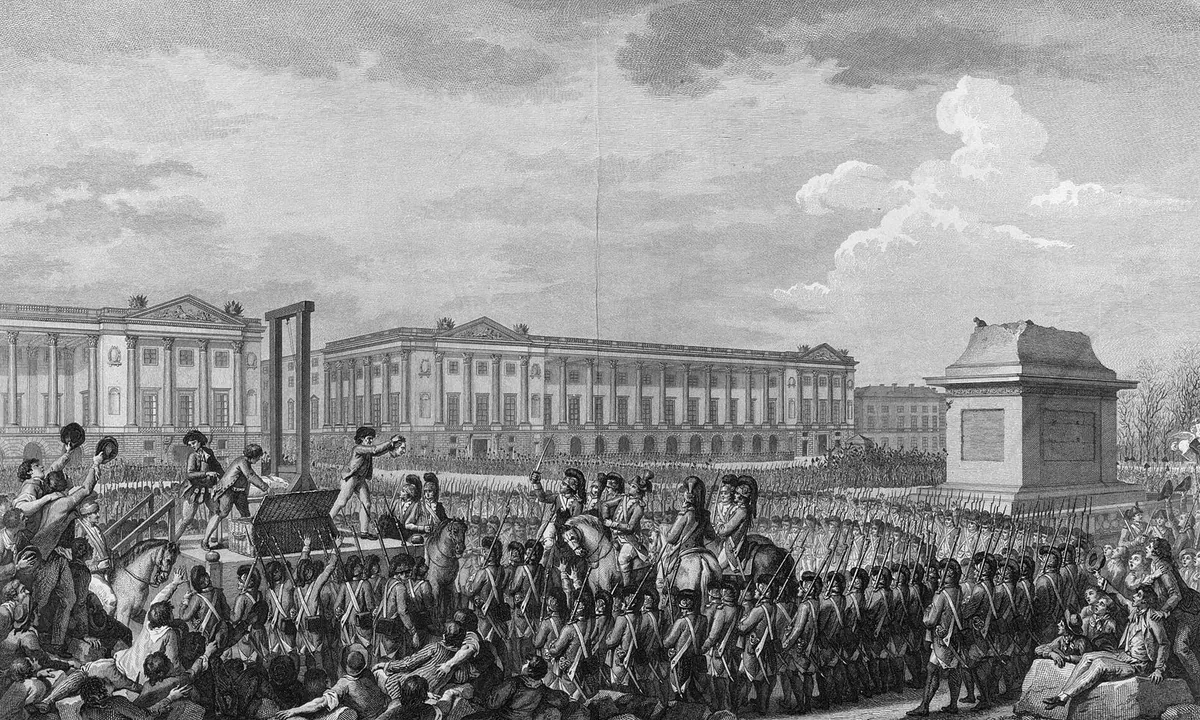
The execution of Louis XVI on the Place de la Révolution, 21 January 1793: engraving of 1794 by Isidore-Stanislas Helman after Charles Monnet. Isidore-Stanislas Helman after Charles Monnet · Public domain · Wikimedia Commons -
6. Which phrase from the Declaration of the Rights of Man answered the idea that the king held all power?
Show the answer
B. “The principle of all sovereignty resides essentially in the nation”. Article 3 is the Declaration's answer to absolute monarchy, where the king held all power. Authority comes from the nation. It does not come from a king chosen by God, or from inheritance.
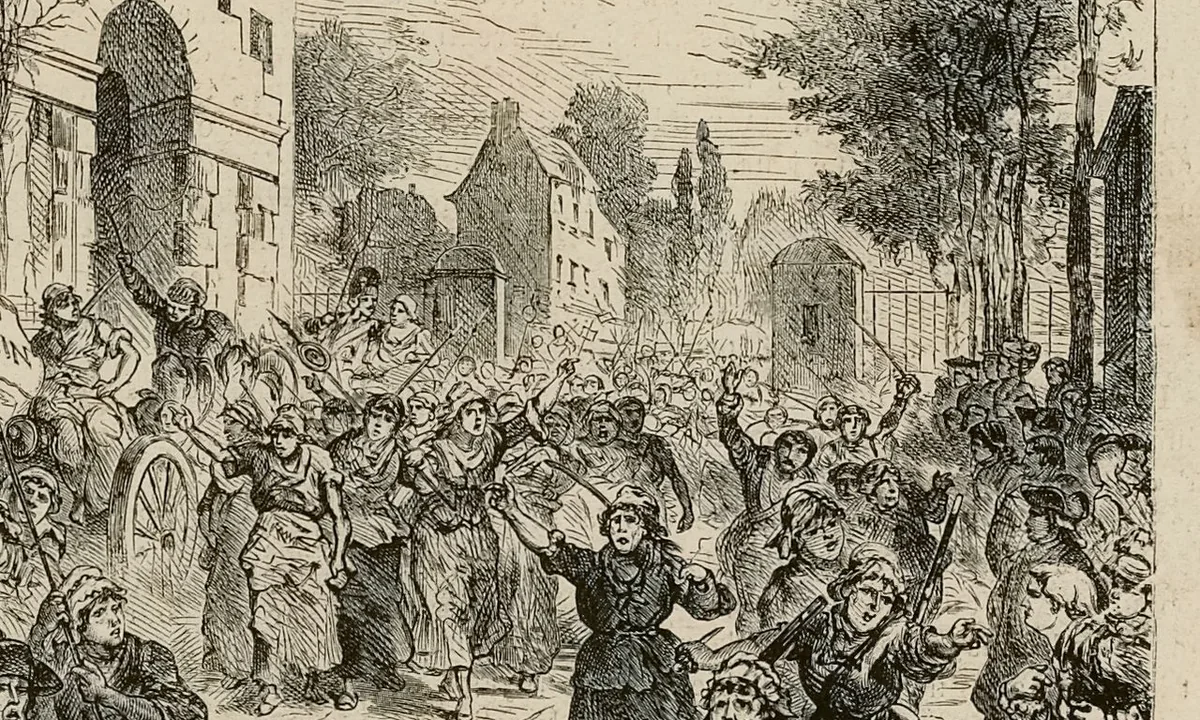
Market women of Paris march toward Versailles on 5 October 1789, in a 19th-century print engraved by Fortuné Méaulle after a design by Léon du Paty (Paris Musées). Léon du Paty · CC0 · Wikimedia Commons -
7. Who was the best-known member of the Committee of Public Safety during the Terror?
Show the answer
A. Maximilien Robespierre. Maximilien Robespierre, a lawyer and Jacobin leader, was the Committee's most famous member. Danton was guillotined after asking for the Terror to be eased.
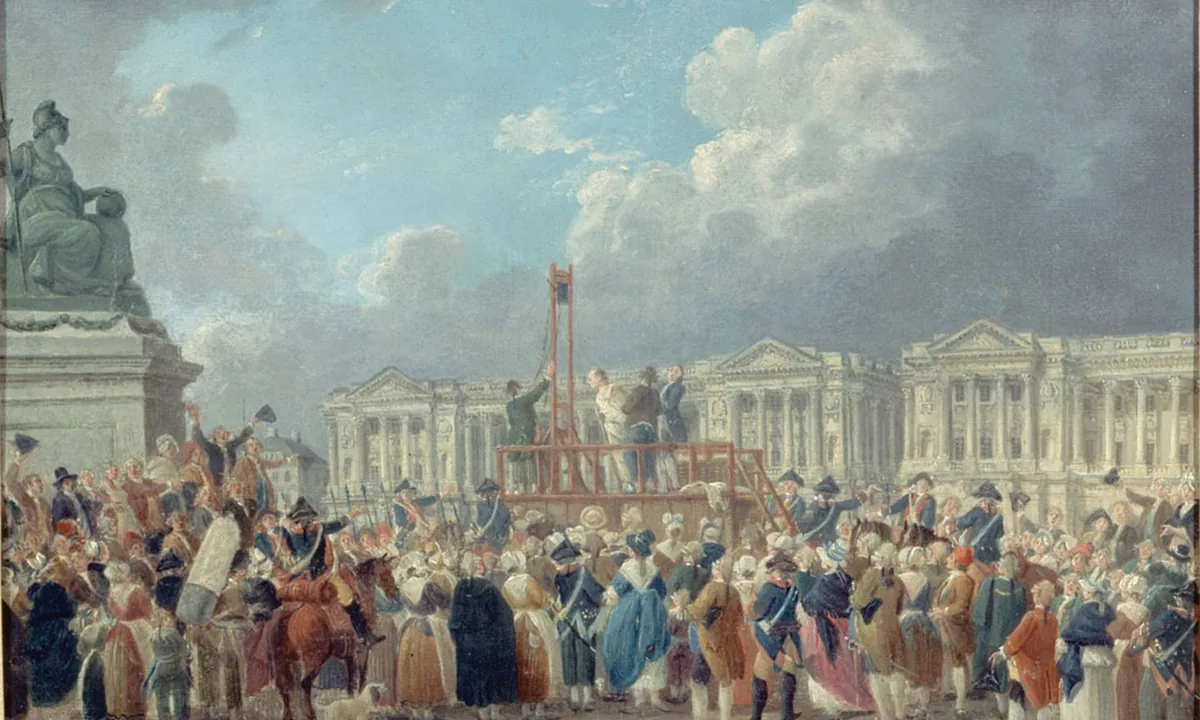
An execution on the Place de la Révolution (today's Place de la Concorde), Paris, painted by Pierre-Antoine Demachy around 1793: crowds surround the guillotine, the symbol of the Terror. Pierre-Antoine Demachy, c. 1793 · Public domain · Wikimedia Commons -
8. Why did the revolutionaries accuse Marie Antoinette of treason?
Show the answer
A. She passed French military secrets to Austria's side. After France went to war with Austria in April 1792, the queen secretly sent French military secrets in letters to Fersen and an Austrian diplomat. Helping an enemy in war is treason.
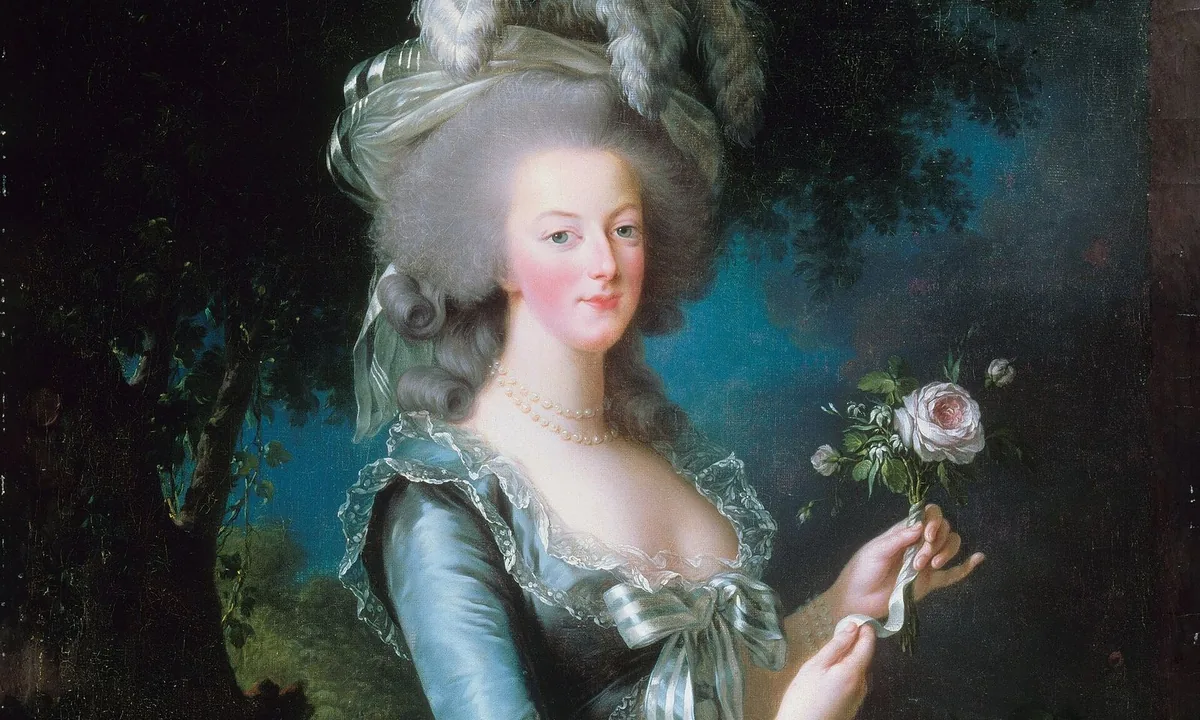
Marie Antoinette with a Rose, painted by Élisabeth Vigée Le Brun in 1783, when the queen was 27. Élisabeth Vigée Le Brun, 1783 · Public domain · Wikimedia Commons -
9. The National Convention voted unanimously to put Louis XVI to death.
Show the answer
B. False. Almost every deputy voted that he was guilty. But the death sentence passed by a narrow margin after many debates, and a number of deputies wanted a reprieve or prison instead.
The execution of Louis XVI on the Place de la Révolution, 21 January 1793: engraving of 1794 by Isidore-Stanislas Helman after Charles Monnet. Isidore-Stanislas Helman after Charles Monnet · Public domain · Wikimedia Commons -
10. The 1789 Declaration of the Rights of Man gave women the same political rights as men.
Show the answer
B. False. The Declaration spoke of 'men' and 'citizens', but women were kept out of political life. Olympe de Gouges answered it in 1791 with her Declaration of the Rights of Woman.
Market women of Paris march toward Versailles on 5 October 1789, in a 19th-century print engraved by Fortuné Méaulle after a design by Léon du Paty (Paris Musées). Léon du Paty · CC0 · Wikimedia Commons -
11. Deputies feared they would be the Terror's next victims. When did the Reign of Terror end?
Show the answer
B. July 1794. On 27 July 1794 the Convention had Robespierre arrested, and he was guillotined the next day. That ended the Terror.
An execution on the Place de la Révolution (today's Place de la Concorde), Paris, painted by Pierre-Antoine Demachy around 1793: crowds surround the guillotine, the symbol of the Terror. Pierre-Antoine Demachy, c. 1793 · Public domain · Wikimedia Commons -
12. From which island did Napoleon return to France in 1815?
Show the answer
A. Elba. He was exiled to Elba after his abdication in April 1814 and escaped in February 1815. St Helena came after Waterloo.
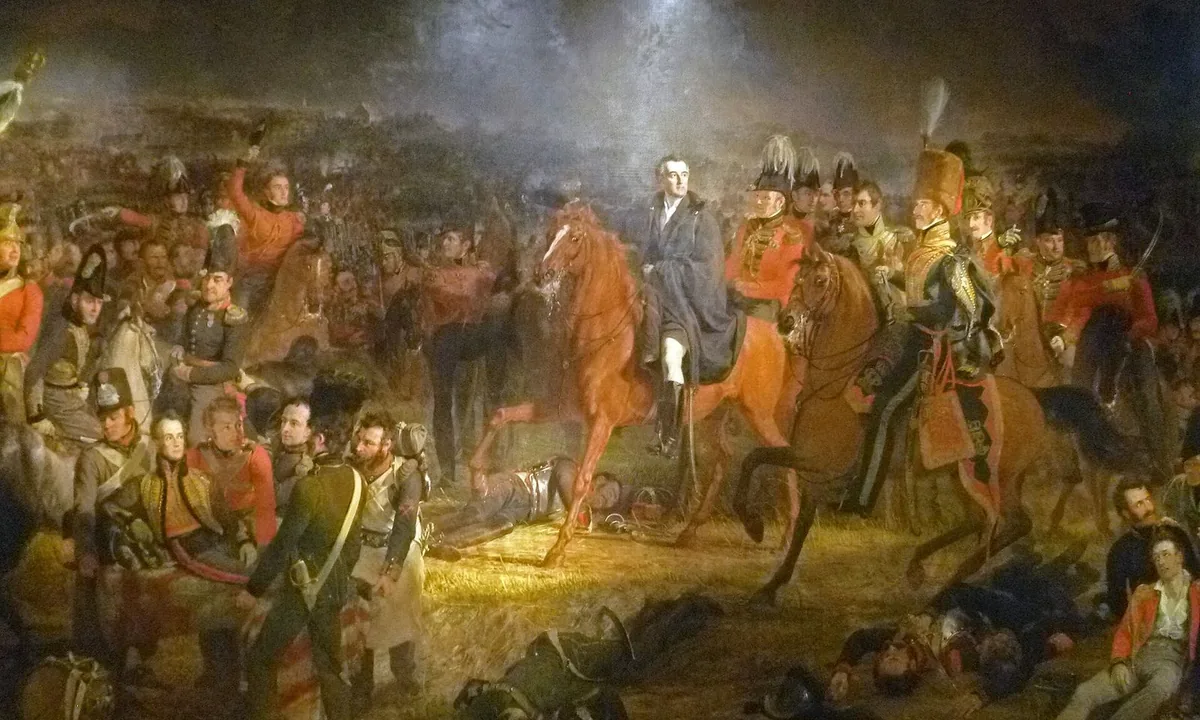
Jan Willem Pieneman, The Battle of Waterloo, 1824 (Rijksmuseum, Amsterdam): Wellington at the centre as news arrives that the Prussians are coming up, with the wounded Prince of Orange carried off at lower left. Jan Willem Pieneman · Public domain · Wikimedia Commons -
13. Why did Sieyès and his allies need Bonaparte in 1799?
Show the answer
C. He had the army and prestige to impose a stronger government. Sieyès believed the Directory could not be fixed without force. Bonaparte, home from Egypt, had the soldiers and the popularity to supply that force.
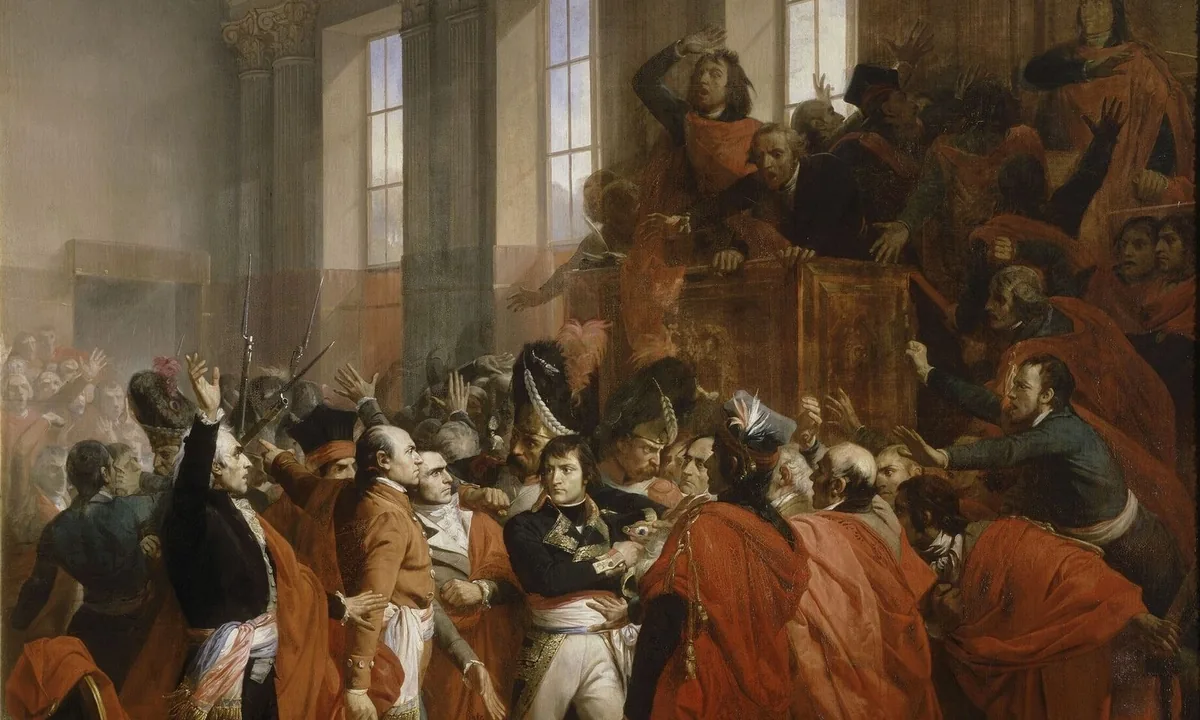
François Bouchot, General Bonaparte at the Council of Five Hundred, Saint-Cloud, 10 November 1799 (1840, Palace of Versailles): deputies surround the general in the Orangerie hall. François Bouchot · Public domain · Wikimedia Commons -
14. Which word did Nelson originally want in his famous signal?
Show the answer
D. Confides. He wanted “confides”, but it was not in the signal book. Lieutenant Pasco suggested “expects”, which could be sent faster.
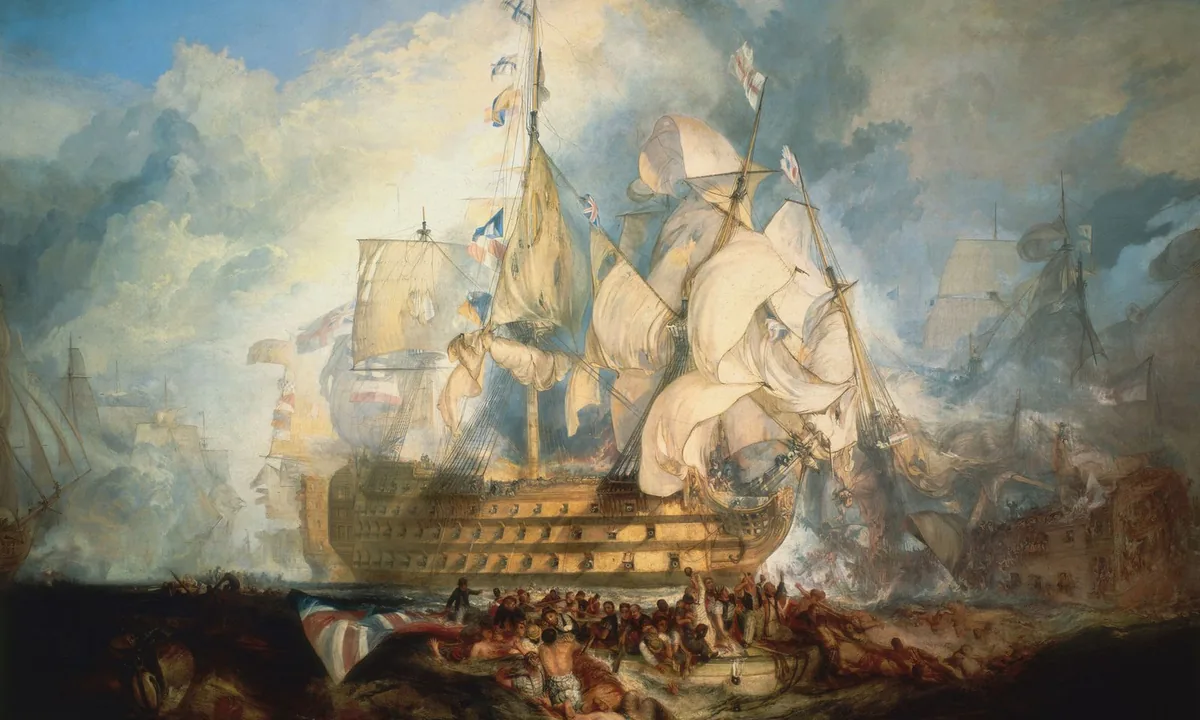
J. M. W. Turner, The Battle of Trafalgar, 1822–24 (National Maritime Museum, Greenwich): HMS Victory at the centre, with the wreckage and drowning men of the battle in the foreground. J. M. W. Turner · Public domain · Wikimedia Commons -
15. What happened in Moscow after the French entered it?
Show the answer
A. Fires broke out and destroyed most of the city. The fires began on the night of 14–15 September and burned for days. The cause is still debated.
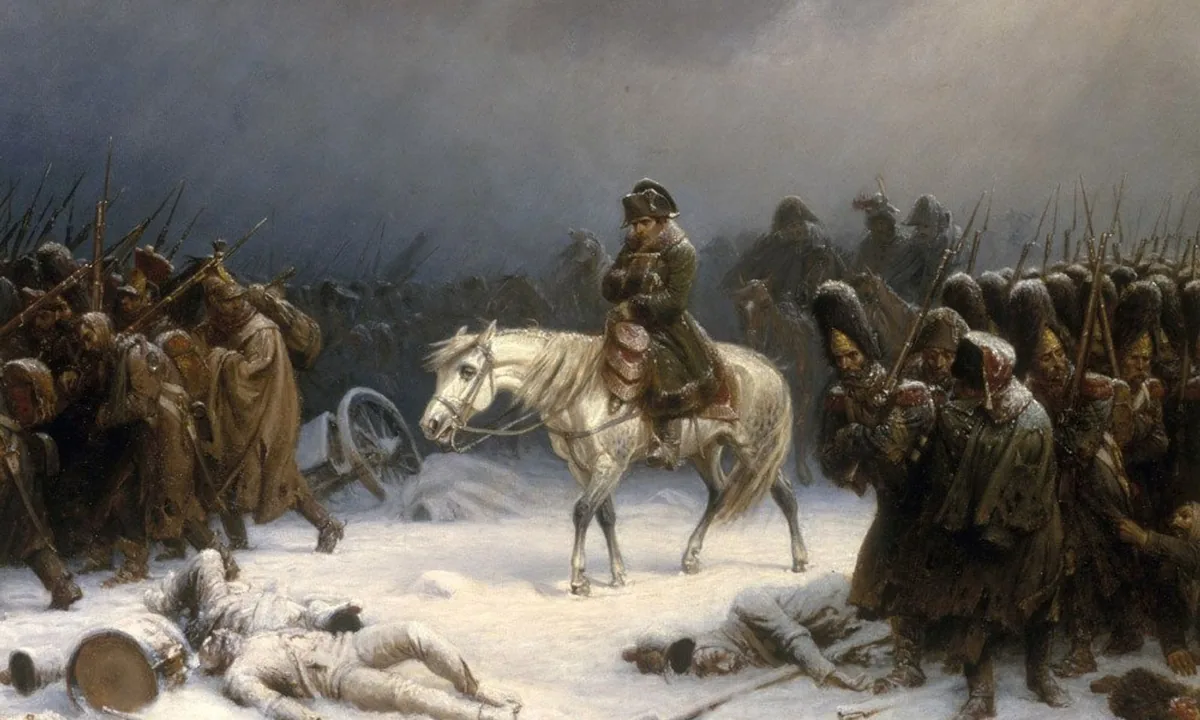
Adolph Northen, Napoleon's Retreat from Moscow, 1851: Napoleon, wrapped against the cold, rides at the head of a straggling column through snow. Adolph Northen · Public domain · Wikimedia Commons -
16. What happened to the Holy Roman Empire after Austerlitz?
Show the answer
B. It was dissolved in 1806. After the Confederation of the Rhine was formed, Francis, the last Holy Roman Emperor, ended the Holy Roman Empire in August 1806 and remained Emperor of Austria.
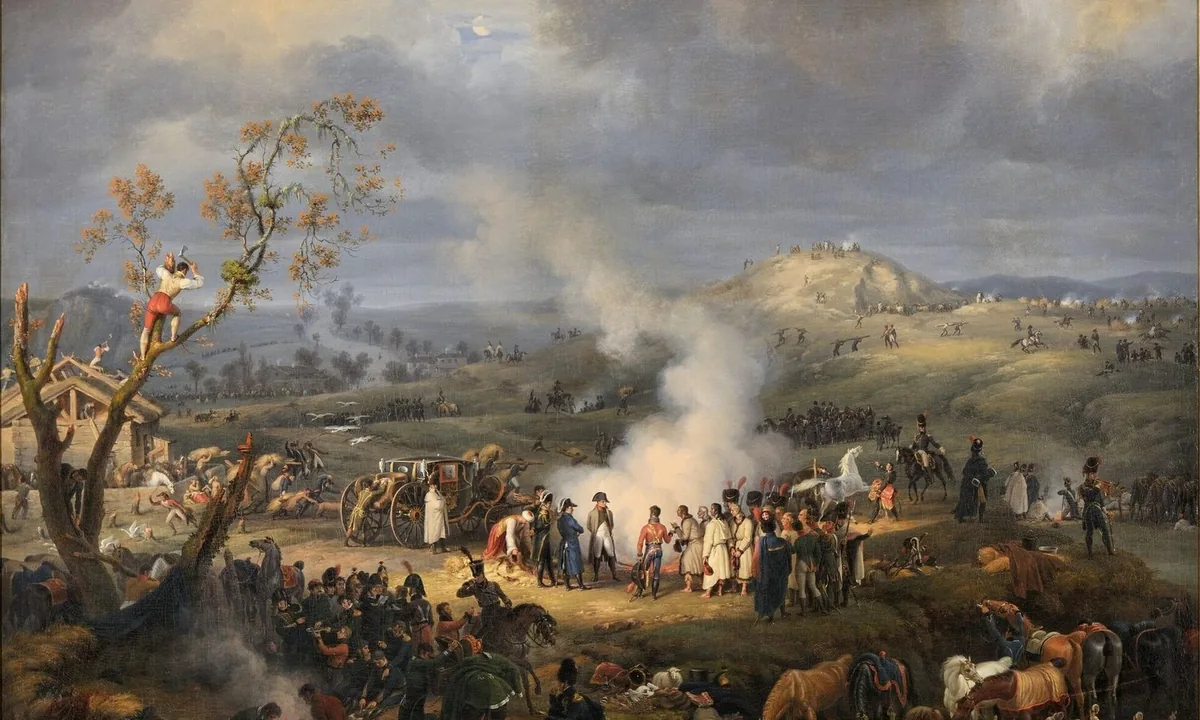
Louis-François Lejeune, Napoleon's Bivouac on the Eve of Austerlitz, 1 December 1805 (painted 1808, Palace of Versailles). Louis-François, Baron Lejeune · Public domain · Wikimedia Commons -
17. Why did the arrival of the Prussian army matter so much at Waterloo?
Show the answer
C. It forced Napoleon to divide his forces and weakened his attack. The Prussians threatened Napoleon's right flank and forced him to send troops to hold them back. So he could not use all his reserves against Wellington.
Jan Willem Pieneman, The Battle of Waterloo, 1824 (Rijksmuseum, Amsterdam): Wellington at the centre as news arrives that the Prussians are coming up, with the wounded Prince of Orange carried off at lower left. Jan Willem Pieneman · Public domain · Wikimedia Commons -
18. Which title did Napoleon hold from December 1799?
Show the answer
A. First Consul. The new constitution of December 1799, the Constitution of Year VIII in the revolutionary calendar, made him First Consul. He became Emperor only in 1804.
François Bouchot, General Bonaparte at the Council of Five Hundred, Saint-Cloud, 10 November 1799 (1840, Palace of Versailles): deputies surround the general in the Orangerie hall. François Bouchot · Public domain · Wikimedia Commons -
19. Why did Trafalgar matter even though Napoleon had already given up invading Britain?
Show the answer
A. It gave Britain lasting command of the sea. The Royal Navy ruled the seas for the rest of the war, protecting British trade and cutting France off from its colonies.
J. M. W. Turner, The Battle of Trafalgar, 1822–24 (National Maritime Museum, Greenwich): HMS Victory at the centre, with the wreckage and drowning men of the battle in the foreground. J. M. W. Turner · Public domain · Wikimedia Commons -
20. Most of the Grande Armée's losses in Russia came in large battles.
Show the answer
B. False. Disease, hunger, exhaustion and cold killed far more than combat did, even though Borodino was one of the bloodiest days of the wars.
Adolph Northen, Napoleon's Retreat from Moscow, 1851: Napoleon, wrapped against the cold, rides at the head of a straggling column through snow. Adolph Northen · Public domain · Wikimedia Commons -
21. Why did Napoleon deliberately weaken his right wing and give up the Pratzen Heights?
Show the answer
D. He wanted to tempt the allies to attack and leave the Heights. Napoleon wanted the allies to leave the high ground to attack what looked like a weak flank, or side. Then he could strike their weakened centre.
Louis-François Lejeune, Napoleon's Bivouac on the Eve of Austerlitz, 1 December 1805 (painted 1808, Palace of Versailles). Louis-François, Baron Lejeune · Public domain · Wikimedia Commons -
22. What was the Imperial Guard's role at the end of the battle?
Show the answer
D. It was sent in as a last assault, failed and retreated. Napoleon sent the Guard against Wellington's centre in the evening. When it was driven back, the French army lost its courage.
Jan Willem Pieneman, The Battle of Waterloo, 1824 (Rijksmuseum, Amsterdam): Wellington at the centre as news arrives that the Prussians are coming up, with the wounded Prince of Orange carried off at lower left. Jan Willem Pieneman · Public domain · Wikimedia Commons -
23. Why did deputies in the Convention turn against Robespierre in July 1794?
Show the answer
C. They feared his unnamed list of traitors meant them. After Danton and others were executed, no one felt safe. On 26 July Robespierre spoke of traitors among the deputies but named no one, so many decided to strike first.
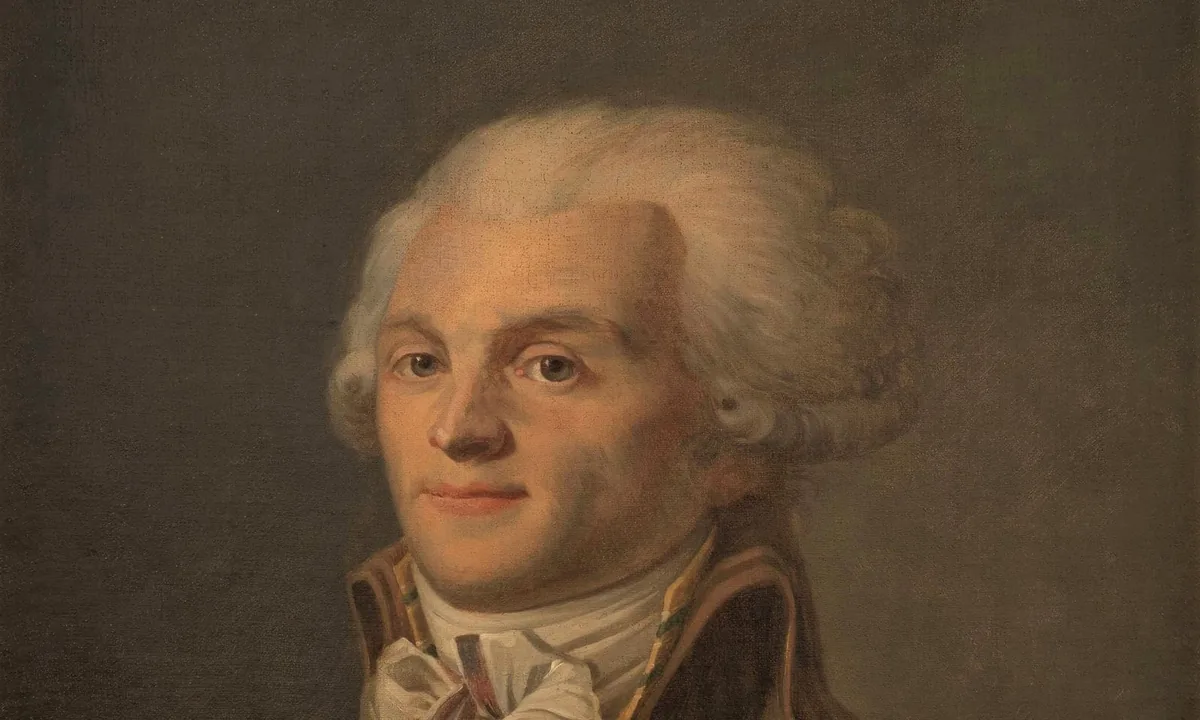
Maximilien Robespierre around 1790, in an anonymous portrait in the Musée Carnavalet, Paris. Unidentified painter, c. 1790 · CC0 · Wikimedia Commons -
24. Which disastrous campaign destroyed Napoleon's Grande Armée in 1812?
Show the answer
A. The invasion of Russia. In 1812 Napoleon invaded Russia. Cold, hunger and Russian attacks destroyed the Grande Armée during the retreat from Moscow, and his downfall began.
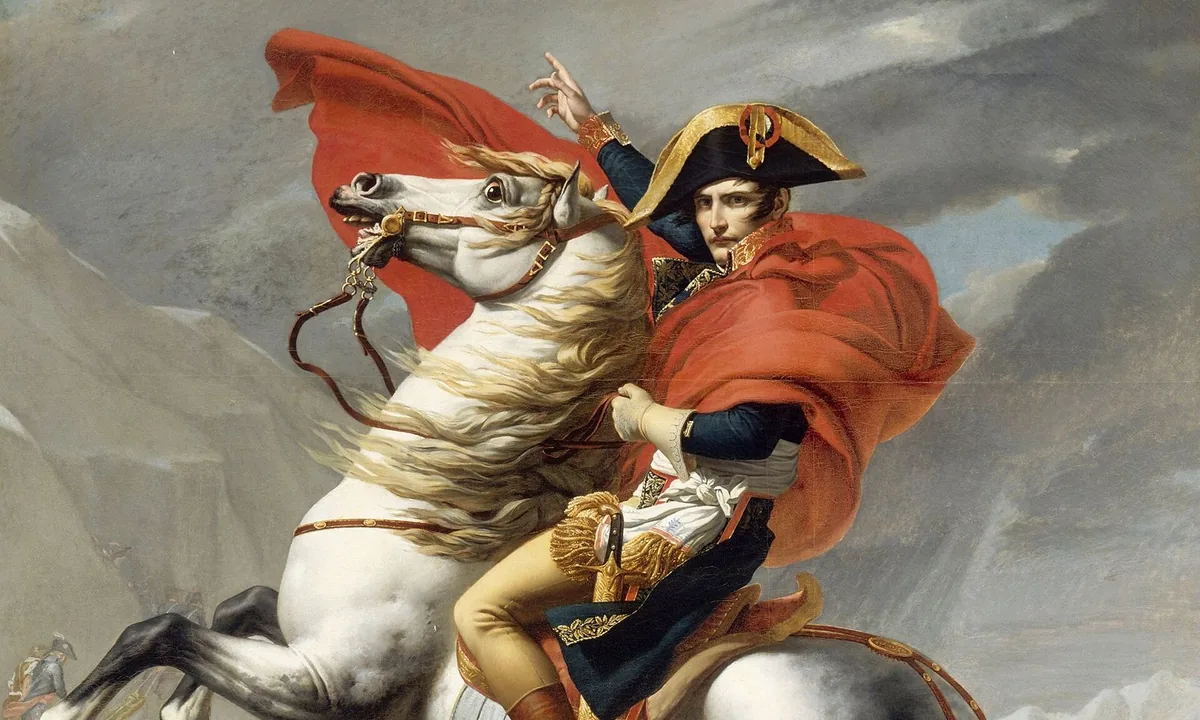
Bonaparte Crossing the Great St Bernard Pass – Jacques-Louis David's heroic image of Napoleon leading his army over the Alps in May 1800. (In reality he crossed on a mule.) Jacques-Louis David, 1802 · Public domain · Wikimedia Commons -
25. On 27 July 1793 Robespierre joined which body, and became its most prominent member?
Show the answer
A. The Committee of Public Safety. Robespierre joined the Committee of Public Safety, which ran the war and the government during the Reign of Terror.
Maximilien Robespierre around 1790, in an anonymous portrait in the Musée Carnavalet, Paris. Unidentified painter, c. 1790 · CC0 · Wikimedia Commons -
26. What set of laws did Napoleon issue in 1804?
Show the answer
D. The Napoleonic Code. The Civil Code of 1804, later called the Napoleonic Code, gave all of France one set of laws. Versions of it still shape the law of many countries.
Bonaparte Crossing the Great St Bernard Pass – Jacques-Louis David's heroic image of Napoleon leading his army over the Alps in May 1800. (In reality he crossed on a mule.) Jacques-Louis David, 1802 · Public domain · Wikimedia Commons -
27. What did the Berlin Decree of 1806 declare?
Show the answer
A. That the British Isles were under blockade. The decree forbade trade with Britain in all lands under French control, beginning the Continental System.
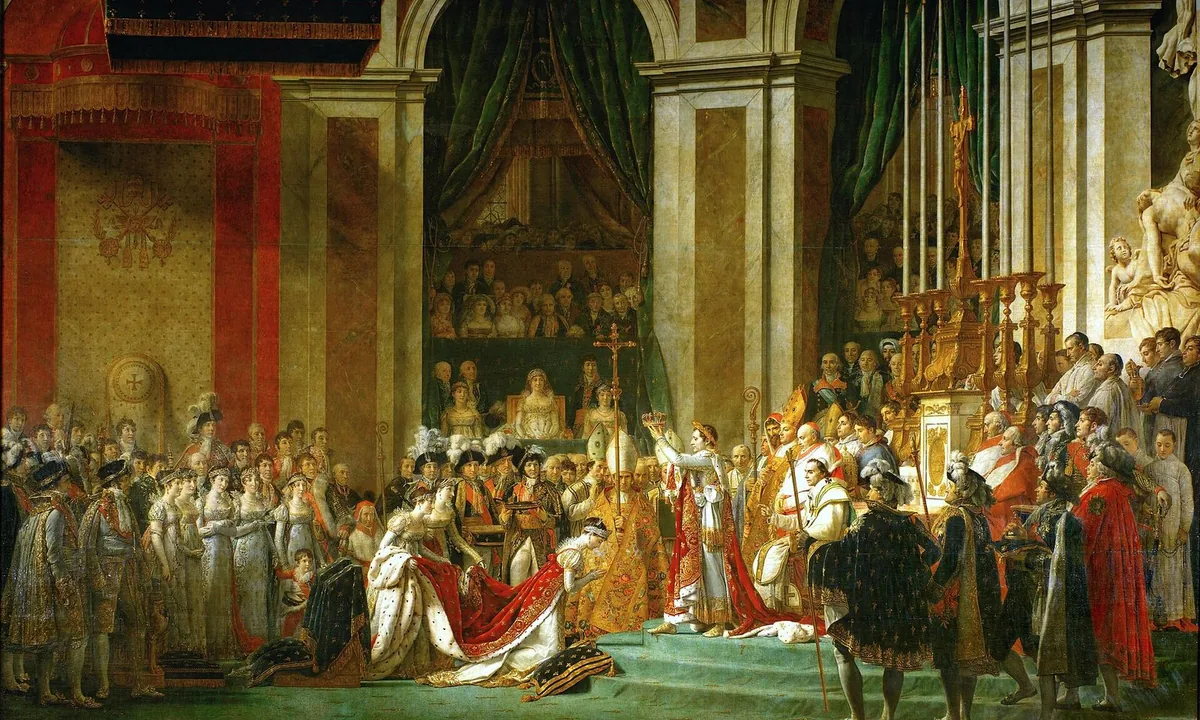
Jacques-Louis David, The Coronation of Napoleon, 1805–07 (Louvre, Paris): on 2 December 1804 at Notre-Dame, Napoleon crowns Josephine after taking the crown himself. Jacques-Louis David · Public domain · Wikimedia Commons -
28. What happened to France's borders in the Second Treaty of Paris?
Show the answer
B. They were reduced to those of 1790. After the Hundred Days the allies were harsher. France was reduced to its 1790 borders, fined and occupied for up to five years.
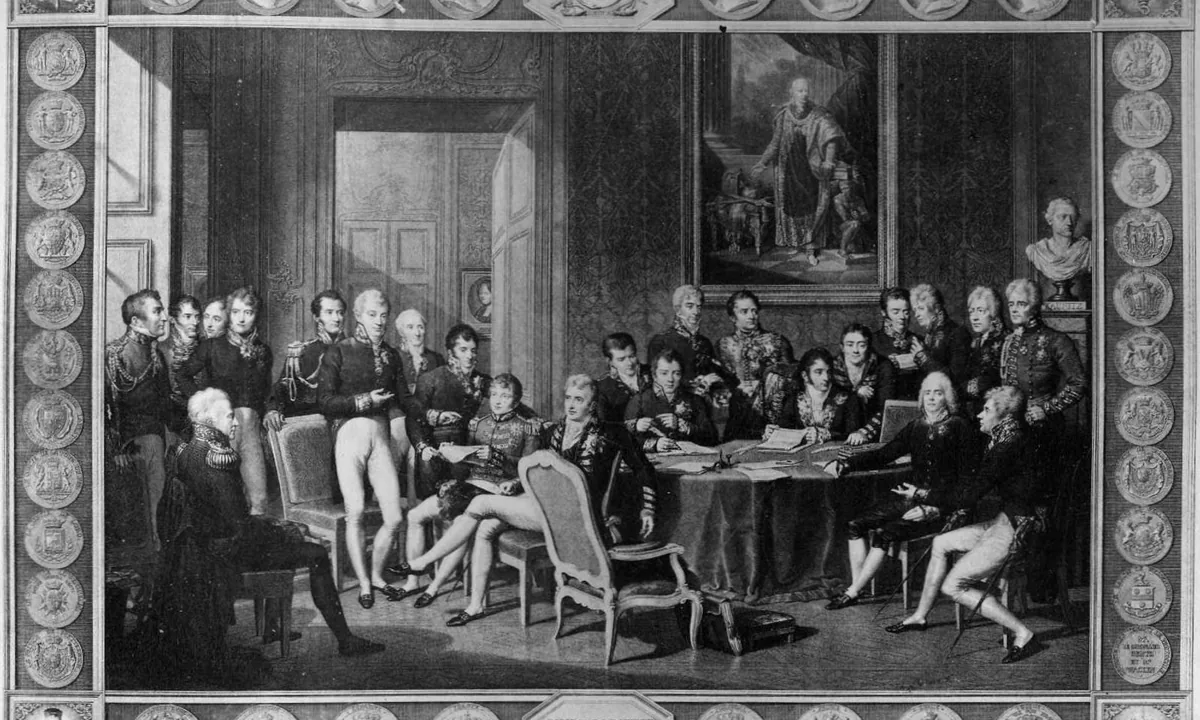
Jean-Baptiste Isabey, The Congress of Vienna (engraving by Jean Godefroy, 1819): delegates gather during a pause in the negotiations, with Metternich standing at left. Auguste Godefroy after Jean-Baptiste Isabey · Public domain · Wikimedia Commons -
29. Why did Napoleon invade Portugal and Spain?
Show the answer
C. Portugal refused to obey the blockade of Britain. Portugal was Britain's old ally and kept trading with it, so Napoleon invaded in 1807. The next year he put his brother on the Spanish throne, which caused a revolt.
Jacques-Louis David, The Coronation of Napoleon, 1805–07 (Louvre, Paris): on 2 December 1804 at Notre-Dame, Napoleon crowns Josephine after taking the crown himself. Jacques-Louis David · Public domain · Wikimedia Commons -
30. Historians have proved that Napoleon was poisoned on St Helena.
Show the answer
B. False. The autopsies pointed to stomach cancer. Arsenic theories are old but are rejected by most historians.
Jean-Baptiste Isabey, The Congress of Vienna (engraving by Jean Godefroy, 1819): delegates gather during a pause in the negotiations, with Metternich standing at left. Auguste Godefroy after Jean-Baptiste Isabey · Public domain · Wikimedia Commons
Your score
You got right. Want the stories behind them?
Aurelius: Learn History has 700+ more questions like these, each one after the five-minute illustrated story it comes from, across 18 eras. Free to try.
Play next: Tudors and Reformation Quiz · World History Quiz · History Quiz
About this quiz
Marie Antoinette, Nelson and Wellington are here too, and so is the question of how Napoleon really died.
The questions come from 15 lessons in the app: The Storming of the Bastille, The Estates-General and the Tennis Court Oath, The Trial and Execution of the King, The Rights of Man and the March on Versailles, The Reign of Terror, Marie Antoinette: The Doomed Queen, Waterloo: Wellington, Blücher and the Hundred Days, Brumaire: The Coup of 1799, Trafalgar and Nelson, Russia, 1812: The Retreat from Moscow, Austerlitz: The Battle of Three Emperors, Robespierre: The Incorruptible, The Rise of Napoleon, The Code, the Empire and the Continental System, Vienna 1815 and St Helena: Europe After Napoleon.
Questions are labelled easy, medium or hard by the level of the lesson they come from, and the quiz plays in that order, easy to hard. There are 700+ more in the Aurelius: Learn History app.
Frequently asked questions
How many questions are in the French Revolution and Napoleon Quiz?
30: 4 easy, 18 medium and 8 hard, played easy to hard. 24 are multiple choice and 6 true or false. Every answer is explained, with the picture of the story behind it, and at the end you see your score by level.
Is the French Revolution and Napoleon Quiz free?
Yes. It plays in your browser with no account and no sign-up. For more, Aurelius: Learn History has 700+ questions like these, each after a short illustrated lesson. The app is free to download and try on iPhone, iPad and Android.
Where do the questions come from?
From the lessons in Aurelius: Learn History. Every question follows a short illustrated story in the app and is written and checked by the Aurelius editorial team. The easy, medium and hard labels are the levels of those lessons. See how lessons are checked.
Which quiz should I play next?
Try the Tudors and Reformation Quiz, the World History Quiz and the History Quiz. All quizzes are listed at the end of this page.
More history quizzes
- Tudors and Reformation QuizHenry VIII, Elizabeth I, Luther and the Armada.
- World History QuizOne game across world history.
- History QuizThe all-round history quiz across many eras.
- World War 2 QuizFrom the invasion of Poland to Bastogne.
- WW1 Quiz: World War 1 Questions and AnswersFrom the Archduke’s assassination to Versailles.
- American History QuizThe Revolution and the Civil War: US history trivia.
- Cold War QuizBerlin, Cuba, Vietnam and the space race.
- Ancient Egypt QuizPharaohs, pyramids, mummies and the Rosetta Stone.
- Medieval History Quiz: The Middle AgesFrom Charlemagne and the Vikings to the Black Death.
- Ancient Rome QuizRepublic, Caesar and empire.
- Ancient Greece QuizAthens, Sparta, Persia and Alexander.
- 100 History Trivia Questions and Answers100 questions with answers for quiz nights and classrooms.