Medieval History Quiz: The Middle Ages
This medieval quiz has 30 Middle Ages questions, from Clovis and Charlemagne to the Vikings, 1066, the Crusades, Magna Carta, the Mongols, Joan of Arc and the Black Death. It starts easy and gets harder, and every answer is explained.
Tap an answer to start, or use the keys A to D. No sign-up.
-
1. What was Domesday Book?
Show the answer
B. A survey of land and resources in England. In 1086 William sent officials across England to record who held each estate and what it was worth. The survey shows how completely Normans had replaced the English landholders.
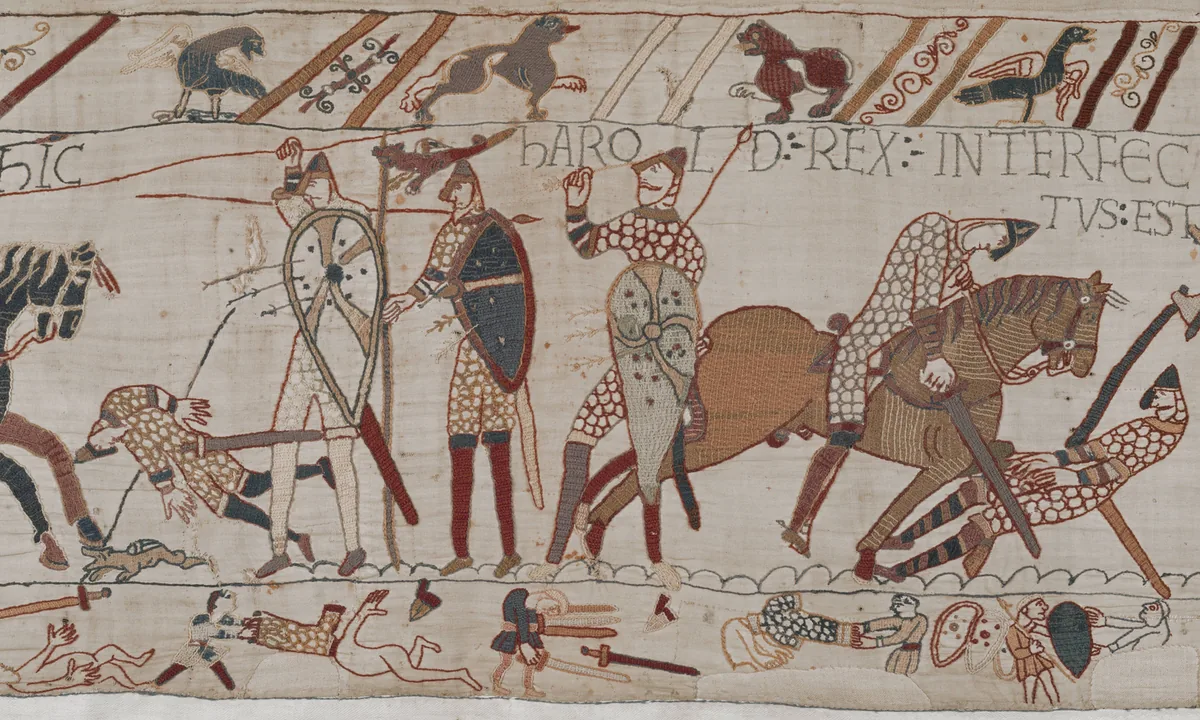
The Bayeux Tapestry, 1070s, Bayeux Museum: the scene captioned HIC HAROLD REX INTERFECTUS EST, “Here King Harold is killed”. Which of the falling figures is Harold is still debated. Unknown embroiderers, 1070s · Public domain · Wikimedia Commons Read the full story: What Happened in 1066? The Norman Conquest of England →
-
2. Why did it matter that Clovis became a Catholic rather than an Arian Christian?
Show the answer
C. It won him the support of Gaul's Roman bishops. Gaul's Roman population and the bishops who led its cities were Catholic. Rival kings such as the Visigoths were Arians. So Clovis's choice made him the bishops' natural ally.
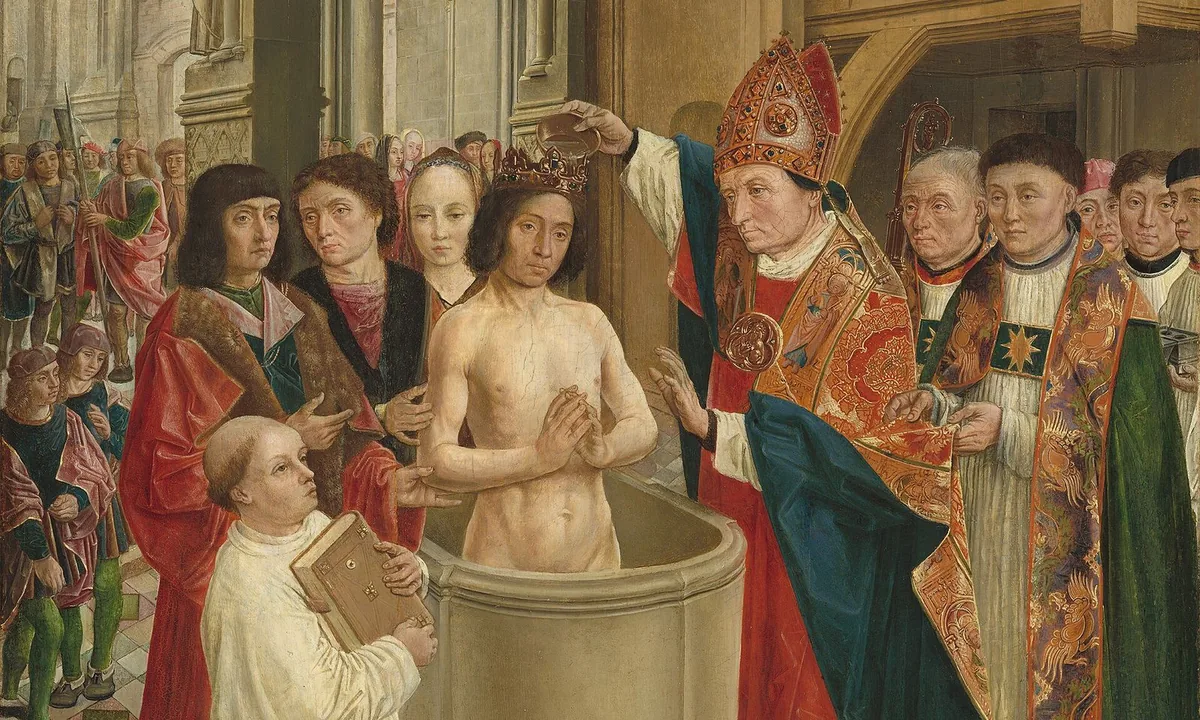
Master of Saint Giles, The Baptism of Clovis, c. 1500, National Gallery of Art, Washington: Bishop Remigius baptises the Frankish king, imagined a thousand years after the event. Master of Saint Giles, c. 1500 · CC0 · Wikimedia Commons -
3. Where is the only confirmed Norse site in the Americas?
Show the answer
D. L'Anse aux Meadows, Newfoundland. In the 1960s, excavations at L'Anse aux Meadows found Norse buildings and objects. In 2021 a study of tree rings showed that wood there was cut with metal tools in the year 1021.
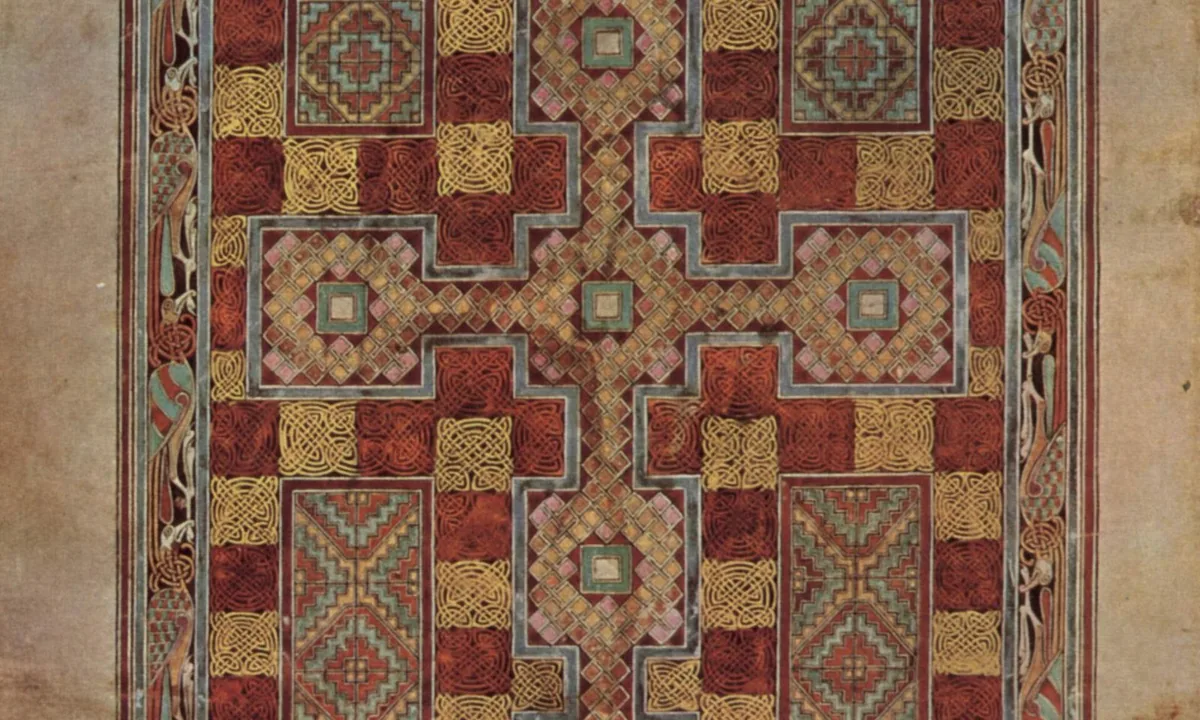
A cross-carpet page from the Lindisfarne Gospels, made on the island around 700 and kept safe by its community through the Viking age; British Library, London. Unknown scribe-artist, c. 700 · Public domain · Wikimedia Commons Read the full story: Who Were the Vikings? Raiders, Traders and Settlers →
-
4. Why was Harold's army at a disadvantage at Hastings?
Show the answer
A. It had just fought a battle and marched the length of England. Harold fought Hardrada in Yorkshire on 25 September. Then he marched south to face William by 14 October. Many of his men were exhausted or had not yet caught up. Tostig had died at Stamford Bridge.
The Bayeux Tapestry, 1070s, Bayeux Museum: the scene captioned HIC HAROLD REX INTERFECTUS EST, “Here King Harold is killed”. Which of the falling figures is Harold is still debated. Unknown embroiderers, 1070s · Public domain · Wikimedia Commons Read the full story: What Happened in 1066? The Norman Conquest of England →
-
5. Where did the Templars have their first headquarters in Jerusalem?
Show the answer
B. On the Temple Mount, in the al-Aqsa mosque. King Baldwin II gave them rooms on the Temple Mount. The crusaders thought it was the site of Solomon's Temple, and that is how the order got its name.
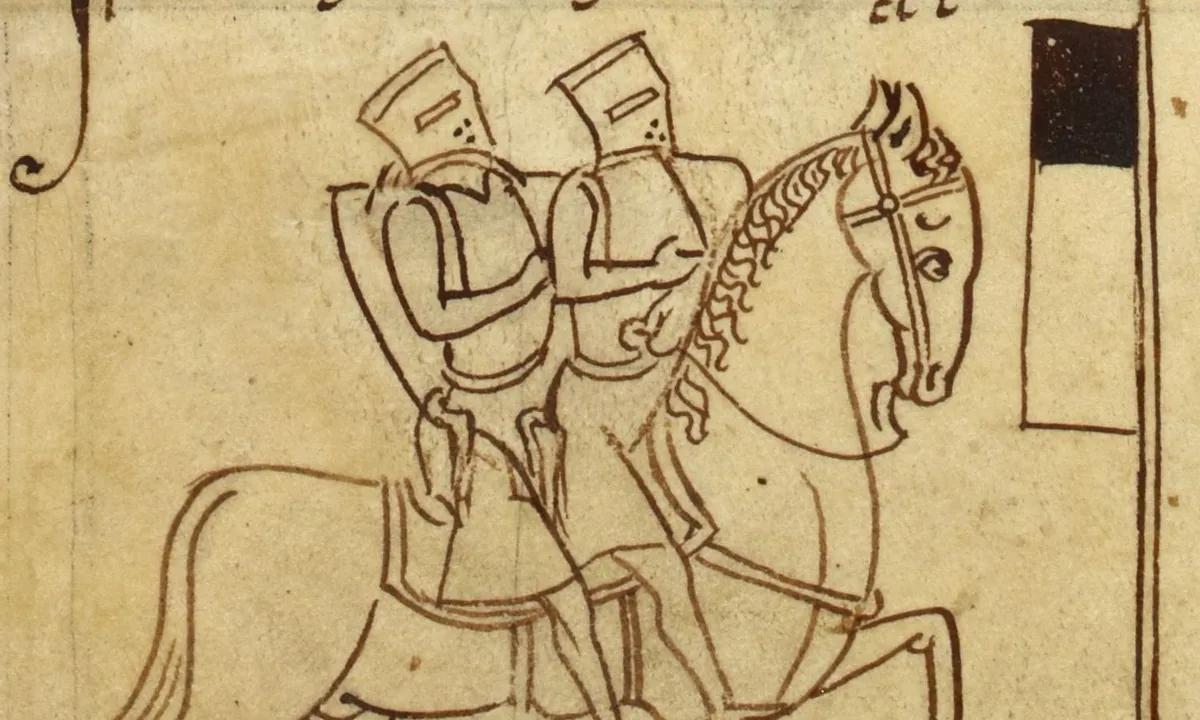
Two knights riding one horse, the emblem of the Knights Templar, drawn by the English monk Matthew Paris in his Historia Anglorum, mid-13th century (British Library, Royal MS 14 C VII, fol. 42v). Matthew Paris · Public domain · Wikimedia Commons -
6. Within months of Runnymede, the pope declared Magna Carta null and void.
Show the answer
A. True. Innocent III had been John's feudal overlord since 1213, and he annulled the charter in August 1215. It survived only because Henry III's regents issued it again after John's death.
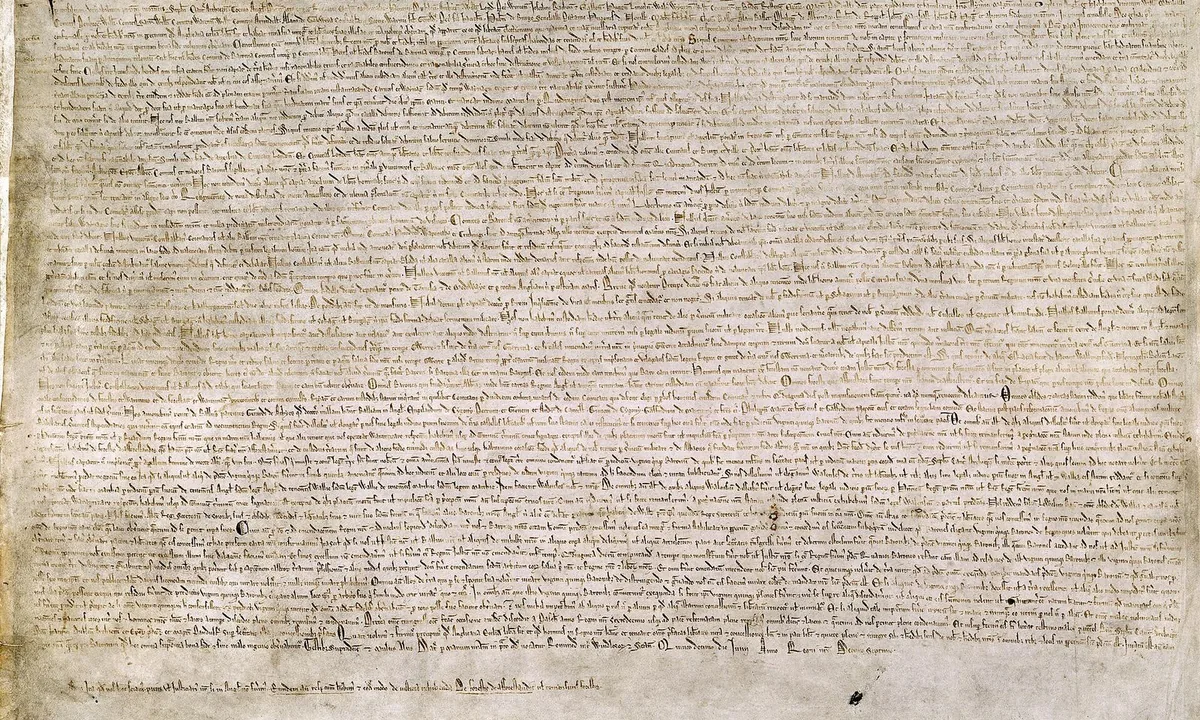
One of the four surviving original copies of Magna Carta, issued in June 1215, British Library, London (Cotton MS Augustus II.106). Royal chancery scribe, 1215 · Public domain · Wikimedia Commons Read the full story: What Is Magna Carta, and Why Does It Matter? →
-
7. What event led Pope Innocent III to announce a crusade against the Cathars in 1208?
Show the answer
D. The murder of his legate Pierre de Castelnau. In January 1208 Pierre de Castelnau was killed near Saint-Gilles. Innocent blamed Raymond VI of Toulouse and called on the knights of France to take the cross.
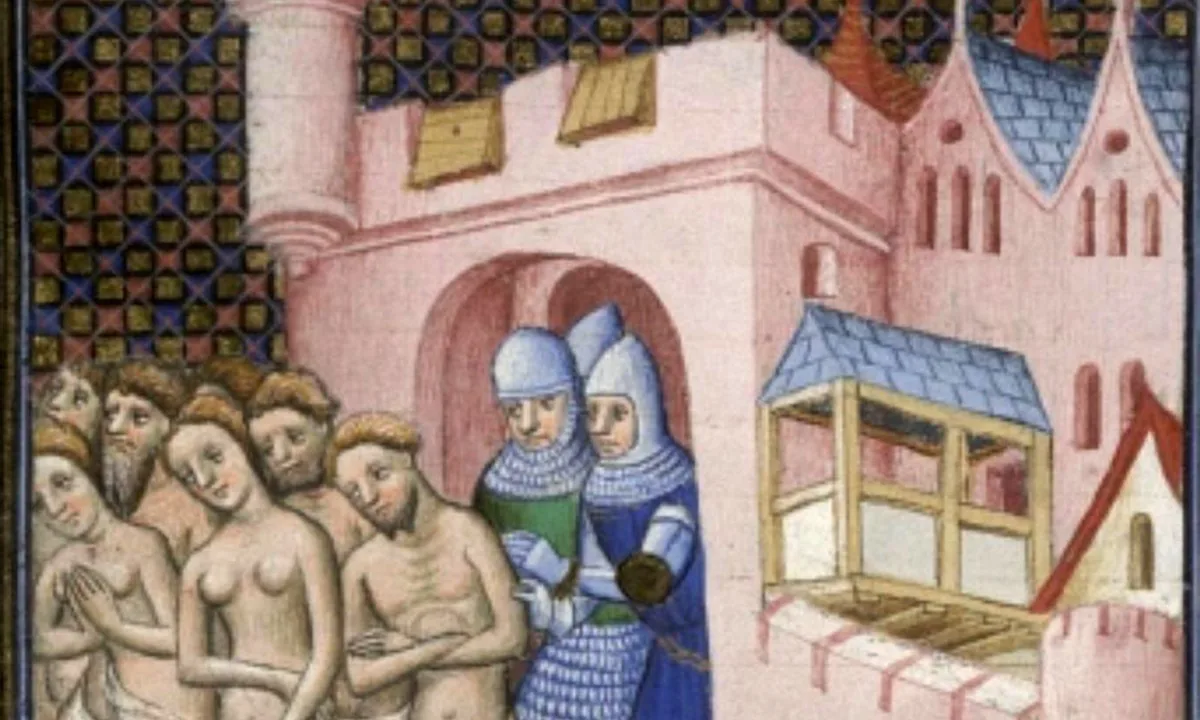
The inhabitants of Carcassonne are driven out of the city by crusaders in 1209, in a Grandes Chroniques de France made about 1415 (British Library, Cotton MS Nero E II). It is a later illumination, painted two centuries after the events, in the dress and armour of its own time. Workshop of the Master of the Boucicaut Hours (Unknown illuminator) · Public domain · Wikimedia Commons -
8. What did Alfred say had been the state of learning in England when he became king?
Show the answer
B. Almost no one south of the Thames could translate Latin. Alfred wrote that very few men south of the Humber could translate a letter from Latin into English. He could not remember a single one south of the Thames when he became king. He used this to explain why his programme of translation was needed.
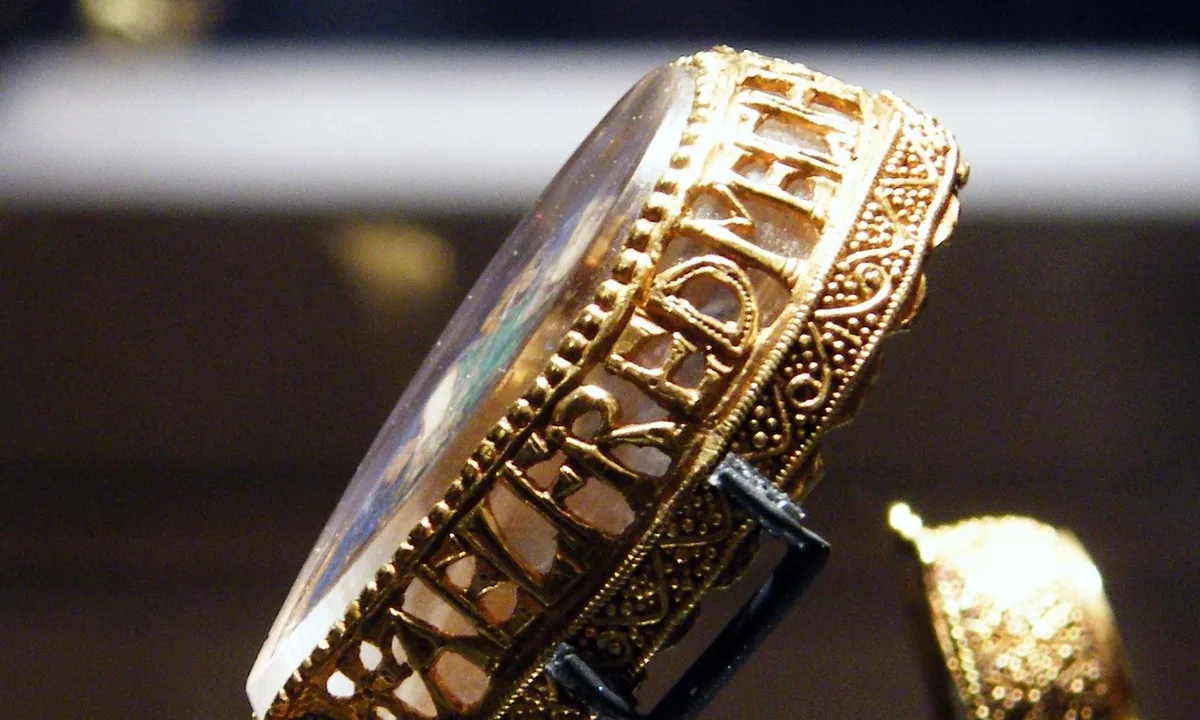
The Alfred Jewel, late 9th century, Ashmolean Museum, Oxford: gold, quartz and enamel, inscribed in Old English AELFRED MEC HEHT GEWYRCAN, “Alfred ordered me to be made”. Richard M Buck · CC BY-SA 3.0 · Wikimedia Commons Read the full story: Why Was Alfred Called the Great? Alfred and the Danelaw →
-
9. Who ruled the empire in Constantinople when Charles was crowned in 800?
Show the answer
A. The empress Irene. Irene ruled in her own name from 797 to 802. Some Franks argued that a woman could not hold the imperial title. Justinian and Theodora lived in the 6th century, and Alexios in the 11th.
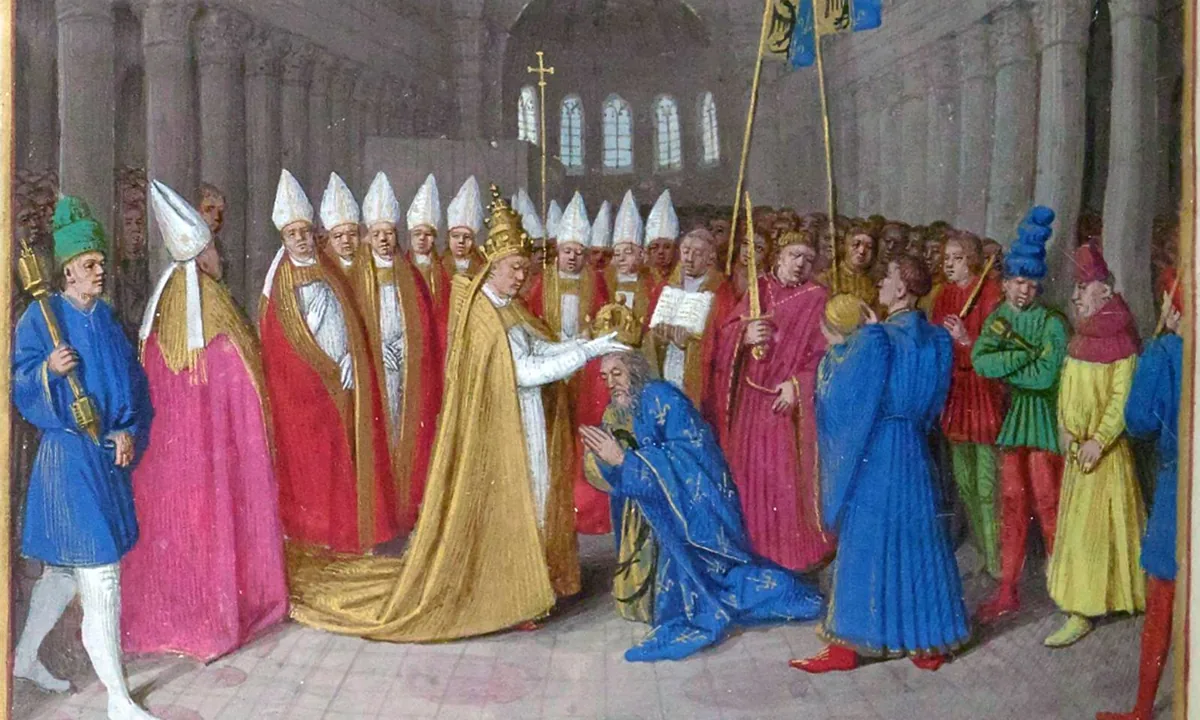
The coronation of Charlemagne, painted by Jean Fouquet for a manuscript of the Grandes Chroniques de France, c. 1455–60, Bibliothèque nationale de France: an imagining more than six centuries after the event. Jean Fouquet, c. 1455–60 · Public domain · Wikimedia Commons Read the full story: Why Was Charlemagne Crowned Emperor in 800? →
-
10. Who led the Muslim army that crossed into Spain in 711?
Show the answer
C. Tariq ibn Ziyad. Tariq ibn Ziyad, a Berber general serving the Umayyad governor of North Africa, led the invasion. The name Gibraltar comes from Jabal Tariq, “Tariq's mountain”.
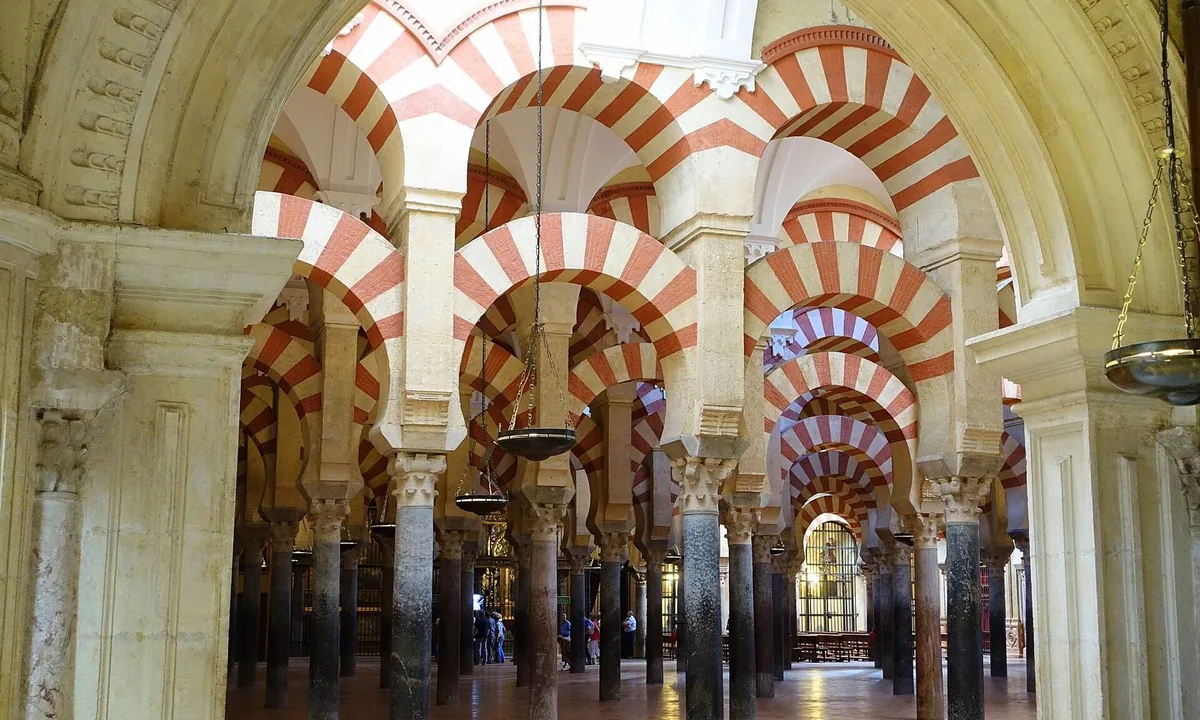
The hypostyle prayer hall of the Great Mosque of Córdoba, with its forest of columns and double tiers of red-and-white horseshoe arches. Abd al-Rahman I began the mosque about 785, and his successors enlarged it. Daderot · CC0 · Wikimedia Commons -
11. Why did the Mongols withdraw from Hungary in 1242?
Show the answer
D. Historians disagree: Ögedei's death, poor pasture and strong castles are all proposed. The traditional explanation is that the Great Khan's death in December 1241 called the princes home. But some historians also point to cold, wet weather in early 1242, which ruined the pasture. They also point to the fortresses that held out. No source from the time settles the question.
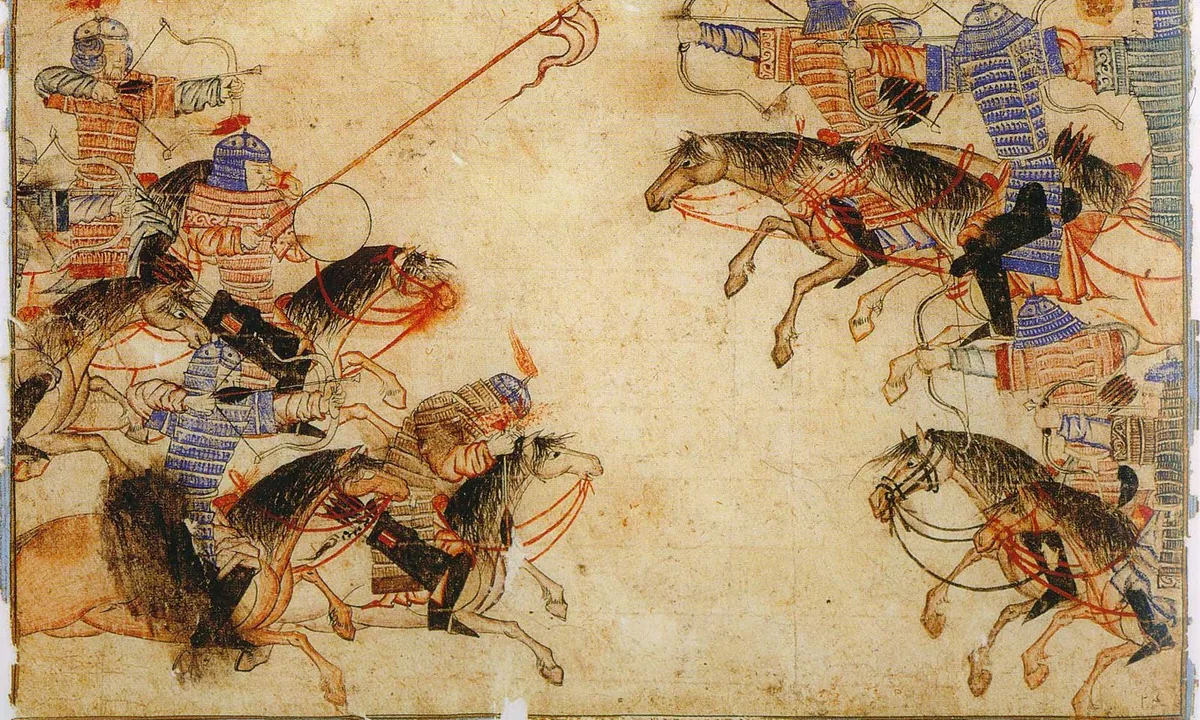
Mounted archers in a painting from an early 14th-century copy of Rashid al-Din's Compendium of Chronicles, probably made at Tabriz under the Mongol Ilkhanid rulers, Staatsbibliothek zu Berlin (Diez albums). Staatsbibliothek zu Berlin · Public domain · Wikimedia Commons Read the full story: The Mongol Invasion of Europe: Why Did the Mongols Turn Back? →
-
12. Who pushed Granada's Muslims to convert from 1499?
Show the answer
B. Archbishop Cisneros. Francisco Jiménez de Cisneros, Archbishop of Toledo, led a campaign of mass baptism in Granada from 1499. It caused a revolt. Then in 1502 a royal order said that all Muslims in Castile must convert or leave.
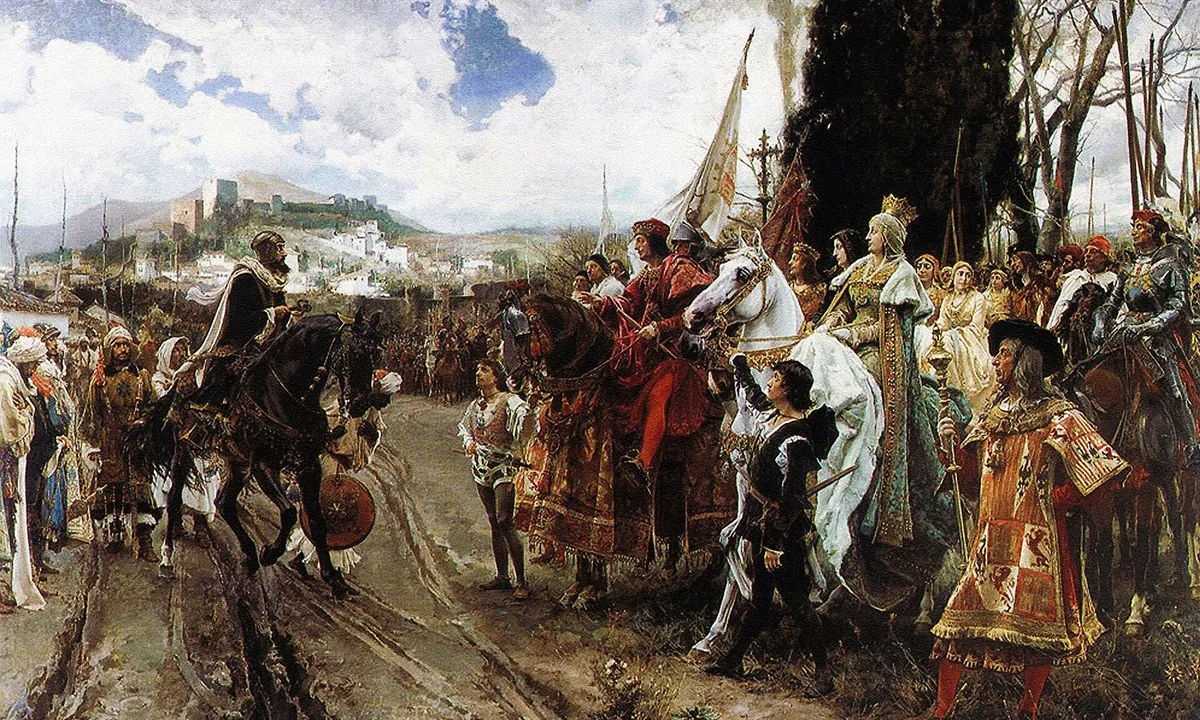
Francisco Pradilla, "The Surrender of Granada" (1882, Palacio del Senado, Madrid). A 19th-century history painting of the handover of the city on 2 January 1492: Boabdil, left, faces Ferdinand and Isabella, with the Alhambra on the hill behind. Francisco Pradilla y Ortiz · Public domain · Wikimedia Commons -
13. What were the parias?
Show the answer
D. Tribute that Muslim kings paid to Christian rulers. The taifas paid gold for protection, and the parias made Castile and León rich. The Almoravids ended this system.
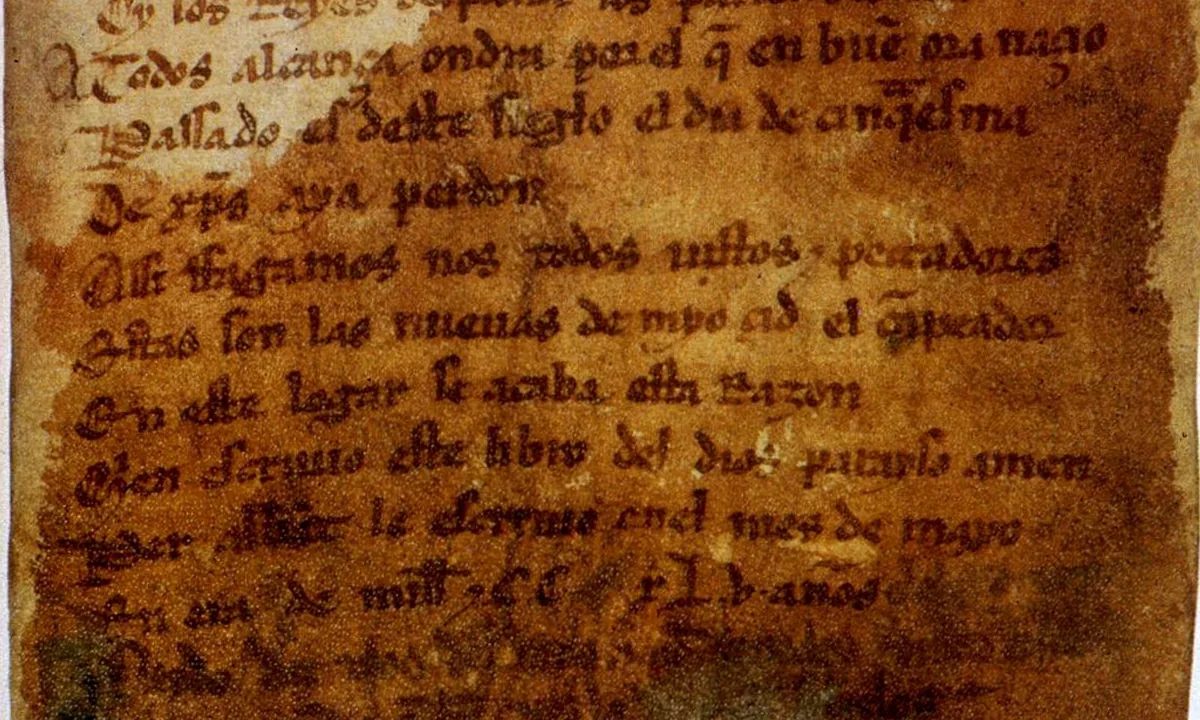
The last page of the Cantar de mio Cid, folio 74 recto of the only surviving manuscript, copied in the 14th century and now in the Biblioteca Nacional de España. The closing lines read "Estas son las nuevas de mio Cid el Campeador" and name a scribe, Per Abbat. Unknown scribe · Public domain · Wikimedia Commons -
14. Why did the emperor Alexios I ask the West for soldiers in 1095?
Show the answer
B. The Seljuk Turks had overrun most of Anatolia. After Manzikert in 1071, the Seljuks took most of Anatolia, the empire's heartland. Alexios wanted paid soldiers. Urban turned his request into a mass armed pilgrimage.
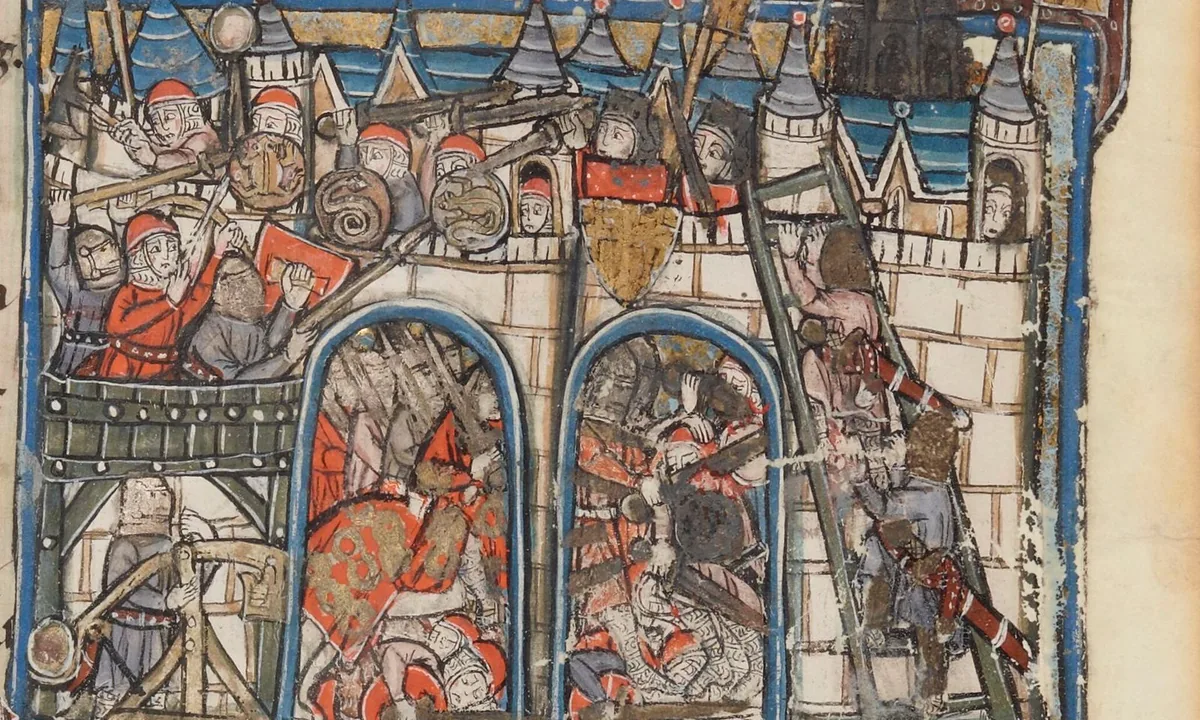
The crusaders take Jerusalem in July 1099, from a 14th-century French manuscript of William of Tyre's history of the crusades, Bibliothèque nationale de France. Unknown illuminator · Public domain · Wikimedia Commons Read the full story: The First Crusade: Why It Started and What Happened →
-
15. Who took power in Egypt after the Seventh Crusade?
Show the answer
B. The Mamluks. In May 1250 the Mamluk generals murdered the new sultan Turanshah and took control. They ruled Egypt until the Ottoman conquest of 1517.
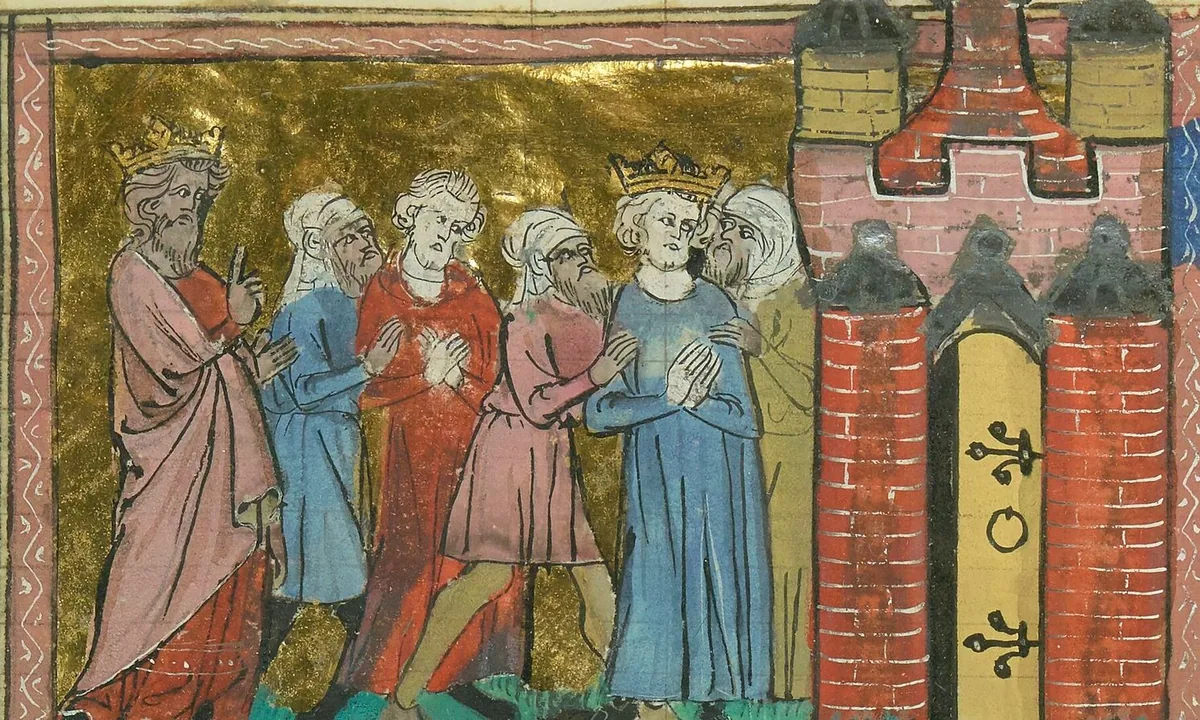
Louis IX taken prisoner in Egypt in 1250, shown in a manuscript of the Old French Histoire d'Outremer (William of Tyre and continuations), Bibliothèque nationale de France, Français 22495, c. 1337: the crowned king is led away by turbaned captors. Master of the Roman de Fauvel · Public domain · Wikimedia Commons -
16. What happened to Richard on his way home in 1192?
Show the answer
A. He was captured and held for ransom. Richard was shipwrecked in the Adriatic. Duke Leopold of Austria captured him and handed him to Emperor Henry VI. Henry released him in February 1194, once 100,000 of the agreed 150,000 marks had been paid and hostages had been given.
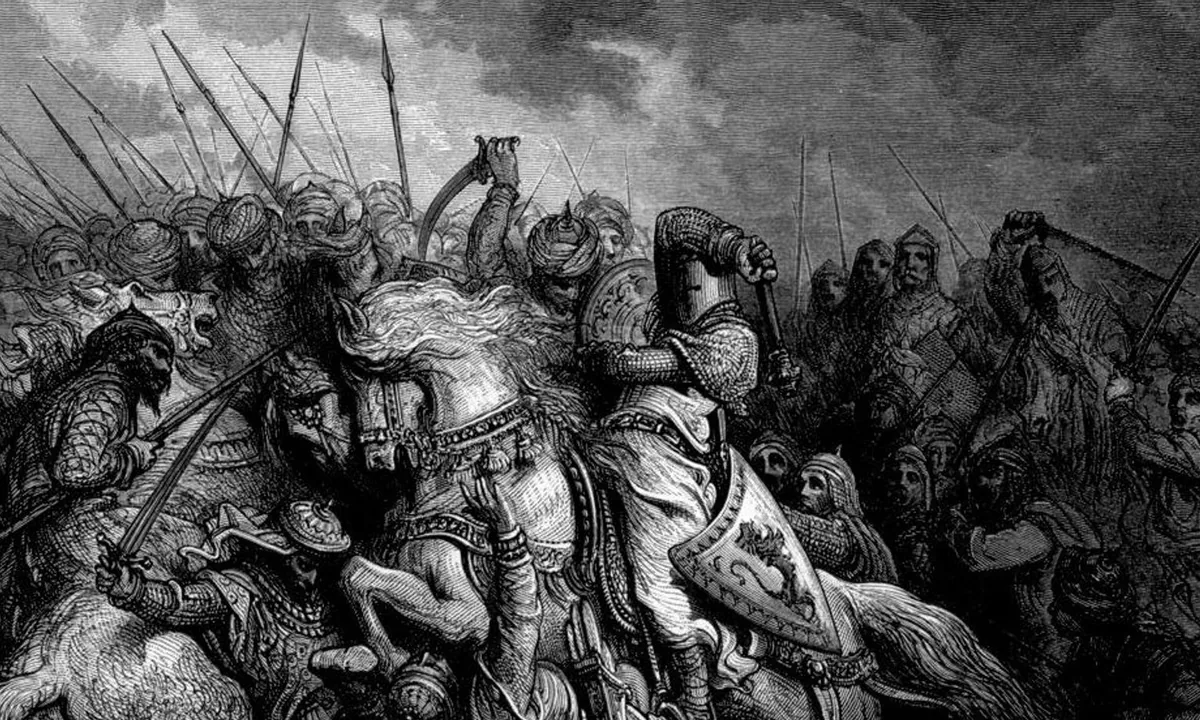
Richard and Saladin at the Battle of Arsuf, a wood engraving after Gustave Doré for the 1877 illustrated edition of Joseph-François Michaud's History of the Crusades: an imagined duel. The two men never met in person and negotiated through envoys. Gustave Doré · Public domain · Wikimedia Commons Read the full story: Richard the Lionheart and Saladin: The Third Crusade →
-
17. Why did the Abbasids build a new capital at Baghdad instead of ruling from Damascus?
Show the answer
C. Their power came from Iraq and Persia, far from the Umayyad base in Syria. The Abbasid revolt began in Khurasan, and the dynasty took its officials from Persia. A capital on the Tigris put them in the rich farmland of Iraq, away from the Syrian ruling class they had overthrown.
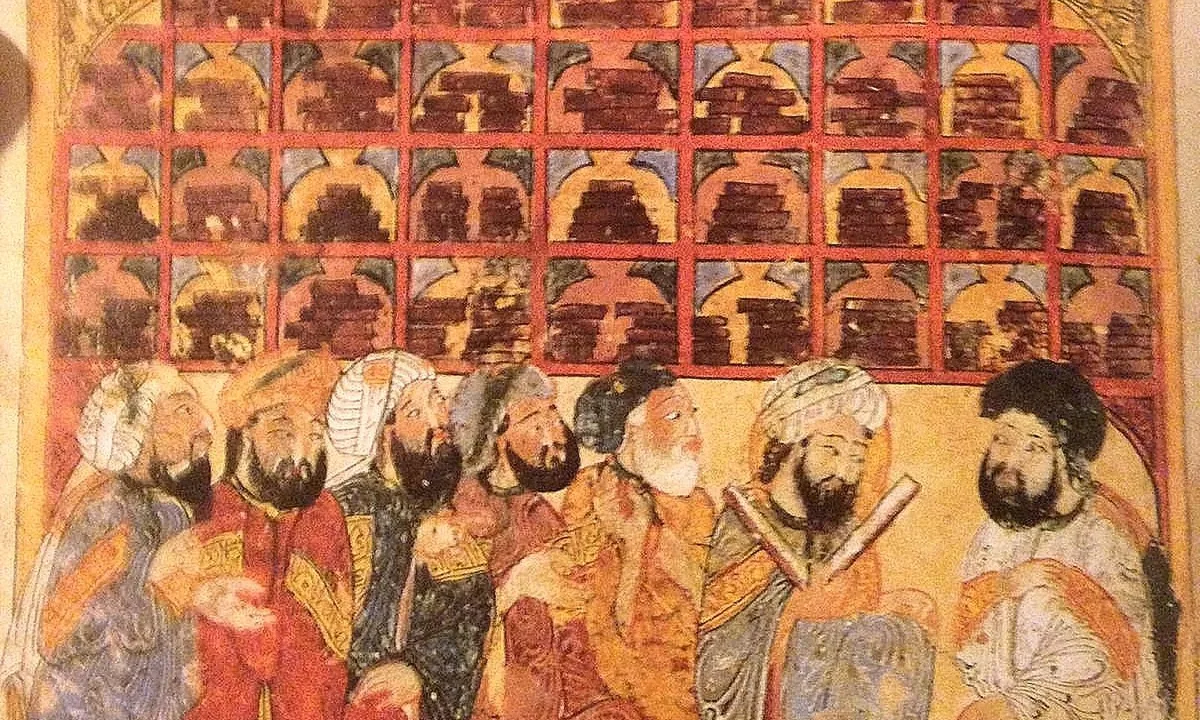
Scholars sitting before shelves of books in a library, painted by Yahya ibn Mahmud al-Wasiti in a manuscript of al-Hariri's Maqamat (Bibliothèque nationale de France, Arabe 5847), copied and illustrated in 1237, probably in Iraq, shortly before the Mongols took Baghdad. Yahya ibn Mahmud al-Wasiti · Public domain · Wikimedia Commons -
18. Why did Eleanor's remarriage to Henry of Anjou change the balance of power in France?
Show the answer
A. It gave the English king more French land than the French king ruled. Aquitaine joined Normandy and Anjou under Henry, and in 1154 he also became king of England. He then held more of France than Louis VII did. But he still owed Louis homage, a formal promise of loyalty, for his French lands.
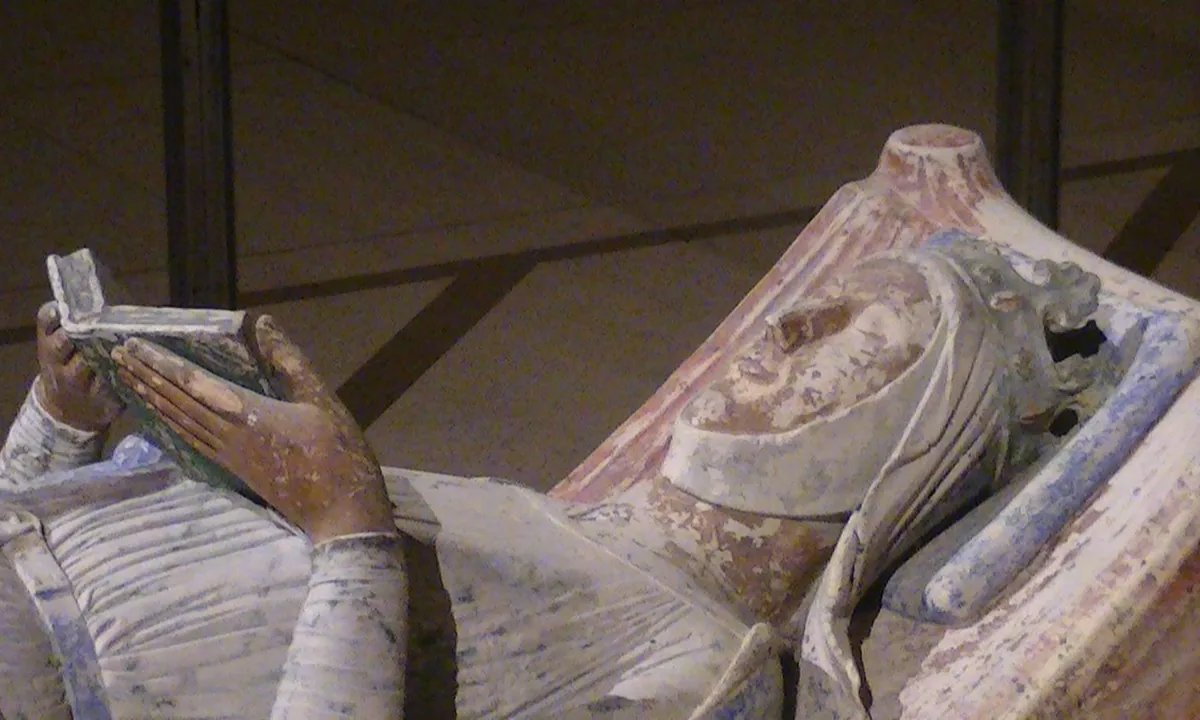
Effigy of Eleanor of Aquitaine, Fontevraud Abbey, France, early 13th century: the painted tomb statue shows her holding an open book. Adam Bishop · CC BY-SA 3.0 · Wikimedia Commons Read the full story: Who Was Eleanor of Aquitaine? Queen of France and England →
-
19. Why did Edward III claim the French throne?
Show the answer
A. His mother Isabella was sister of the last Capetian king. Edward's claim came through his mother. The great French nobles held that the crown could not pass through a woman, so they chose Philip of Valois instead.
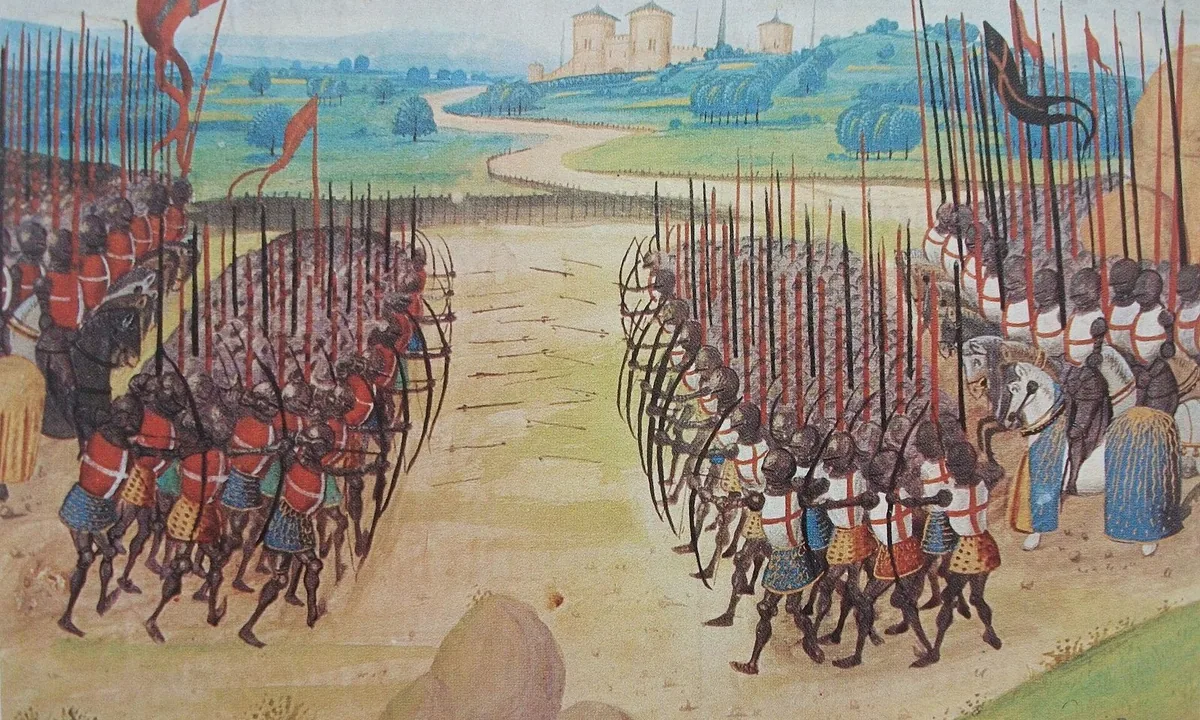
The Battle of Agincourt in an abridged Chronicle of Enguerrand de Monstrelet, Paris, c. 1470–80, Bibliothèque nationale de France (Français 2680): two armies face each other across a field, archers in front and mounted knights behind. Unknown illuminator · Public domain · Wikimedia Commons Read the full story: The Battle of Agincourt and the Hundred Years' War →
-
20. Why did the English want Joan tried for heresy?
Show the answer
A. To discredit Charles's coronation, which they claimed rested on a witch. Her victories, and Charles's anointing at Reims, had weakened the English claim. A conviction for heresy would suggest that Charles owed his crown to the devil.
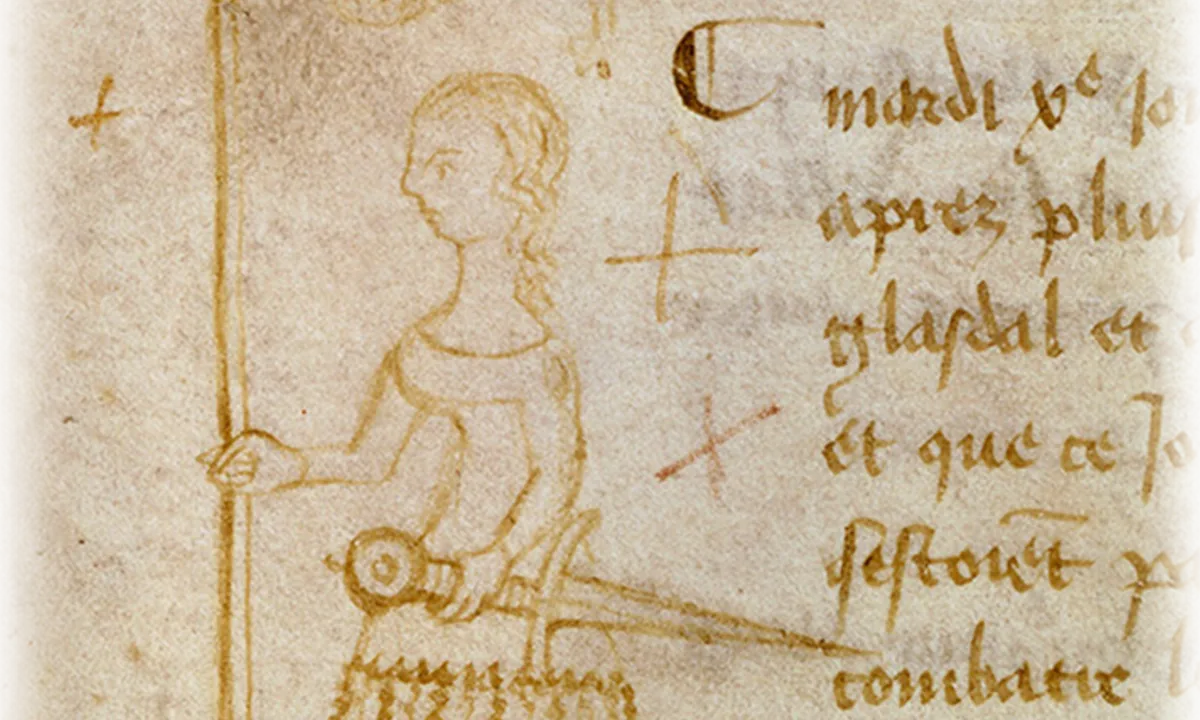
Sketch of Joan of Arc by a clerk in the Paris parliament, 1429, Archives nationales: the only known image of Joan made in her lifetime. The clerk never saw her. Clément de Fauquembergue · Public domain · Wikimedia Commons -
21. Why was the Templar order an easy target for Philip IV in 1307?
Show the answer
C. It had lost its mission after Acre and held wealth he wanted. After 1291 the order had no clear purpose. It was rich, and it answered only to the pope. Philip IV was in debt, and he used rumours of heresy to move against it.
Two knights riding one horse, the emblem of the Knights Templar, drawn by the English monk Matthew Paris in his Historia Anglorum, mid-13th century (British Library, Royal MS 14 C VII, fol. 42v). Matthew Paris · Public domain · Wikimedia Commons -
22. What did clause 61, the “security clause”, allow?
Show the answer
C. A council of 25 barons to seize royal lands. Clause 61 let a committee of 25 barons enforce the charter. They could seize the king's property if he broke it. No king could accept that for long, and it was dropped from every later version.
One of the four surviving original copies of Magna Carta, issued in June 1215, British Library, London (Cotton MS Augustus II.106). Royal chancery scribe, 1215 · Public domain · Wikimedia Commons Read the full story: What Is Magna Carta, and Why Does It Matter? →
-
23. The words “Kill them all; God will recognise his own” appear in the papal legates' own letter about Béziers.
Show the answer
B. False. They appear in a story by Caesarius of Heisterbach, written about ten to fourteen years later. The legates' letter does not contain them. So historians treat the line as probably a legend.
The inhabitants of Carcassonne are driven out of the city by crusaders in 1209, in a Grandes Chroniques de France made about 1415 (British Library, Cotton MS Nero E II). It is a later illumination, painted two centuries after the events, in the dress and armour of its own time. Workshop of the Master of the Boucicaut Hours (Unknown illuminator) · Public domain · Wikimedia Commons -
24. Why did Alfred build a network of burhs?
Show the answer
A. To protect towns and give his forces a base within a day's march of any attack. The Vikings attacked by sea and river with great speed. The burhs were towns with soldiers stationed in them, and few places in Wessex were more than a day's march from one. They gave shelter to local people and let the king's forces respond quickly.
The Alfred Jewel, late 9th century, Ashmolean Museum, Oxford: gold, quartz and enamel, inscribed in Old English AELFRED MEC HEHT GEWYRCAN, “Alfred ordered me to be made”. Richard M Buck · CC BY-SA 3.0 · Wikimedia Commons Read the full story: Why Was Alfred Called the Great? Alfred and the Danelaw →
-
25. What was lay investiture?
Show the answer
A. A king giving a bishop the ring and staff of office. Lay investiture meant a layman, usually a king, putting a bishop into office with the symbols of spiritual office. Paying for a church office was a different abuse, simony. Reformers attacked that too.
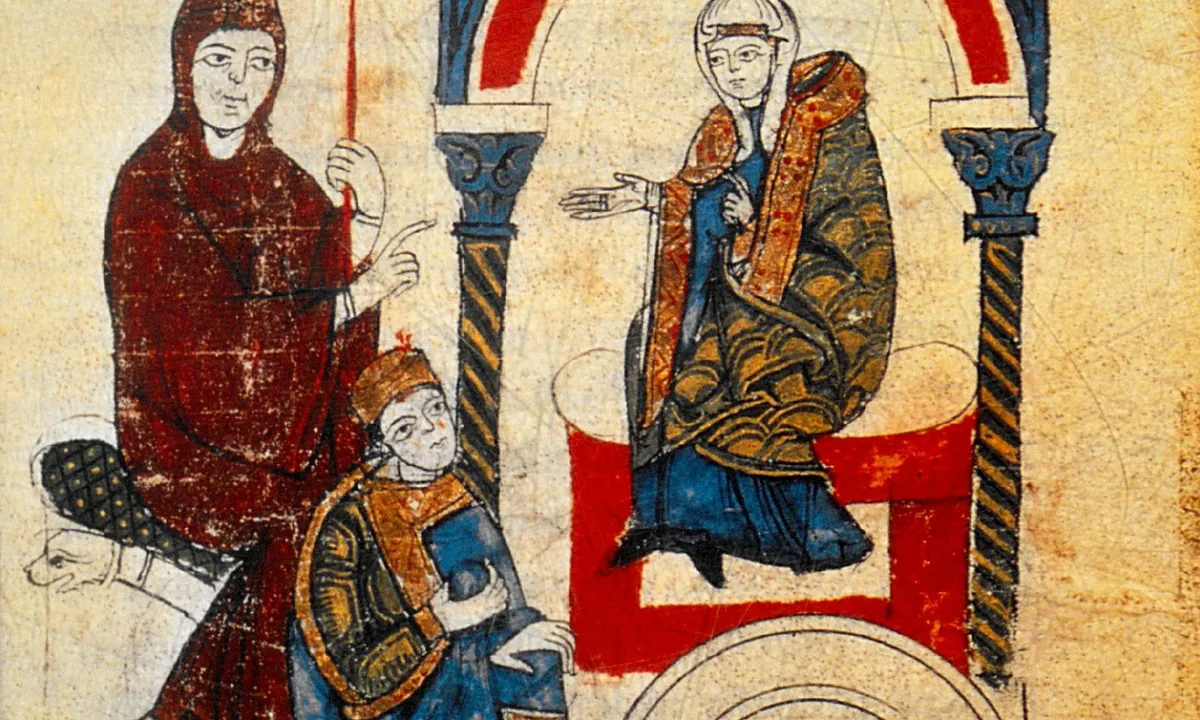
Henry IV kneels before Abbot Hugh of Cluny and Matilda of Tuscany, asking them to plead for him with the pope: a miniature from Donizo's Life of Matilda, c. 1115, Vatican Library. Unknown illuminator, c. 1115 · Public domain · Wikimedia Commons -
26. Who held the Temple Mount (Haram al-Sharif) under the treaty of 1229?
Show the answer
D. The Muslims. The treaty returned Jerusalem to the Christians. But it left the Dome of the Rock and al-Aqsa mosque in Muslim hands, and Muslims were free to worship there. The Templars, who used al-Aqsa as their headquarters, were angry.
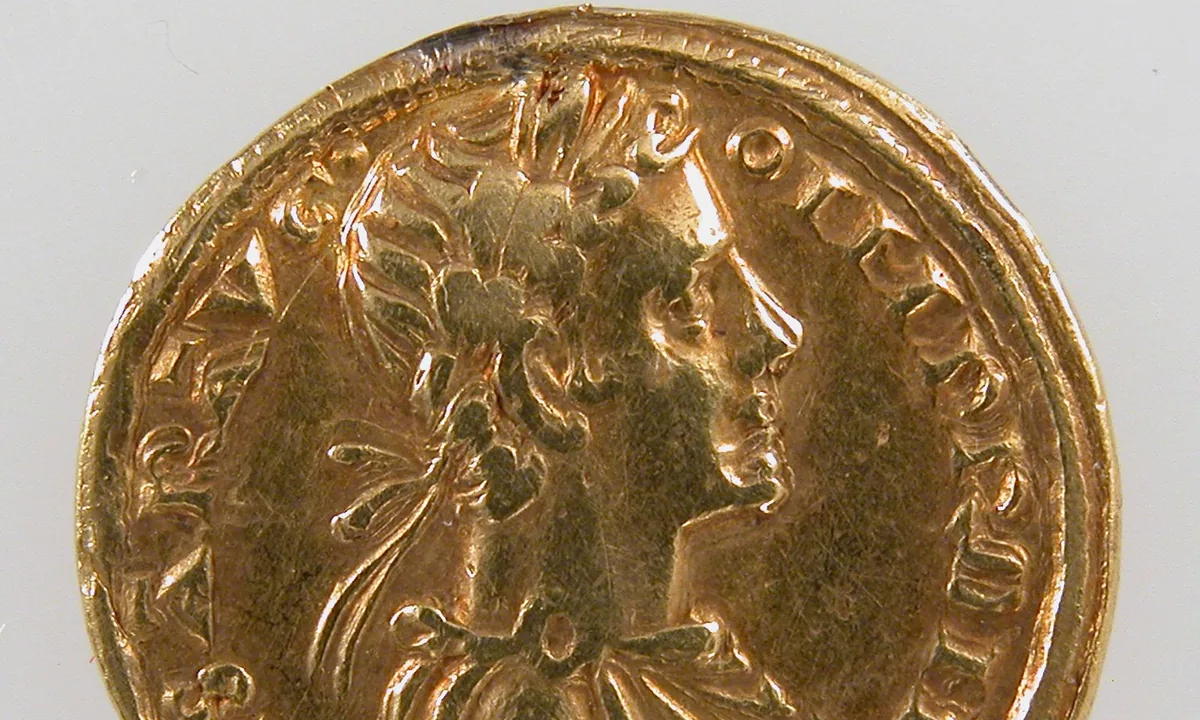
Gold augustalis of Frederick II, struck in southern Italy from 1231: the emperor appears as a laureate Roman Caesar, an image that recalls ancient imperial coins. Metropolitan Museum of Art. Unknown mint · Metropolitan Museum of Art · CC0 · Wikimedia Commons -
27. Why did Ferdinand and Isabella say they were expelling the Jews in 1492?
Show the answer
B. Because contact with Jews led conversos back to Judaism. The decree says that contact between Jews and Christians led “wicked Christians” to Judaize. Historians add that the Crown wanted religious unity after the conquest of Granada.
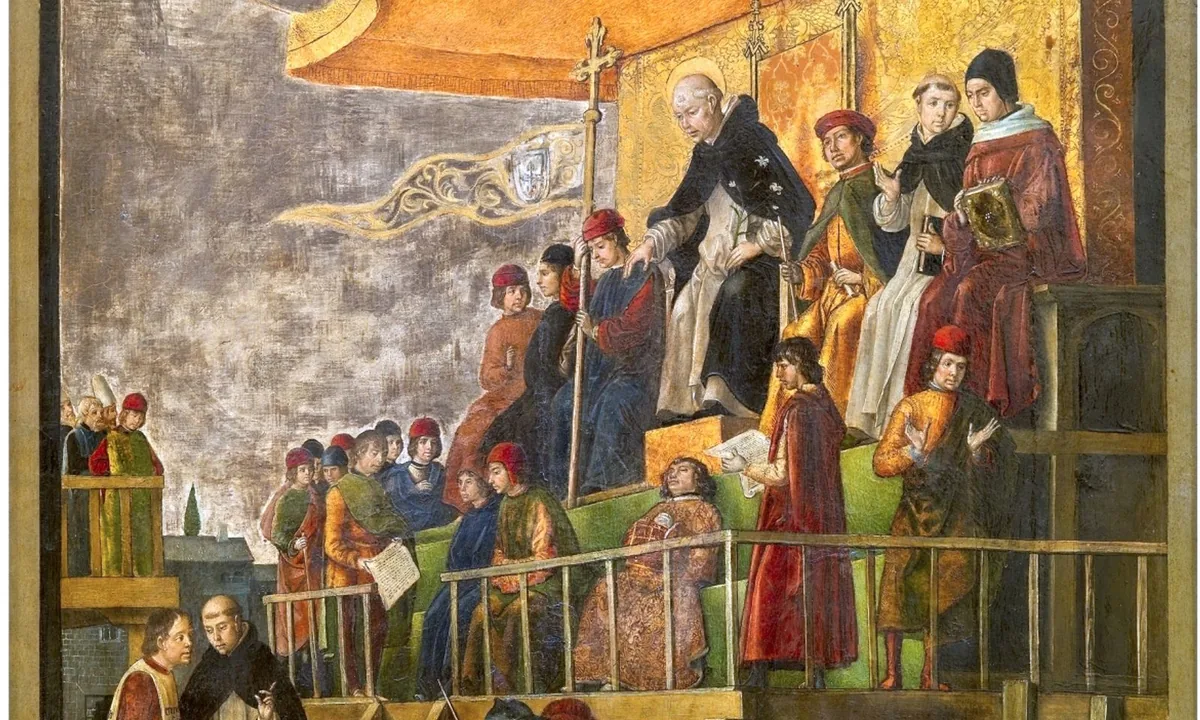
Pedro Berruguete, "Saint Dominic Presiding over an Auto-da-fé" (about 1493-99, Prado), painted for the church of Santo Tomás in Ávila. The scene shows the saint, who died in 1221, on a platform presiding over a public sentencing of heretics. Pedro Berruguete · Public domain · Wikimedia Commons -
28. The name “Wars of the Roses” was used by the people who fought them.
Show the answer
B. False. Roses were used as badges, especially the Yorkist white rose, but the name came later. Shakespeare's rose-picking scene is invented, and Walter Scott made the phrase popular in 1829.
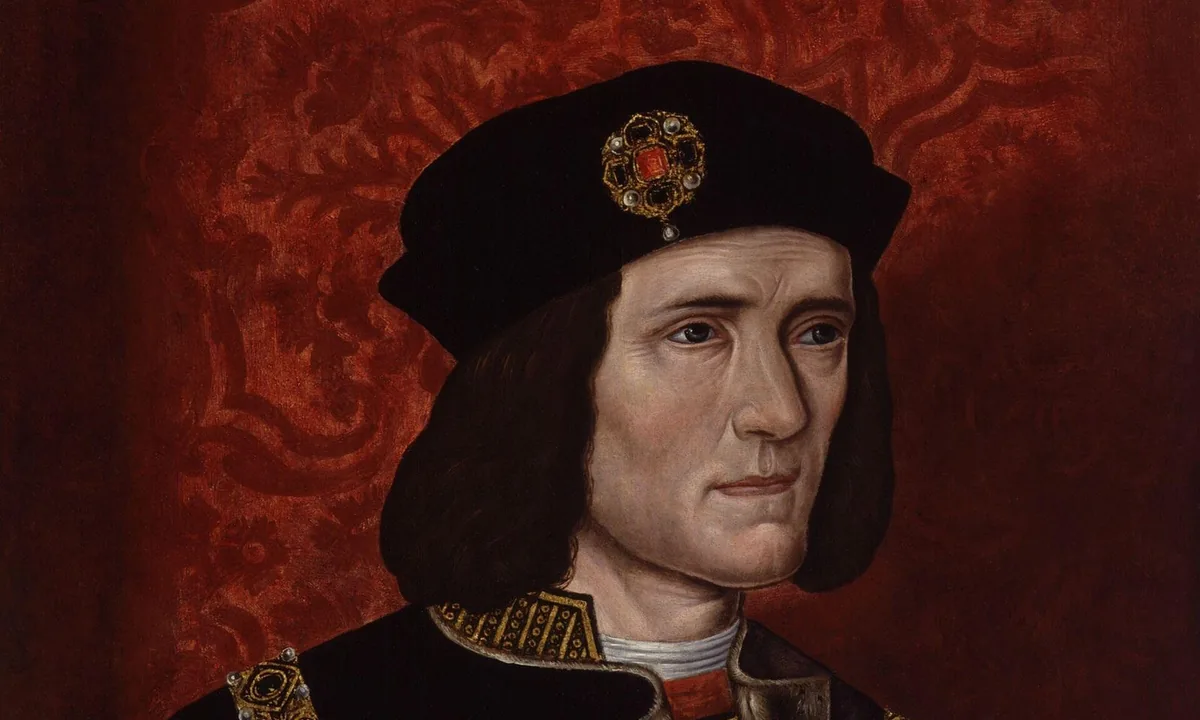
King Richard III by an unknown artist, late 16th century, National Portrait Gallery, London: painted long after his death, probably from an earlier lost portrait. Unknown artist · Public domain · Wikimedia Commons Read the full story: What Were the Wars of the Roses? York, Lancaster and Richard III →
-
29. Which bacterium caused the Black Death?
Show the answer
B. Yersinia pestis. Ancient DNA from 14th-century plague burials, from London to Central Asia, contains Yersinia pestis. The other bacteria cause cholera, tuberculosis and typhoid.
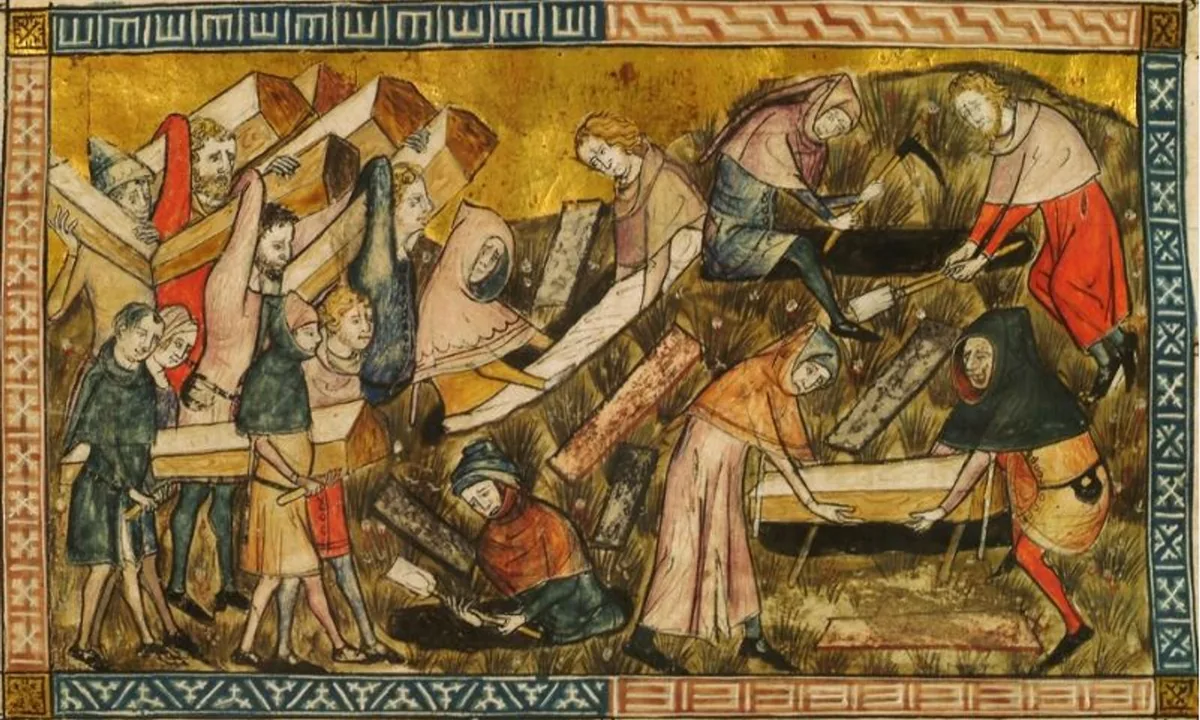
Citizens of Tournai bury plague victims in 1349, from the chronicle of Abbot Gilles Li Muisis, c. 1349–52, Royal Library of Belgium, Brussels. Pierart dou Tielt, c. 1353 · Public domain · Wikimedia Commons -
30. The earliest surviving biographies of Muhammad were written more than a century after his death.
Show the answer
A. True. Ibn Ishaq wrote in the 8th century, and his work survives in later editions. So historians combine it with other evidence: the Quran, early coins and inscriptions, and the accounts of non-Muslim writers.
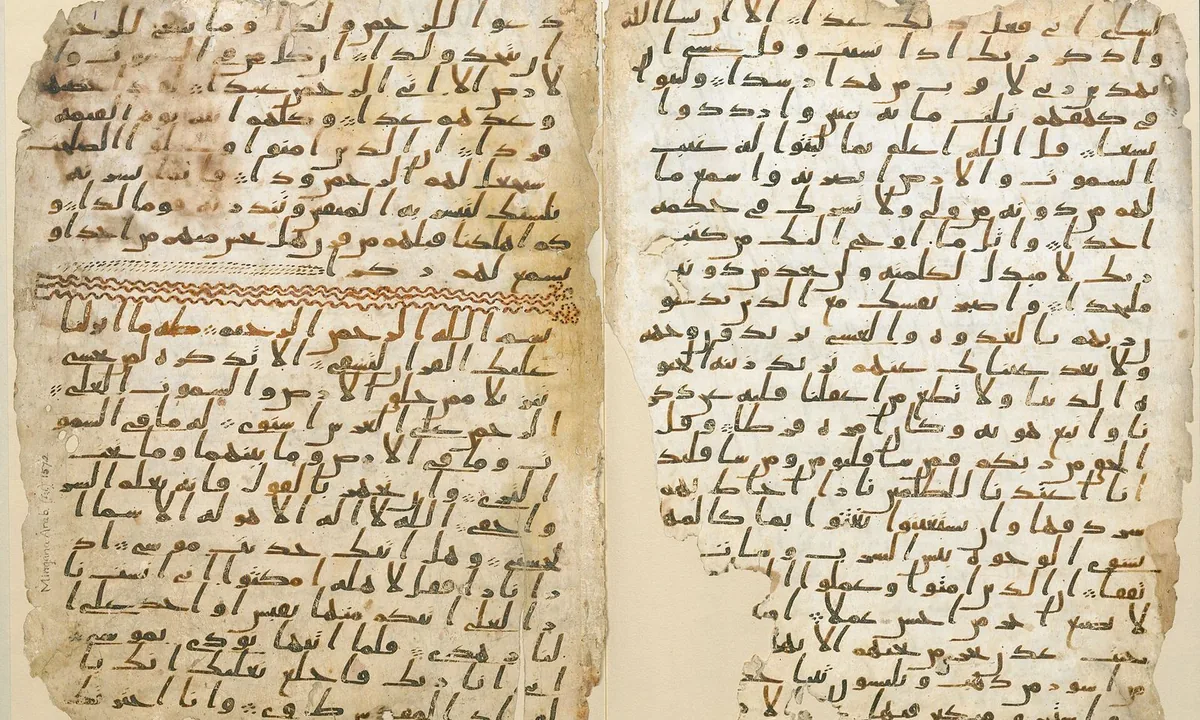
Two parchment leaves of an early Quran in the Mingana Collection, University of Birmingham, with sura 18 on the right. Radiocarbon dating placed the parchment between 568 and 645 CE with 95.4% probability. Unknown scribe · Public domain · Wikimedia Commons
Your score
You got right. Want the stories behind them?
Aurelius: Learn History has 700+ more questions like these, each one after the five-minute illustrated story it comes from, across 18 eras. Free to try.
Play next: Ancient Rome Quiz · Ancient Egypt Quiz · History Quiz
About this quiz
It covers the whole medieval world in the app, from Alfred the Great and Córdoba to the Knights Templar and the Wars of the Roses.
The questions come from 25 lessons in the app: What Happened in 1066? The Norman Conquest of England, Who Was Clovis, King of the Franks?, Who Were the Vikings? Raiders, Traders and Settlers, The Knights Templar, What Is Magna Carta, and Why Does It Matter?, The Cathars and the Albigensian Crusade, Why Was Alfred Called the Great? Alfred and the Danelaw, Why Was Charlemagne Crowned Emperor in 800?, Córdoba and Al-Andalus, The Mongol Invasion of Europe: Why Did the Mongols Turn Back?, Granada and 1492, El Cid and the Reconquista, The First Crusade: Why It Started and What Happened, Louis IX and the Fall of Acre, Richard the Lionheart and Saladin: The Third Crusade, Baghdad: Golden Age and Fall, Who Was Eleanor of Aquitaine? Queen of France and England, The Battle of Agincourt and the Hundred Years' War, Who Was Joan of Arc?, What Happened at Canossa in 1077?, Frederick II and the Sixth Crusade, The Spanish Inquisition, What Were the Wars of the Roses? York, Lancaster and Richard III, What Was the Black Death?, Muhammad and the First Caliphs.
Questions are labelled easy, medium or hard by the level of the lesson they come from, and the quiz plays in that order, easy to hard. There are 700+ more in the Aurelius: Learn History app.
Frequently asked questions
How many questions are in the Medieval History Quiz?
30: 4 easy, 20 medium and 6 hard, played easy to hard. 26 are multiple choice and 4 true or false. Every answer is explained, with the picture of the story behind it, and at the end you see your score by level.
Is the Medieval History Quiz free?
Yes. It plays in your browser with no account and no sign-up. For more, Aurelius: Learn History has 700+ questions like these, each after a short illustrated lesson. The app is free to download and try on iPhone, iPad and Android.
Where do the questions come from?
From the lessons in Aurelius: Learn History. Every question follows a short illustrated story in the app and is written and checked by the Aurelius editorial team. The easy, medium and hard labels are the levels of those lessons. See how lessons are checked.
Which quiz should I play next?
Try the Ancient Rome Quiz, the Ancient Egypt Quiz and the History Quiz. All quizzes are listed at the end of this page.
More history quizzes
- Ancient Rome QuizRepublic, Caesar and empire.
- Ancient Egypt QuizPharaohs, pyramids, mummies and the Rosetta Stone.
- History QuizThe all-round history quiz across many eras.
- World War 2 QuizFrom the invasion of Poland to Bastogne.
- WW1 Quiz: World War 1 Questions and AnswersFrom the Archduke’s assassination to Versailles.
- American History QuizThe Revolution and the Civil War: US history trivia.
- Cold War QuizBerlin, Cuba, Vietnam and the space race.
- Ancient Greece QuizAthens, Sparta, Persia and Alexander.
- French Revolution and Napoleon QuizFrom the Bastille to Waterloo.
- Tudors and Reformation QuizHenry VIII, Elizabeth I, Luther and the Armada.
- World History QuizOne game across world history.
- 100 History Trivia Questions and Answers100 questions with answers for quiz nights and classrooms.